Category Archives: EU politics

Podcast: Brexit, Climate Crisis and The Green Party

I recently had the pleasure of talking to the good folk at The Big Green Politics Podcast. If you are in the small group of people who don’t feel that you hear me voice my opinions enough then you can listen again below.

Do follow the podcast – they offer an interesting international alternative take on the big (Green!) issues of our day. Previous episodes available here >>> and follow them on twitter here >>>

https://soundcloud.com/biggreenpoliticspodcast/uk-politics-special-brexit-climate-crisis-and-the-greens-with-steve-hynd

2 Comments

Filed under Climate Change, EU politics, Politics

I want my country’s confidence back

Mo Farah - Jon Connell Fickr

Picture by Jon Connell – Flickr

“I want my country back…”

This is the lazy rhetoric of the Leave campaign. I want my country back…from what, or to when, seem to be questions they are unable or unwilling to answer.

But I think I can though, so here goes.

More than anything I want my country back from the recent poisonous rhetoric of the Leave campaign. When did it become OK in this country to produce political videos depicting refugees as “vicious snakes”? At what point did it become OK to produce political videos that depict a women being raped by a political entity? At what point did it become OK to produce posters so dehumanising, degrading and despicable that they are compared to Nazi propaganda – by the Conservative Chancellor of the Exchequer?

I want this to stop. This isn’t the politics of a country that I am proud of. This is the politics of the gutter.

It hasn’t always been like this though. And that’s what I want my country to return to. Metaphorically speaking, I want my country back to that balmy summer of 2012 when the country came together around the Olympic Games to celebrate our role in the international community.

Do you remember it? Kids playing in the street, spontaneous acts of kindness, citizen ambassadors? I remember the image of Mo Farah flying the Union Jack and how it became a symbol of our nation: confident, energetic, multi-cultural, welcoming, high achieving.

After that incredible summer of the 2012 Olympic Games a study was done to explore what impact it had on our international standing. The results were clear, people from around the world saw us Brits as more “distinctive, daring, charming, energetic, trendy and authentic”.

The world came to us and we embraced them confident open arms.

Skip forward 4 years and we seem have retreated further into ourselves. Without the same confidence we have half-turned our back on our neighbours, arms crossed, protective.

So how do we get our country back to that outward looking, confident country we were all so proud to be part of?

I can tell you it is not going to come from either the mainstream Leave or Remain fear based campaigns. While the Leave camp are hell bent on dog whistling on immigration, the Remain record is stuck on the question of “what if” we leave.

I want to be asking a different question. I want to be asking what it is about the EU that has secured peace for decades, secured a higher quality of environment and worker protections. And, significantly, what was the role of the UK in that process?

When we start to dig deeper we can find a proud history. One that stretches from Churchill’s post-war vision to our leadership through the EU in tackling climate change, promoting human rights, and exporting democracy. A role in the UK plays in the EU that we can be really proud of.

This is what we must be focused on and, crucially, asking how can we look to build on these successes?

I will be voting Remain on Thursday not out of fear but because I want my country’s confidence back. I want us to reclaim that outward facing, confident and positive feeling that gripped us back in 2012. I want us to be leading not leaving the EU. I want us to remain a positive, confident, tolerant country.

1 Comment

Filed under EU politics, Politics, Social comment

Artist Richard Woods is “unashamed to be political”

This interview was originally printed in New Europe.


Richard Woods describes himself as “more social commentator than artist” and has been compared to the likes of Peter Howson. Woods is famed for his grotesque caricatures and macabre take on places, politics and people as he explores the “absurdity of human existence”. On the back of another critically acclaimed exhibition at the Garden Gallery in the UK, Steve Hynd met up with Woods to find out what drives the painter behind the canvas. 

Can you tell us a bit about your background – where did you grow up  and where did you study?

I was born in Harrogate, but moved with my family to Cheltenham when I was seven. My parents would often take me abroad, so from a young age I had already seen a lot of the world. As an only child I had a lot of time on my hands and spent most of my time drawing and watching cartoons, leading to an extremely active imagination.

Is there any one person that inspires you?

The artist Peter Howson has been the biggest inspiration on me. He’s the official war artist for Bosnia. I remember going to Art College aware of the fact I wanted to paint people but was unsure of how I wanted to do it. When a tutor showed me Howson’s work for the first time I was blown away. That’s when I knew the type of artwork I wanted to make -Distorted characters and stories which are rooted to real issues within society. All of a sudden I felt I had a real sense of purpose, that I was doing something greater than just painting a picture. Perhaps that sounds a bit egotistical, but I don’t really mind that to be honest.

Would you describe your art as political?

Yes certainly. When I first began creating social commentaries I was really focusing on the darkest aspects of the world. I was tackling the ugliest problems in society head on with huge dark boldly painted canvases.

But I was young and full of enthusiasm then, I somewhat reckless with my choices. I soon realised what I was painting could alienate some people more than inspire them – although all those early paintings are now in private collections. I wanted people to reflect on my art but also to enjoy my work visually. I wanted people to be inspired to also try and fix the problems I paint about

Are you an artist first, social commentator second, or vice-versa?

I think at one point I was more social commentator than artist, but over the past couple of years I would say I’m more of a visual artist.

Most of my imagery begins with the idea or the inspiration which can be a news headline or something as simple as a personal experience. That’s the foundations of a work before I indulge my imagination and build up a composition. As an artist my experiences and surroundings mould my perspectives on life. Artists create work in response to these whether consciously or not.

Is there a message or ethos behind your art? If so, is it important to you that people understand that message?

Yes I would like them to but at the same time I’m just like anyone else, I need to make a living and I want people to want to hang my pictures on their walls.

Visual art is essentially about creating something unique and aesthetic that visually people can enjoy. I am always trying new things out. At my recent solo show in Cheltenham I had quite a diverse exhibition to show people what I can do with a paintbrush. Quite often artists develop a comfort zone (including myself) which is actually quite anti-creative. To find true originality you need to experiment.

I have even been painting landscapes outdoors recently. I know, a bit of a cliché.

How have the UK’s coalition years affected your art?

The coalition creates a lot of interesting imagery. I did one painting of Cameron and Clegg titled “Cutting Corners,” which interestingly got a lot of attention in Scotland. It was sold along with some of Peter Howson’s paintings from The Braewell Galleries. I think people value a visual representation of the political issues that they cannot always articulate themselves.

Your art is often a grotesque reflection on life, does this reflect your personal take on life?

It’s definitely how I view the world. I always loved looking at the German expressionist paintings, like Otto Dix and Max Beckman. They were so grotesque and surreal yet held so much truth about the world in their content.

I really thrive on making work which has a cause or purpose. With my early work some people seemed a bit shocked by it but for me I didn’t see what was so shocking, it was just normality to me.

In complete contrast my more recent work which has seen huge ice cream cones filled with fluorescent ice cream has been really appealing to people, especially children. Yet they actually represent a number of dark topics including The Fukishima nuclear disaster and the idea of economic meltdown. This is a good dynamic, having people enjoy the visual imagery then afterwards can discuss the politics.

For more information on his art please visit http://www.art-spaces.com/richardwoods/

Leave a comment

Filed under EU politics, Gloucestershire, Interview, Politics

Trans-Caspian Pipeline lives to fight another day

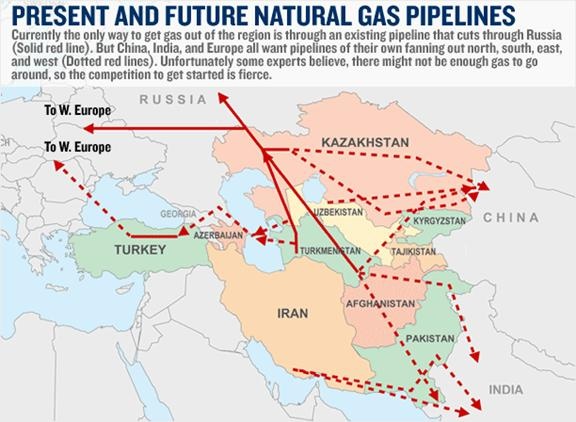
The Council of the European Union has today announced that it has adopted a decision authorising the Commission to negotiate an agreement with Azerbaijan and Turkmenistan on a legal framework for a Trans-Caspian (natural gas) Pipeline System.

I have blogged before about the problems this pipeline may hold. Anyone concerned with human rights and development in Central Asia should follow these developments closely. Will the EU live up to its human rights commitments in its trade deals?

Regardless it looks like the EU is committing itself down the energy road of reliance on large quantities of imported natural gas. A diversification away from Russia is a no brainer but holds with it infinite dangers. Interesting times ahead – watch this space.

Leave a comment

Filed under EU politics, Human rights, Politics, Russia

Turkmenistan and the Nabucco pipeline

Turkmenistan is one of those countries you may just about have heard of in the UK.  It’s in Central Asia, it borders the Caspian Sea, Kazakhstan, Uzbekistan, Iran and Afghanistan.  It was ruled until a few years ago by President for life Niyazov (aka Türkmenbaşy).  He has been replaced by former health minister,  Gurbanguly Berdimuhamedow.

Human Rights Watch has described Turkmenistan as “one of the most repressive and authoritarian” countries in the world.  Freedom House has included Turkmenistan in their 2009 “Worst of the Worst” list for social and political freedoms alongside Saudi Arabia and North Korea.  There are regular disappearances, reports of torture and harassment of journalist, environmentalist and human rights defenders.  You get the idea; it is a pretty dark place.

Despite this, the EU is going to extraordinary lengths to court Turkmenistan into trading with them. Why…? Gas!

The EU’s flagship energy security project (after deciding they couldn’t trust the Russians anymore) was the Nabucco pipeline.  The pipeline is planned to traverse four countries (Turkey, Romania, Hungary and Bulgaria before terminating in Austria).  It will be over 3,000 km long and is expected to cost around 8 billion Euros (wait and watch as this figure will inevitably rise).  After sorting out some legality this summer, the only issue stopping the project going full-steam ahead is the issue of supply.  Who has gas, and is willing to sell it to the EU.  Iran is an obvious answer, but the US soon put their foot down there.  Iraq looks possible, but the internal fighting between the north and Baghdad may prove to be an issue).  Azerbaijan will almost certainly be providing some but does not have the capacity for much more than a third of the pipelines capacity.  This leaves the EU without many options other than Turkmenistan.

So this is the issue, does the EU provide wealth and fortune to a leader (who keeps his power through natural resource revenues) and secure the EU with another gas supply – this would fulfil their aim of diversifying (partially) their gas supply.  Or do they stand up for the Human Rights, development and democracy issues that they are committed to uphold? Is it possible to do both?

I feel as though it is important to approach this from a pragmatic position, what action by the EU might improve life for the average Joe in Turkmenistan?  We can see that previous attempts to isolate Turkmenistan have not bought about the sort of changes we would like to see.  Indeed, no real improvements (other than on paper) have been observed in Turkmenistan in the last two decades (despite what they would have us believe in their hearing at the UPR).  It would be very easy for the EU to sit on its high horse and criticise the Turkmens human rights record.  This however, would lose our strategic aim of securing their gas supply and secondly would probably make no difference for those who are currently suffering human rights abuses.

I am personally not sure what the answer to this is, but my former colleague Neil Endicott has just published a report (http://www.quaker.org/qcea/energysecurity/The_Nabucco_Gas_Pipeline.pdf) arguing that the EU should engage with Turkmenistan. It should do this he argues, by “seeking to engage the Turkmen government in the Extractive Industries Transparency Initiative (EITI), a scheme which addresses resource revenue management issues and provides protected space for independent civil society groups to operate”.

This scheme is still relatively young.  I feel as though it’s a long shot at best.  It is however, by far the most appealing prospect when the other options are to engage and sell out, or to isolate and tacitly accept the human rights situation in Turkmenistan.  I cannot see any other option which is more likely to improve life for the population of Turkmenistan. I think it could be worth a shot.

1 Comment

Filed under Central Asia, EU politics, Human rights

The UK and the EU

This is an issue which affects my daily life.  I am a Brit working and living in Brussels.  I have got used to the usual jibes about not caring, about being arrogant and such forth.  I accept the fact that the UK is politically isolationist, and to its own detriment.  What I do not accept though, is the level of the debate which continues to rage throughout the British Isles and fails to hold our politicians to account.  Are you pro or anti EU? What a bloody stupid question!

Am I opposed to the introduction of the Social Charter that bought with it basic societal protection like the minimum wage, no.  Am I opposed to the increasing shift towards joint military operations such as Operation Atalanta (that smacks of safe-guarding oil), yes! 

Hopefully you get my point.  The EU is a complex beast with fingers in many pies.  To suggest you are either “pro” or “anti” it is clearly daft. 

Firstly let’s expel a myth.  The EU is not separate to the UK.  The UK is part (a disproportionally powerful part at that) of the EU.  Our elected national government has to agree to all legislation that is passed (in the European Council).  So when you hear…”it was forced onto us by Brussels”… you can be safe in the knowledge that this is scapegoating.  Equally, the UK is represented by 72 Members of European Parliament (which makes up the second part of the bicameral legislative branch of the EU – along with the Council).  On top of this, we have just had Baroness Cathy Ashton appointed as the new High Representative for Foreign and Security Policy (a sort of EU foreign minister).  To suggest that the UK is not an integral part of the EU is nonsense. 

Why then, if the UK plays such an integral role in Europe do I get constantly mocked for being a “Brit” (apart from my obsessive tea drinking)?  Why is the UK not seen as a “real” part of the EU? This question is a complex one and I do not suggest I hold the full answer.  Here though are two possible ideas that might shed some light.

Firstly, there is a historical significance of how we came about to become a member of the EU and how this contrasts with others accession process.  We can see that membership of the EU is something all other countries have strived for (in the current Enlargement programme the Balkan states are jumping through hoop after hoop to get in).  The UK however, eventually joined the Union in 1973 with a massive sense of feet dragging.  Whilst most nations joined with an optimistic sense of opportunity, the UK slouched in to the back of the class to play the disruptive role from the beginning.  Ever since then, the UK has been plagued by this concept that we might somehow be losing out.  This is something uniquely British.  Even other Member States who have tricky domestic politics have the ideological commitment to an integrated Europe to fall back on. 

Secondly, New Labour in the early 2000’s, chose a series of policy choices that scuppered their commitment to improve relations with the EU (after 18 years of disastrous relations jerking from one crisis to another).  New Labour came into power with a strong commitment to play a key role in the EU. Blair, by all accounts demanded respect within council meetings and for a short while a British voice was taken seriously.  In Blair’s own words, he saw himself as a bridge between Europe and the US. 

This position however was only successful in the short term.  Geo-politics soon meant that Blair had to decide to between Europe and the US.  With both France and Germany opposing the American neo-cons war mongering, Blair was left with an opportunity of great strategic importance.  At this time of decision between being Bush’s poodle and his strategic commitments within Europe, Blair sat on his metaphorical bridge for so long that the path back to the EU was soon cut off.  His inability to criticise the US meant that he lost all credibility and support within the EU (this was all dragged up again recently with him being linked to the position of President of the EU). 

Blair, back tracked on his personal enthusiasm for the euro, he smashed any concept of a common position on foreign and security policy within the EU and most of all he isolated himself from all “socialists” across Europe. 

Enough about the past though…what does the future hold for us?

In all likelihood a Conservative led government headed by Cameron.  This is a man who has chosen to remove his MEP’s from the most powerful block in the European Parliament in favour of teaming up in a marginal group with radicals from central and Eastern Europe (The European Conservative and Reformists Group).  This has annoyed nearly all major centre-right figures across the EU.  A Cameron UK government will not be taken seriously by their conservative counter parts (who now make up the main power houses across the EU).  This EU observer article gives you an idea of how the UK Tories are viewed (http://euobserver.com/9/28783). 

The only ray of European hope in British Politics is represented by Greens and Nationalist (Plaid Cymru) who sit in the Greens/EFA group.  Both the UK Greens and Plaid Cymru representatives have played a progressive integrationist role in Brussels.  This however, is only reflected in the European Parliament and not in the European Council (which has national governments in…i.e. Labour or Conservatives). 

The EU is facing a defining two years as it entrenches the changes that the Lisbon treaty has put in place.   I welcome the introduction of a progressive British politician into the position of High Representative for Foreign and Security Policy.  I worry however, that the level of debate in the UK around European politics removes any sense of accountability to our flailing politicians.  Cameron should not be able to ruin the UK’s strategic interests in Europe and not be held to account.  Browns work to repair relations with the EU should be applauded (opposed to the usual Brown bashing we experience in our media).  More to the point, I should not have to endure daily jibes because my fellow countrymen are blind to one of the most powerful influences on their lives and cannot hold their politicians to account.

The UK is lost in Europe but it is not dead.  We still (just about) have the economic and political stature to be welcomed back by other Member States.  I do not know whether this will still be the case in 5 years after a Cameron premiership!

21 Comments

Filed under Balkans, EU politics

Copenhagen and the 2 degree guard-rail, the wrong goal missed

We are constantly told that if we want to avoid “serious” climate change then we have to stick to below two degrees. Have you ever wondered though where this mysterious 2 degree figure came from or who came up with it? In the next couple of weeks at Copenhagen anyone with any grasp on climate change will be trying to beg, borrow and steal their way to an agreement that would result in us (humans) limiting the average global temperatures to below 2 degrees from 1990 levels. Anything above this and we are doomed! It is thus slightly important to explain why even this target is wholly inadequate.

In 2001 the IPCC (Inter-governmental Panel on Climate Change) came up with the 2 degrees figure using a very sensible method. Simply, they looked at the bad stuff that was likely to happen because of climate change (species extinction through to run-away climate change – this is when tipping points cause further tipping points (http://www.youtube.com/watch?v=WkUaAltxUpg) and worked out how likely at different temperatures it was to happen. At 2 degrees they figured there was very little chance of runaway climate change occurring. There was however still a significant chance of species extinction (there were then events in between that varied in their likelihood of occurring). They considered this to be a “safe” level to aim for.

This all seems very sensible (what’s a few species in the grand scheme of things?). In the run-up to Copenhagen however, the University of Copenhagen produced a report (http://www.pik-potsdam.de/news/press-releases/files/synthesis-report-web.pdf) authored by many of the original IPCC authors highlighting why, in the light of the latest science since 2001, this 2 degree guardrail is wholly insufficient. Essentially they were saying that they had underestimated the temperature at which these reactions to temperature rise would occur. This is hugely problematic.

According to their latest estimates, sticking to 2 degrees would leave us with a moderate chance of experiencing run-away climate change. I cannot emphasize how scary this is. A moderate chance of plunging our entire species into starvation, mass migration, probable war and potential extinction! Why are we not in a state of emergency? Why have I been blogging about the death of the local pub, when soon we will not be able to grow the crops needed for brewing (let alone to feed ourselves)?

This is IF we meet our 2 degree target. What do you think…will our leaders unite together to make the sort of agreement that is needed to make lasting cuts in carbon emissions? I suggest not. Will our leaders buckle to economic and political pressure rather than scientific reality? I suspect so. What does this mean for us as a species…as a civilized society…a community…a family or even as an individuals?

It means that we are facing very very tough times ahead. How tough depends on how we (as a species) act now! How prepared we are for these tough times depends more on how we act as a community, family and individuals. To tackle this issue we need a collective effort like never before (think WW2 and multiply it…the enemy we face now is far scarier than the threat fascism ever posed to humanity…the millions that Hitler wiped out might look like small numbers if we do not act on climate change).

Think of climate change though not as something that is either happening or not happening but as something that is on a scale. I have no doubt that we will witness the extinction of many more species, but how far down this scale towards run-away climate change we slip is really up to us.

British Green MEP Caroline Lucas recently summed the situation up by stating that if we meet the EU’s most ambitious targets then we will leave ourselves a 50:50 chance of experiencing the worst consequences of climate change.  These are odds I am not willing to accept.

We can act now to limit to the consequences of climate change or we can go down in history as the only species that monitored itself into extinction.

5 Comments

Filed under Climate Change, EU politics

Islam and Europe

In the week before the Swiss voted on banning the construction of minarets the European Conservatives and Reformists (ECR) group (which is where the UK Tories sit) and the British Council did their bit to entrench a bit of prejudice by putting on a debate in the Parliament on “Islam and Europe”.  I had the misfortune of attending this event and to come face to face with the likes of Douglas Murray. 

Douglas Murray, the widely credited political commentator, came off by far the strongest in the debate.  This is a travesty of the highest order as he presents such simplistic arguments (albeit in a clever and articulate way) that anyone with even the slightest grasp of Islam should have been able to expose him.  None of the panellists managed this.  I am by no stretch of the imagination an expert on Islam, or even a follower of the faith.  What I am, is somebody who can see that having a debate about “Islamic culture” and “European culture” is so overly simplified that it borders on being useless. 

There is clearly a debate that does need to happen, and this is how to reconcile potentially antagonistic aspects of cultures within a given geographic location.  We can see that honour killings for example are clearly incompatible with western understandings of liberalism and human rights.  Murray went to great lengths to represent some actions of some people who purport to act in the name of Islam as being representative of Islam as a whole.

This argument should be quite easy to show as being flawed.  Just as the opinions put forward by George Bush in the name of Christianity might sit uncomfortably with lots of practicing Christians, so an individual Muslim in the public eye may well act in a way that is abhorrent to many millions of Muslims.  This first point was at least partially raised, that people interpret faith in many different ways and can use it to justify all sorts of actions (from invading countries to habitually helping the poor!).

The point that was not raised (to my utter shock) however was that theologically Islam is extremely diverse.  It is a truism that Liberal Quakers and the Catholic Church represent two very different schools of Christian thought.  In the western media and in every day life however there is a lot of loose language around different schools of Islamic thought.  The most often quoted is that of Wahhabism (thanks in large to people’s connections with it and Bin Laden). Often this is blurred with inherently violent forms of Islam such as Jihadist Salafists.  It cannot be stated clearly enough that there is nothing inherently violent about Wahhabism.  There is something inherently conservative, but this is vastly different from violence.

There is nothing within Islam that suggests that it cannot be compatible with human rights and western understandings of liberalism (See the writings of An-Na’im http://www.law.emory.edu/aannaim/). What is apparent, is that an absolute understanding of Islam as one distinct religion (opposed to a series of theological schools of thought messily brought under one banner – like nearly all the world’s big religions) can be used to either justify the complete compatibility of Islam and western standards, or (if you so choose) it can be used to argue that they are inherently antagonistic. 

By arguing that any religion (including Islam) is inherently peace-loving is short-sighted and plays into the hands of those who would wish to paint a faith as intolerant (like Douglas Murray for example).  We all have a responsibility to engage with the worlds religions, even when we are starting off from a level of ignorance.  If we do not explore alternative religions and see the potential within them for moving towards a progressive future we will alienate those who wish to work for a better future through a religious framework.  Equally we leave ourselves ignorant to argue against those who wish to paint any given religion as being intolerant.

I happen to agree with Douglas Murray when he comes out with comments like “Mary was probably a Jew who told a lie” and “Mohamed probably did not write the Koran” (he actually said these things in the Parliament sessions), but I would have at least two responses to such comments :

  • Firstly I would have to question what he hopes to achieve by making such inflammatory statements and
  • Secondly I would suggest that he leaves himself alienated from billions of people who see their religion as their primary moral guide.  If Mr Murray is genuinely interested in building a better world he is going about it in a very strange way.  How can you build a better world when you have just insulted half of its population?

Instead of showing themselves to be progressive minded individuals the ECR and the British council have shown themselves to have little academic (let alone political) credibility.  If you are interested in this, do not be afraid to go and ask about it in your local mosque and be honest that you do not know much about Islam but you are interested. 

I am no expert, but even I can see that Douglas Murray is a short-sighted populist.  Let’s not stigmatise people because of the actions that are undertaken in the name of their faith.

6 Comments

Filed under EU politics, Far-right politics, Human rights, Religion

Anna Politkovskaya – A letter to Anna

Anna Politkovskaya was an investigative journalist who was shot dead on the 7th October 2006.  A few nights ago, I went to see “A letter to Anna”, a documentary film about the work and death of Anna.  She had written extensively on torture and human rights abuses across Russia but particularly in the North Caucasus.  Often her writing would have a member of authority as the villain in the story exposing scandals within the highest enclaves of society. 

She knew that she worked in constant danger but continued because of her belief in telling the truth.  She was a truly remarkable person who lived in truly remarkable danger.  In 2004 on her way to cover the Beslan hostages situation she fell mysteriously ill on the flight on the way there.  She came close to dying that day and many of her friends suspected poisoning.  The threats and attacks she suffered and her eventual death, is unfortunately, not a rarity amongst journalists in the Russian Federation (http://en.wikipedia.org/wiki/List_of_journalists_killed_in_Russia).  This Wikipedia page highlights the point. 

The problem does not stop at individual cases such as Anna’s.  There is wide spread de facto impunity for the perpetrators of these crimes.  This has left an environment where journalists and human rights defenders work in constant danger.  Irene Khan of Amnesty International directly correlated the impunity that is allowed for these crimes with many recent deaths, including the death of Natalia Estemirova (http://www.amnesty.org/en/news-and-updates/news/human-rights-activist-natalia-estemirova-murdered-in-russia-20090716). 

The Russian and Chechnayan authorities need to highlight in the public domain how they intend to investigate these politically sensitive crimes in an impartial and thorough manner.  We cannot allow such impunity to go unchallenged in the 21st century.

If you think that this has nothing to do with you, I ask you to do one thing, Watch “A letter to Anna” and tell me that you were not moved by her incredible outlook on life.  Tell me that you could not feel the incredible injustice in her life and death. 

Anna Politkovskaya’s spirit lives on through the work of all the journalists she inspired.  It is imperative, in my opinion, that we let her life be remembered by not letting her colleagues be forgotten now as they face the same challenges she did. 

Please, make an effort to watch the film.

2 Comments

Filed under EU politics, Human rights, Russia