Category Archives: Gloucestershire

From warm words to warm homes in Stroud

This article was published in Greenworld – the membership publication of the Green Party.

New research suggests that the UK’s retrofitting industry needs to grow ten-fold if the UK is to decarbonise its housing stock at a suitable pace in line with climate science. This challenge is substantial. We are missing much of the skills, supply chains, and wider infrastructure to make this happen. The Government continues to talk the talk of decarbonisation and retrofitting, but has so far failed to put significant money where its mouth is. 

For this challenge to be addressed we need central government, local government, businesses and residents working together.

Local government has a once-in-a-lifetime opportunity to kick-start efforts to tackle this by investing now in its own housing stock. And that’s exactly what Stroud District Council’s Housing Committee has proposed to do. The plan will see us investing £180m in the next 30 years to retrofit, insulate and decarbonise the Council’s five thousand homes. This is part of the Council’s ongoing commitment to address the climate emergency as part of its wider Carbon Neutral 2030 strategy

The impact of this investment will be significant. It will see a reduction in emissions of up to 24.5 per cent, with council tenants saving up to 11 per cent on fuel bills. This new investment will mean that, on average, council homes will meet Standard Assessment Procedure (SAP) C ratings by 2030. 

The Stroud District Council Housing Committee’s plan, which was agreed this month, now needs full council support – if passed, the programme will be accelerated, with more money invested. It will first be targeting houses with the poorest SAP ratings, ensuring those that will benefit the most receive support first. 

For those who don’t know, Stroud District Council is run through a ‘Cooperative Alliance’ made up of 15 Labour Councillors, 13 Green Councillors and three Liberal Democrats. The Housing Committee is chaired by a widely respected long-standing Labour Councillor and the Vice-Chair is a newly elected Green Councillor, Chris Jockel. This level of investment stands as a testimony to the possibility of progressive politics in power. It also shows how a Green voice on the council over many years – Stroud District Council being one of the first councils to elect a Green Councillor – has shifted the Overton window to such a degree that now these bold measures were agreed with little disagreement, even from the Conservative opposition.

There is good climate thinking behind focusing on residential properties. They currently account for the second-largest source of carbon in the district, about 17 per cent, following road transport. However, the five thousand homes the council owns is only a drop in a heavily polluted ocean. In this sense, there is a wider question about how the council can ensure that its investment can lead as a catalyst for action from within the private sector.

This ‘early’ – in terms of market economics, not climate necessity – investment can and must act as a guarantor of a base-level of demand within the region, in order for the private sector to sure up supply chains of skills, labour and technologies. Businesses will know that it’s the Stroud District where there will be decarbonisation and retrofit work taking place. As such, the District will offer a degree of security for medium-term business planning, and, crucially, can stress test the currently shaky supply chains as heat pump demand grows

Council investment can also act as a catalyst for the training that is currently missing from the labour market. Stroud is well placed to deliver this with its highly praised Further Education (FE) college in Stroud. 

But, and this can’t be stressed enough, these policy challenges could and should be fixed through central government intervention much more efficiently. This does not mean repeating the mistakes of the disastrous Green Homes Grant that installed just 49,000 efficiency measures to date, saving a meagre 0.04 per cent of total residential sector emissions, but instead focusing on the use of large-scale financial levers to enable bodies like local authorities to invest at scale.

It shouldn’t be up to local authorities to stretch their Housing Revenue Accounts to fund these projects. The Government could, with the stroke of a pen, free up borrowing from local authorities’ general reserves linked to expected savings to allow for much bigger investments. It could also be providing more strategically directed grant funding, which we know has a dramatic effect in bolstering local jobs and skills. These are, by definition, shovel ready ideas, with local authorities like Stroud District Council pushing their finances to deliver as much as they can.

Lastly, all of this requires a public behaviour change campaign on a scale rarely seen. You can install as many heat pumps, insulation, and other energy efficiency measure as you want but if one doesn’t empower people on how to interact with them efficiently, then we are doomed for failure. In Stroud District Council, there is significant investment happening on improving council/tenant interactions, but much more needs to be done in an area traditionally characterised by poor engagement and basic service delivery. The success of the programme might well stand or fall on whether we get this piece of people-oriented work right. Only time will tell if we do or do not.

In Stroud, we are ambitious in our efforts to tackle the climate emergency and to offer residents safe, warm, and green homes to live in. We are putting as many pieces of this jigsaw together as possible. At this stage, it’s important to be open and honest about the challenges we are facing; finance, supply chains, skills, tenant engagement; and as we move forward, it’s important to also be honest about our successes, challenges and mistakes. This process will, in the medium-term, help to build confidence in the private sector, which is where we need super-sized action to occur if we are to meet the climate action targets that science dictates.

Details of the decision made by the Stroud Housing Committee can be seen on agenda item 6 on last month’s report pack to the committee.

Leave a comment

Filed under Environment, Gloucestershire

To the care staff, you deserve the world and I gave you a bottle of wine

I’ve never seen someone look more tired. The luminous orange jumpsuit he was pulling on looked paper thin, but the way he handled it made it look like it was weighing him down. The rain didn’t help either, coming down as it was in thick heavy droplets. He steadied himself and leant awkwardly up against the police van trying to dress himself. I didn’t like to stop and stare, but it was hard not to.

I sat there in my car for some minutes. How many exactly I can’t say for sure. It smelt sickly of limoncello, from the hand sanitizer that rested permanently now in the driver’s door. Another small visual clue of how things have changed. A few months ago, I was not the type of guy to religiously use hand sanitizer. Now though as rain blurred my windscreen and limoncello filled my nostrils, I watched two young police officers pull on full protective clothing outside of a medium sized residential care home on the outskirts of my hometown, Gloucester. I learnt later that they were undertaking this task to free up capacity amongst medical personnel.

Sat there I thought back to visiting the care home in the last few months. The gush of warm air as you open the door. The biro by the visitor’s book perched next to the inexplicable bowl of foxes mints. How a sea of faces would look up as you entered the living room; One resident, chair-bound and staring, another engrossed in knitting, and my Dad always, and I mean always, fast asleep. All of them frail, elderly and often with poor health. Each of them deemed ‘vulnerable’ by the new vernacular of our new age. And none of them with any real agency to control the threat that they faced from this new virus.

I still don’t know how many of the people that my Dad shared the final few years of his life with are now dead. I’m not sure I want to know. I also don’t know how many of those who survive him know he is dead. I realise now that there is a lot I don’t know about Dad’s final few years of life as I played little more than a weekly cameo part popping in and out of his four walled world. I think about how terrifying it must be now for those with the cognitive function to process what is happening as they remain isolated away from their friends and family in care homes reading daily about this deadly virus.

I can’t begin to imagine what it must feel like to work in a care home and be responsible for their health and wellbeing in this context so out of our control. As the news catches up with the role care homes play in this global pandemic though the numbers that are following are terrifying. The ONS has already recorded over 5,000 deaths but this figure is likely to be much higher. As Full Fact say:

“[many of the] unexplained extra deaths in care homes and private residences are in fact Covid-19 deaths, and we’re undercounting the size of the epidemic”

The enormity and scale of this crisis isn’t always evident to those not on the frontlines – myself very much so included. But I promise you that I saw it in the body language of the two young police officers pulling on their protective clothing waiting to go into the care home. And I promise you it was more than evident in the staff member who greeted me at the back door. I saw in her so much tiredness. The tiredness that death brings. Worse though I think I saw in her the tiredness that suffering you can’t stop brings.

I asked if she is OK and she mustered a forced smile that meat little and said that she hasn’t hugged her child in weeks. I stood there helplessly in the rain that seemed to be getting worse.

We went inside, a few seconds respite from the rain. We started to pick up the pile of possessions I was there for. A small mountain piled in the corner of an unused communal room. We carried them together outside. Working quickly together but always apart. Large drops of rain running down each of the bin bags of clothes that we both bundled into the back of my car. At one point I made a joke about how much he owned but no one was around to hear it. In the silence that followed the latex of my gloves squeaked loudly against the plastic of the wet bags every time I dropped one into my car.

The whole transaction felt stripped of remotely appropriate interaction. I remember thinking that I wanted to hug her, to give her any strength I have left and to help her keep going. I wanted to tell her that in my eyes she is the nearest thing to a hero I’ve seen for doing what she does. I wanted to tell her how much her years of care of my Dad meant. Instead she handed me an envelope of 140 pounds and twenty-two pence of petty cash leftover, and I gave her a bottle of wine and some chocolate.  I muttered something about being eternally grateful but the phone in her pocket rang.

It was so inadequate.

It kept raining and I got back into my car, stripped off my gloves, squirted the yellow limoncello smelling hand sanitizer onto my hands and started the engine. I left knowing I would probably never come back.

Sat here now surrounded by my Dad’s possessions I can say that I am grateful to the care staff, to the nurses, to the police. But this doesn’t even come close to communicating how profoundly important I know their jobs to be, how much I think we as a society owe to them and how angry I am that it has taken these truly awful circumstances for us to begin to appreciate this.

All I can do to make sense of it is write this and think how in retrospect I am embarrassed that I gave them a bottle of wine when they deserve nothing short of the world.     

2 Comments

Filed under Gloucestershire, Health

The partially privatised NHS patient transport system is failing us all

This article was published on Open Democracy.

Sat in the waiting room of Cheltenham Hospital with my Dad I started to google ‘Arriva NHS patient transport’. I had already read all that Hello magazine had to offer, what else was I to do?

And so, I read to fill the time. I read about the company that many local NHS Trusts have contracted to provide patient transport. I read with bemusement about their commitments “to the highest quality of care” and about how patients “inspire” them “to achieve excellence” and laughed to myself about how this failed to tally with my experience. I also started to read alarming numbers of patient testimonies describing being let down by them. About how the most vulnerable were being left for hours with no adequate care.

That morning I had sat by myself for hours as my Dad failed to show up for his appointment. He was coming from Cirencester, less than half an hour’s drive away, but finally arrived close to 2 hours late. They had picked him up 15 minutes after his appointment time and then proceeded to pick other patients up on the way meandering through Cotswold villages.

In that time, I rescheduled his appointment, twice. The receptionist was wonderfully understanding and yet deeply scathing about Arriva. She gave me their direct number saying that the dispatch office of Arriva no longer listened to her. “It shouldn’t but it happens all the time, where we can we will always try and fit people in. Often, I end up having to book patients taxis, it’s not right that people should have to wait around like this” she said.

She was apologetic, nice, but in her mind, unable to help or affect the system that was failing patients.

After the appointment was over Arriva informed me that they were, once again, running late. I rang them directly. They apologised over the phone to me and said that there would be an hour delay in getting my Dad picked up.  This was at 12:15, about the time I had originally agreed to take over looking after my 5-month-old baby, and about 1 hour after my 2-hour parking ticket had run out.

What happened next was bordering on the farcical. To be exact:

  • I rang at 12:15 to be told they would be there by 1:15.
  • I rang at 1:30 to be told they would be there by 2:00
  • I rang at 2:15 to be told they would be there by 2:30
  • I rang at 2:45 to be told they would be there by 3:00
  • I rang at 3:10 and they arrived a few minutes later.

When they did arrive, they apologised for being late by saying “we weren’t sure which department you were in”. I didn’t quite have the emotional energy to respond. I had arrived that morning at 10:30 to support my Dad through a 5-minute routine appointment. I was leaving close to 5 hours later.

Sadly, though this seems far from unusual. As one nurse who came out to see us still waiting retorted, “why am I not surprised to see you still here?”. My cursory google search gave dozens of comparable stories. 67-year old Brian Cropton from Stonehouse commented that “it’s just getting worse and worse” after he found himself regularly let down by them being left for hours and on occasion completely abandoned.

This chimes not only with the experience of the NHS staff who I spoke to, but also one of the official records. Last year in July members of Gloucestershire County Council’s Health and Care Overview and Scrutiny Committee told Arriva its performance was not good enough. One local Cllr commented that “Arriva have patently failed in a number of areas and it simply isn’t good enough” and that “[The] report is full of excuses”.

This came a year after an official warning was issued in late 2015 for “consistent failure to achieve a number of required Key Performance Indicator standards”.

I write this now not just because my own experience was awful but because it fits into a wider pattern – not once since Arriva Transport Ltd took the Gloucestershire NHS contract have they hit their own target of 95% of patients being dropped off between 45 minutes before and 15 minutes after their appointments. Pause on this point for a minute. Even if they had hit their targets, 1 in 20 patients would not be dropped off within an hour slot of their appointments. Can you imagine the logistical and financial impact this is having?

With one year left on their contract, I wonder if anything will change. Will it just be renewed? Is the NHS in a financial state to pay for better services? Is there any reason not to bring the service back in-house?

I don’t know. What I do know though is that the receptionist I spoke to told me about an elderly man who cried in her waiting room because he just wanted to get back to his bed and I know that is not OK.

1 Comment

Filed under Gloucestershire, Health

24 hours in the UK

slad
Last year when my plane touched down at Heathrow coming back from Uganda I was met with a wonderful scene to welcome me back to old blighty. Queuing to enter the terminal building, what the British do best, an elegant determined woman pushed to the front of queue – sacrilege! One chap next to me notices that I have clocked this queue jumping outrage and chips in with the comment, “fucking French huh”.

What a welcome back to the UK – baseless xenophobic queue based hatred all performed to the backdrop tinny Christmas carols under a smattering of drizzle!

This year I was a smidgen disappointed to find no Christmas carols on repeat but delighted to make it out of the airport without witnessing any casual racism.

Once back in the hills and valleys of the ‘West Country’ though I took little time to head out for a walk. Thinking that this is what made the UK amazing I walked with uncharacteristic clear skies and meek winter sunshine hitting the frost covered ground. I was in a buoyed mood striding across farmer’s fields and down hidden valleys following bubbling brooks.

This mood was lifted further though with what truly makes the Great Britain great. With every dog walker passed a friendly ‘good morning’ was chirped followed by a compulsive observation of the uncharacteristically good weather: “wonderful day for it” or “you couldn’t ask for a better day” before then swiftly apologising for their dog who would be eagerly sniffing my trouser legs.

These small interactions last less than a few seconds but make up an integral part of the DNA of British culture.

Warmed by the simple pleasant jollity of rural British life I stopped in the open fire warmth of a local pub – the Woolpack in Slad – where I had arranged to meet family.

Sat sipping local real ales on slightly uncomfortable wooden furniture (why is that both pubs and churches consider it a virtue to have furniture that in other walks of life would be considered completely unfit for purpose?) I watched dogs curl up on the floor close to their owner muddy wellington boots. With a low warm afternoon winter sun breaking through the window I sat back with family around me and listened to the impromptu piano/saxophone performance that only added to the ambiance.

Outside, after a hearty pub lunch, we strode up Swift’s Hill which enjoys some of the finest views in the region down over the Slad Valley across the market town of Stroud and out to the Severn Valley and across to the Black Mountains in Wales. A few clouds clung to the horizon to exaggerate the sunset as wonderful pinks and oranges were thrown over the fields and footpaths.

It felt like the weather was welcoming me back to the UK, giving me 24 hours of pleasure before it inevitably resumed in the monotony of drizzle that everyone seems to perpetually believe might stop at any moment but so rarely does.

Walking back over the fields I make a decision to call into another pub on the way home. Instead of live piano/saxophone renditions, this pub instead has the unmistakable sound of football coming from the TV screens. Excited to be able to watch my national sport with my fellow countrymen I step in and order my pint of warm frothing ale.

Looking for a place to sit I approach a stranger with the prerequisite of “excuse me, I am terribly sorry, but would you mind if I possibly took a seat” motioning towards one of five empty seats surrounding him. Smiling warmly the man looks up from his Daily Telegraph with impeccable replicable manners and says, “Please, it would be an honour”.

How wonderful is that – being told it would be an honour for me to sit next to him.

Buoyed by these little interactions I sit happily watching Arsenal score four goals with the return of their star striker – Giroud. In an unspoken acknowledgment I suggest to the man next to me through nothing more than eye contact that I was happy, that I was delighted to be back in the UK and that in that moment I could think of nothing I would rather be doing.

Responding to this the man next to me commented in a perfect middle England accent, “Typical isn’t it”. “What’s that?” I responded. “The fucking French keeping such an English institution like Arsenal afloat” he sneered.

Sigh.

Leave a comment

Filed under Gloucestershire, Social comment, Travel

My former Head of Year, (Mr) Gareth Warren has passed away – some reflections.

Mr Warren
It has taken me a few days to firstly hear, then to process, the news that my old Head of Year, (Mr) Gareth Warren, has passed away. He was just 61 years old when he died of pancreatic cancer.

I don’t want to eulogise him here. Nor do I want to place him on the pedestal that society reserves only for the dead. Instead, I want to explain why I respected him, even as a teenager when respect was perhaps in shorter supply than it should have been, and significantly why I still respect him to this day.

Mr Warren (it still fills wrong referring to teachers by their first name) had the image of being tough. Almost to the point of caricature, he had a way a sweeping into a classroom that would bring silence and apprehension to even the worst behaved of kids. Invariably he would burst in, take a few exaggerated slow steps through the door and pick with a trained eye the instigator of the troubles before muttering through a thick growl their surname (a hangover from rugby coaching that found its way into the classroom). Their surname would inexplicably gain a syllable at the end adding an ‘e’ noise (Hynd became, Hynd-e).

This, if your name was muttered, was your cue to follow him out of the classroom.

This demeanour though was at least only part charade. Embedded within his teaching was a philosophy of tough love. I have never met a teacher before or since that was better equipped to deal with the plethora of problems, mood swings and anxieties that teenagers have.

When it was needed he was there with his thick growl to bollock you, and believe me, bollock you he would. But, at the same time, he was also there to support you when you needed. I can think of a dozen kids in my year that would have been expelled from most other schools but who stayed at Chosen Hill thanks to Mr Warren’s personal intervention and support.

The current Deputy Head, Shirley Bridgen gave a reasonable summary of this approach to the local paper saying:

“He genuinely believed that all children deserved a chance, especially those who struggled at times to find their way.

“To these students there was an open door, always a way back – this was his philosophy”

This is true. But all of this though makes him sound incredibly earnest like some sort of British Erin Gruwell. He wasn’t – he had a great patience and sense of humour when dealing with kids and style all of his own.

Maybe an anecdote will serve best to illustrate this:

I can remember flouting the no jewellery rule day in day out at school wearing some wooden beads around my neck (don’t ask, something to do with the fashion in the late 90s). To begin Mr Warren asked me to take them off, which I did before putting them back on again. Later, he tried confiscating them for a week – after which I would put them back on again. Finally it got to point where he walked up behind me one day and put one hand on my shoulder, untied the beads, and said (and I remember this very clearly), “Steve you are as insolent as you are annoying” before smiling to himself and walking off shaking his head.

Later that day I got called into his office. He was sat behind the desk wearing my beads and my sunglasses (also confiscated earlier that week). He sat me down and asked me why I didn’t want to be a year 11 prefect. To which I answered, in a way that only as insolent and annoying 15 year old could, that I didn’t want an unpaid job that made me stop people wearing their own necklaces.

Trying not to smile but obviously smirking he then asked me if I would help him out. He asked me if I would speak at some careers event at Gloucester Rugby Club later that day on behalf of the school. I agreed I think mainly because Mr Warren had asked me, not because I actually wanted to.

I guess this anecdote is just about his skill as a teacher, balancing hard-nosed discipline with a light touch of humour and goodwill.  Turning around a situation in one day to be about the student and ultimately what was best for them.

When leaving the Rugby Club after the event Mr Warren thanked me for giving such a good speech. Despite myself, I remember enjoying the compliment. Maybe fishing for another I then asked him why he asked me to talk at the event. He answered, “Because Hynd-e, I can’t get you to shut up so I thought you might as well put your gift of the gab to good use”.

13 years later I work in Communications. I think he might have spotted something in me before even I did.


UPDATE (from facebook):

A celebration of the life of Gareth Warren will take place on Friday 20th June, 3:30pm at Gloucester Cathedral. All are welcome.

Family have requested no mourning clothes.

Donations to Pancreatic Cancer UK via www.justgiving.com/GarethWarren


Leave a comment

Filed under Gloucestershire

Mike Assenti on the need to change the political climate around flooding

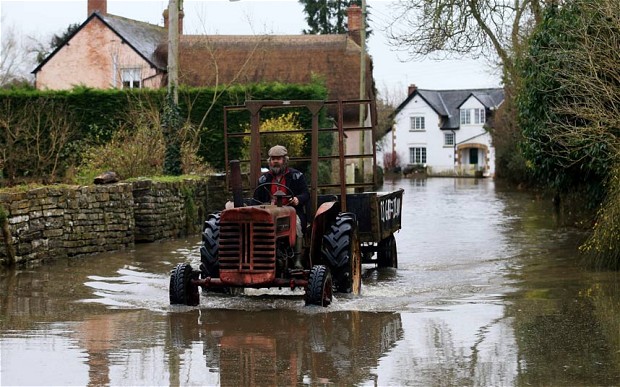
With half of the Somerset Levels currently underwater and thousands of lives and livelihoods put on hold, a huge argument has erupted around the Enviornment Agency and what it should have done to prevent the situation.  Mike Assenti writes for Hynd’s blog on climate change, flooding and his growing frustration with the political establishment.

Somerset-floods_2802176b
Suddenly, it seems everybody is an expert in flood management.

Why weren’t the rivers dredged? Should the rivers even be dredged? Did the Environment Agency give the government bad advice, as Eric Pickles has claimed? Is the Environment Agency’s policy the direct result of the Treasury’s rules, as the EA’s Chairman Chris Smith has countered?

Frankly I don’t know.

Unlike Mr Pickles, I’m more than happy to admit that I’m really not well versed on the evidence on the effects of dredging, and I’m most certainly not an expert in flood defences. But, if you’re interested, George Monbiot wrote a fascinating article on the subject last month for the Guardian.

The media is understandably mostly concerned with the striking images of the effects of this weather, and with the terrible personal stories of those affected. (Now that it is the Home Counties which are facing some serious flooding, the tension seems to have ratcheted even higher…but this is a subject for another, more cynical post.)

Much of the focus has been given to the short term effects of the flooding, and even to the medium term causes and preventative measures. Of course, the fact that there is now a political row attached to this aspect will undoubtedly drive further superficial analysis.

What has had far less attention though are the long term causes of this extreme weather. Whether or not this current batch of weather is definitively linked to climate change is almost impossible to say for certain, but the MET Office Chief Scientist, Dame Julie Slingo has stated that, “All the evidence suggests there is a link to climate change“.

Regardless of the provenance of this current batch of storms, climate scientists broadly agree that one effect of climate change is likely to be the increasing frequency and severity of extreme weather.

We have spent years hearing the horror stories of climate change, and even seeing what are supposedly some of the early effects. Agreements have been made as to how best to tackle it, carbon targets set, carbon targets postponed, reduced, and missed. Subsidies have been introduced to encourage the development and installation of renewable power sources, said subsidies then reduced or removed. The leader of a government which came to power claiming to be ‘the greenest ever’, has since been quoted demanding the removal of ‘all the green crap’ from utilities bills.

As an Engineer, I am reluctant to point out a problem without also suggesting a solution. However, in this case my frustration with the attitudes of those in power (both politically and commercially), as well as with a large part of the general public has spilled over from indignant rage into resigned apathy. I don’t know how more clearly the scale of the problem and nature of the solutions to climate change need to be stated before we start to take it seriously. Dozens of solutions to this problem have been mooted, but all of them require a fundamental shift in thinking by those in charge.

Instead of paying lip service to those campaigning for solutions to climate change, we need to start seeing some real action. We need to see real investment in renewables and local storage, rather than incentivising fracking. Countering the assertion of the energy companies that green subsidies are to blame for increasing bills not with (the totally accurate) explanation of how little these subsidies are, but with an explanation of why it is fair that they are paid. Taking more control of public transport, to make it economical to travel by train or bus rather than driving. Appointing an Environment Secretary who isn’t a climate change skeptic would be a good start, not to mention ditching a chancellor who wants the UK to be behind Europe on tackling climate change.

For years now the images of the effects of climate change have been of floods in Bangladesh, typhoons in the Far East and rising sea levels in the Maldives. Now that affluent villages in the South West of England are under water, will we start to see a shift in attitude?

Sadly, I suspect that we will continue treating the symptoms rather than the root cause.

I recently heard an excellent description of climate change skeptics who cite the cold weather in the US as evidence against climate change as standing on the Titanic, claiming, “The ship can’t be sinking – my end is 500 feet in the air”.

Here in the UK, we are ignoring the oncoming icebergs while we argue about drying the bed linen.

3 Comments

Filed under Climate Change, Gloucestershire, Politics

Brian Oosthuysen, on the birth of the Rainbow Nation and the death of Mandela

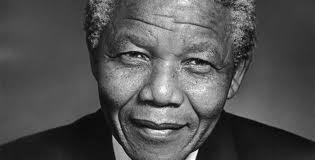
This is a guest post from Brian Oosthuysen on the death of Nelson Mandela. Brian is a Labour Party Gloucestershire County Councillor in Stroud and he is also a consistent campaigner for freedom, fairness and human rights both locally and internationally. Brian tweets @BrianatRodboro

Mandela 2
Apartheid was an evil, vicious system which saw the death of many thousands and the incarceration of even more. It dominated all aspects of life and was one of the reasons I left SA as a young man.

Nelson Mandela was one of those sent to prison and he suffered in many different and horrible  ways during his 27 years behind bars.

In the 70s and 80s I often addressed meetings as a member of the Anti-Apartheid Movement in England and I always ended my talk with a look into the future, which I saw as unbearably bleak.  “It will”, I would say, “end in bloodshed and the deaths of thousands of black and white people”.

And then Nelson Mandela (Madiba) was released and almost immediately transformed the political and social landscape in South Africa, and the Rainbow Nation was born.

His act of forgiveness to his former warders, his call for reconciliation and his setting up of the Truth and Reconciliation Committee showed the people of South Africa and the world that he was a man of towering stature and amazing integrity.  The constitution which his new government brought in is recognised across the world as one of the most progressive, and his stamp is clearly on it.

South Africa has many problems but the South Africa we now have is a country more at peace with itself than it has been since before 1945 when the Nationalist government came to power and Madiba is the reason for this.

Madiba once said, “No one is born hating another because of the colour of his skin or his background or his religion. People must learn to hate and if they can learn to hate, they can be taught to love, for love comes more naturally to the human heart than its opposite.”

He lived out that maxim and his death leaves the world a darker, colder place.

Hamba Kahle, Madiba.


1 Comment

Filed under Gloucestershire, Human rights, Politics

‘That was my mosque you tried to burn down’

Police outside Mosque on Ryecroft Street in GloucesterIn the early hours of this morning, someone tried to burn down the Masjid-E-Noor mosque in Ryecroft StreetGloucester. CCTV footage shows someone pouring petrol onto the front door before lighting a rag to ignite the fire.

This is just one of a recent spate of anti-Islam (Muslim?) attacks that have occurred since the tragic murder of Lee Rigby.

In reaction to these attacks the liberal left have gone on what I refer to as the, “we are all the same” offensive. Owen Jones writing in the Independent illustrates this phenomenon by stating:  “83 per cent of Muslims are proud to be British…compared to 79% of the British public” – a gallant effort to highlight the ludicrousness of the EDL’s arguments.

I think something slightly more nuanced than this though.

I don’t really share many nationalistic sentiments, with the right or the left. Why would I? What have I got in common with someone from Glasgow, or Gilford, or even Glandyfi?

In contrast however, what do I have in common with someone from Gloucester? Well, quite a lot now you come to mention it…and yes, I do take it personally when an arson attack occurs in Gloucester.

The good people of Gloucester and I, we share a lot. We probably share friends, favourite places to eat, bus routes, schools, hospitals and everything else that makes a community. And yes, despite being a de facto atheist our friends and family will share places of worship.

So when a man approaches the mosque with petrol and matches in hand, he isn’t just approaching a place of worship that is special to hundreds of Gloucester residents. He is wading through the centre of my community.  He is lighting a fire under something that I hold very close to me.

The vibrant Muslim community in Gloucester is part of what makes the city what it is. The Masjid-E-Noor mosque has been part of this city for generations. People have been worshiping in the mosque since 1974 and at the site even longer. An arson attack on the mosque is like burning a hole in the patchwork rug of Gloucester.

This arson attack, on my local mosque, is no different to trying to burn down my neighbour’s house. It’s fucking with people that are close to me, and the metaphorical flames of hatred might burn down something that I deeply care about – the diverse tolerant multicultural ambiance of my home town, Gloucester.

You can sign a letter to Yakub Patel and the congregation of the Masjid-e-Noor mosque on the hope not hate website – here

4 Comments

Filed under Gloucestershire, Social comment

Artist Richard Woods is “unashamed to be political”

This interview was originally printed in New Europe.


Richard Woods describes himself as “more social commentator than artist” and has been compared to the likes of Peter Howson. Woods is famed for his grotesque caricatures and macabre take on places, politics and people as he explores the “absurdity of human existence”. On the back of another critically acclaimed exhibition at the Garden Gallery in the UK, Steve Hynd met up with Woods to find out what drives the painter behind the canvas. 

Can you tell us a bit about your background – where did you grow up  and where did you study?

I was born in Harrogate, but moved with my family to Cheltenham when I was seven. My parents would often take me abroad, so from a young age I had already seen a lot of the world. As an only child I had a lot of time on my hands and spent most of my time drawing and watching cartoons, leading to an extremely active imagination.

Is there any one person that inspires you?

The artist Peter Howson has been the biggest inspiration on me. He’s the official war artist for Bosnia. I remember going to Art College aware of the fact I wanted to paint people but was unsure of how I wanted to do it. When a tutor showed me Howson’s work for the first time I was blown away. That’s when I knew the type of artwork I wanted to make -Distorted characters and stories which are rooted to real issues within society. All of a sudden I felt I had a real sense of purpose, that I was doing something greater than just painting a picture. Perhaps that sounds a bit egotistical, but I don’t really mind that to be honest.

Would you describe your art as political?

Yes certainly. When I first began creating social commentaries I was really focusing on the darkest aspects of the world. I was tackling the ugliest problems in society head on with huge dark boldly painted canvases.

But I was young and full of enthusiasm then, I somewhat reckless with my choices. I soon realised what I was painting could alienate some people more than inspire them – although all those early paintings are now in private collections. I wanted people to reflect on my art but also to enjoy my work visually. I wanted people to be inspired to also try and fix the problems I paint about

Are you an artist first, social commentator second, or vice-versa?

I think at one point I was more social commentator than artist, but over the past couple of years I would say I’m more of a visual artist.

Most of my imagery begins with the idea or the inspiration which can be a news headline or something as simple as a personal experience. That’s the foundations of a work before I indulge my imagination and build up a composition. As an artist my experiences and surroundings mould my perspectives on life. Artists create work in response to these whether consciously or not.

Is there a message or ethos behind your art? If so, is it important to you that people understand that message?

Yes I would like them to but at the same time I’m just like anyone else, I need to make a living and I want people to want to hang my pictures on their walls.

Visual art is essentially about creating something unique and aesthetic that visually people can enjoy. I am always trying new things out. At my recent solo show in Cheltenham I had quite a diverse exhibition to show people what I can do with a paintbrush. Quite often artists develop a comfort zone (including myself) which is actually quite anti-creative. To find true originality you need to experiment.

I have even been painting landscapes outdoors recently. I know, a bit of a cliché.

How have the UK’s coalition years affected your art?

The coalition creates a lot of interesting imagery. I did one painting of Cameron and Clegg titled “Cutting Corners,” which interestingly got a lot of attention in Scotland. It was sold along with some of Peter Howson’s paintings from The Braewell Galleries. I think people value a visual representation of the political issues that they cannot always articulate themselves.

Your art is often a grotesque reflection on life, does this reflect your personal take on life?

It’s definitely how I view the world. I always loved looking at the German expressionist paintings, like Otto Dix and Max Beckman. They were so grotesque and surreal yet held so much truth about the world in their content.

I really thrive on making work which has a cause or purpose. With my early work some people seemed a bit shocked by it but for me I didn’t see what was so shocking, it was just normality to me.

In complete contrast my more recent work which has seen huge ice cream cones filled with fluorescent ice cream has been really appealing to people, especially children. Yet they actually represent a number of dark topics including The Fukishima nuclear disaster and the idea of economic meltdown. This is a good dynamic, having people enjoy the visual imagery then afterwards can discuss the politics.

For more information on his art please visit http://www.art-spaces.com/richardwoods/

Leave a comment

Filed under EU politics, Gloucestershire, Interview, Politics

An unemployed mother, 11 children and a council ‘eco-mansion’ – the true cost to society

My home village, Churchdown, has become the centre of a media storm. Blowing in from middle England this storm is causing lasting damage. Not just to Britain’s poorest families but to each and every one of us.

Just round the corner from the Hare and Hounds in Churchdown, one of my old haunts, lives Heather Frost. Heather is unemployed and is currently living in temporary council accommodation with her 11 children.

Cue the tabloid hysteria…

The Sun reports “A JOBLESS mum on benefits is having a £400,000 council house built for her — and her brood of ELEVEN children”

The Daily Mail goes with, “mother of 11 to get six-bedroom eco-house after moaning her TWO council homes are cramped”

While The Express analysed the events saying, “The result has instead been to create powerful incentives for irresponsible people to bring into the world very large numbers of children they cannot possibly support”

I am not here to argue the morality of having 11 children, but to comment on the media storm surrounding this story.

I hope to show how it’s inaccuracies and how it causes lasting damage not just to some of the poorest in our society but to each and every one of us.

So where to start in this quagmire of misinformation?

Virtually all media reporting of the story goes to great length to try and generalise Heather’s quite extraordinary story into an attack on our benefits system in general.  The Daily Mail reports that there are over 190 families with more than 10 children and this is costing us, the taxpayer, over £11 million a year.

Of course, what the Mail describes is a fraction of the overall benefits system.  These 190 households sit alongside 1.35 million other households where at least one parent claims an out of work benefit.

Ally Fogg in the Guardian points out that the £11 million that these families receive, constitutes less than one hundredth of 1% of the total benefits bill of £100bn (excluding pensions).

The cost to us…the taxpayer? Small change.

The Express tries to score come political points with it’s analysis that we now have a ‘powerful incentive’ for people to have more children.

This ‘powerful incentive’ the Express describes is referring to child benefit. This currently stands at just £20.30 a week for your first child and then an additional £13.40 a week for any further children you have.

To put this into context. Krishna News in Churchdown paid me more money per week for doing a paper round than Heather Frost gets for each of her additional children.

Additionally, two of her children are between 16 and 20 so she would only receive child benefit if they are still in full time education. Her oldest child is now 21 so is not eligible for child benefit.

Who needs facts when you write for the Express though? Little inconvenient facts like the average reproduction rate of 1.9 children for families on benefit. The almost identical reproduction rate to those not on benefits.

If there is a ‘powerful incentive’ to have children on benefits (which there isn’t)  then those on benefits have yet to spot it.

Ah, but she is having a brand new £400,000 house built for her and her ‘brood’ The Sun reports. Well, keep reading and in paragraph 7 of that same story it explains how Tewksbury Council could afford this. It states, “Tewkesbury Borough Council sold a plot of land…to Severn Vale Housing association…A condition of the sale was that one of the 15 affordable properties they built on the site would be a six-bedroom home”.

The penny drops. When The Sun quotes Robert Oxley from the TaxPayers Alliance saying, “It’s scandalous that so much time and money is being spent on one custom-built house” he doesn’t actually say whether or not it is ‘tax payer’s money’ that is being spent.

These stories fuel a hatred for some of the poorest families in Britain. Regardless of how many times tabloids but the word ‘struggling’ mockingly in inverted commas, it won’t effect the fact that 1 in 5 Brits live in poverty and are struggling.

These stories though act as smokescreens. They force us to focus on how the poor are costing us rather than how poverty is costing all of us.

As we worry about the £11 million being spent on people with large families we learn to ignore the £25 billion that child poverty is costing the UK every year.

The people who suffer? Not just the 4.5 million at risk of homelessness who are currently on the housing waiting list or the 3.6 million children that are living in poverty in the UK.

In times of austerity, this media storm is costing all of us.

UPDATE: New Research out today suggest that in many UK cities over 40% of kids live in poverty.

11 Comments

Filed under Gloucestershire, Homelessness, Politics, Social comment

2000 Trees 2012 – bringing you the best new and underground music, despite the weather

‘Happy Campers’ – Photo by James Popel

Stood with my hood up, rocking the full waterproof image and ankle deep in mud I met Claire, a happy camper at Gloucestershire’s 2000 Trees festival. From under her waterproof cape she wipes off the water running down her face and comments, “to the untrained eye, this mud might look as bad as Glastonbury in 2007, but it really isn’t you know. You can glide through this mud without worrying about losing your wellies”.  Looking around, it was clear that the mud and rain wasn’t dampening spirits. I asked Claire if she was having a good time and she responds with a wink and a smile, “the best”.

I spent the last weekend at Upcote Farm, the home of 2000 Trees, trying to pin down exactly what makes this festival not just good, but bloody epic – despite the weather.

2000 Trees has become an integral part of the alternative festival scene and has consistently attracted me back. Founded in 2007 and selling just over 1,000 tickets it has grown in the last six years to four stages and attracting just under 5,000 festival goers.

At the heart of the festival is an ethos to do it differently, to not succumb to the same old festival formula. In their own words, “as cheesy as it may sound 2000trees genuinely started with six mates sat around a campfire complaining about the state of UK Festivals…and their ever spiralling ticket prices, poor facilities and pursuit of profit at all costs”.

This ethos of ‘doing it differently’ transcends the baseless words of small festival rhetoric into an exciting reality that can be seen penetrating every corner of the festival.

The food is varied but it is nearly all local, sustainably sourced or organic. This commitment to great local food and drink permeates right through to the bars who stock Cotswold Lager. Their policies on using bio-fuels and their great recycling record have meant that they have won “A Greener Festival” award for their on-going commitment to environmental sustainability. Last but certainly not least is their commitment to booking the best new and underground music Britain has to offer.

2012 alone boasted a diverse line up varying from Lucy Rose to Pulled Apart by Horses. In addition, there was a continued emphasis placed on the local music scene in and around Gloucestershire. Local independent labels such as ‘I Started The Fire Records’ were strongly represented throughout the weekend and enjoy a close working relationship with festival.

These artists join the likes of Frank Turner, Bombay Bicycle Club, King Blues and many more that have graced the small stages in the festival’s short six year history.  Personally however the highlight of the whole weekend came in the form of a band that was completely new to me, the Bristol based trio ‘The Cadbury Sisters’. The three sisters blend a three part harmony with ease to create a melancholic but beautiful mix of contemporary folk.

The festival’s commitment to bringing the best of new and underground British music, all of which has been personally scouted by the event organisers, has resulted in the festival becoming a firm favourite with the artists as well as the punters.

As Chris T-T (Xtra Mile) commented to me, “The best bit was the family feeling that Xtra Mile artists had through the weekend; especially with Lockey and Marwood playing almost every year, Trees feels like the label’s home festival”.

Pushed for a ‘worst part of 2000 Trees’ Chris T-T commented, “The worst bit was the plastic hexagons they laid down to help people get across the site; they had tiny holes in, so as you squelched on them jets of mud spunked up through the holes, right up your legs”.

I think most festival organisers would take that if that was the worst criticism thrown at them.

Late on Saturday night, by chance, I bumped into Claire as we were both walking down the hill back to the main arena and we talked some more about the festival and what we thought made a good festival epic. It was one of those pleasant festival conversations you have with complete strangers. As I walked away I wished her a good weekend.  As an afterthought she shouted after me and said, “Isn’t everyone having fun though”. I responded honestly, “yeah, they are”. She then did my job for me summarising perhaps all that you need to know about 2000 Trees and said, “perhaps that’s what makes 2000 Trees epic?”.

2 Comments

Filed under Beer, Food and Drink, Gloucestershire, Music

The day I was ashamed to be a Cheltenham Town fan

This article was published on the Tattooed Football blog.

We were 2-0 down. The collective voice had slipped out of our supporters. We were silent. Spurs fans responded in the only way they knew, to start mocking our silence. They finished with a collective ‘shhhhhhh’ to illustrate the resonating silence coming from us. What happened next shocked me. It shouldn’t have done, but it did. Someone behind me shouted in a thick West Country accent, ‘you’re not in gas chambers now!’

Read the full article here

2 Comments

Filed under Far-right politics, Football, Gloucestershire, Politics, Social comment, Sport