
My mum, Jackie, with her favourite cow, Emblem.
Yesterday was my mum’s funeral, the end of a long journey that started many years ago. Its initial stages were played out behind the scenes, out of sight, deep inside my mum’s mind. Unknown to any of us, friends or family, the 100 billion or so neurons in my mum’s brain started a countdown. These neurons in her brain threw out neurological branches that connected to more than 100 trillion points, allowing for thoughts and memories to be formed and recalled. Slowly, and completely silently, this number started to drop. With no fanfare, an incredibly awful and utterly incurable process began that would only begin to show itself years later.
When it did show itself, it did so relatively innocuously. It was the odd repeated question, the occasional double take, the subtlest of shifts away from engaging in conversation.
The science behind Alzheimer’s tells us that the areas of the brain most commonly affected early on are those that are used for learning and planning. I remember patiently sitting with my mum trying to explain to her how to use her new mobile phone. The simplest instructions seemingly lost in the seconds following the conversation. In retrospect I can see the folly of trying to explain, and reexplain, something new to my mum. That I failed to mitigate my own behaviour, let alone expectations, to allow for the early onset dementia is both something I regret, and something that makes me feel embarrassed.
How unequipped I was to support my mum in those initial stages leaves a deeper sadness in me now than the ending of her story. She was preparing for one of the hardest journeys of her life, and I turned up with no shoes to walk in, maps to direct me or rations to sustain us. I was woefully ill-equipped.
In retrospect, there was still so much left to celebrate at this stage and instead I was too focused on the immediate problems and challenges in front of me. The fixation on the next steps trying to ‘fix’ these problems blinkered me from spotting the wider landscape of where we were, how we got there and how much further we still had to go.
I remember asking questions about gardening and composting and getting encyclopaedic answers disguised under a subtle humble demeanour of a women with a life time of experiences not used to being asked to share them. The lack of notebook and pen in hand resonates strongly now to illustrate my own failings at the time to appreciate the delicacy of these thoughts that could dissipate at any moment.
By the time I spotted the severity of the journey ahead, my mum had been walking solo for years. Everyday a confusing challenge, walking a journey no one would chose to take. Each day trying to guide herself with sheer willpower through an ever-changing landscape.
To try to support her I took my first significant step in equipping myself for this journey. This was to read Oliver James’ book ‘Contended Dementia’. Although far from the miraculous saviour text some of its proponents make it out to be, it did set me off in the right direction. It was from this that I accepted that parts of my mum’s memory, and what makes her who she is was slipping away. I set about ‘relearning’ my relationship with my mum. This was beyond tiring and involved unlearning a lifetime of habits. My questions soon ceased to be part of our conversations. They were instead replaced with an ever-changing melody of chitter chatter which at times danced as freely as the topics that passed through her mind, while at others were strictly kept to subjects I knew to garner a positive reaction. I learnt the joy of hearing about parts of my mum’s life that were previously never mentioned and my curiosity about the patchwork of her earlier life grew. Even then though I struggled to prevent my focus returning to the ever-growing list of things we couldn’t do or talk about.
In retrospect, if I could change one thing from this whole journey, it would be to spend more time at each stage celebrating all that was left of my mum – the good, the bad and the utter complexity in between.
My mum had a fiercely proud personality, often contradictory in its nature, and a stubbornness that any mule would be proud of and in retrospect she plodded on this journey as any mule would – proudly, quietly and without complaint. She would never ask for help and would scorn the suggestion if anyone ever offered it.
And yet, in my mum’s mid-stage of dementia, I feel like I learnt new ways of interacting that allowed me to better help her. By just being with her and holding a conversation that was not threatening and didn’t highlight the missing memories I felt like, for a short period, I could carry some of the extra weight for her on this journey.
At this stage I began to spot the crucial role that emotions played. If I had a positive interaction with my mum, then I could tangibly see how these positive emotions lived on much longer than the memory of the actual interaction. Equally, if something distressed her it was clear that the anger, or hurt, or confusion would long outlast the initial problem. This moved me onto what I think of as the relentless optimism stage. Regardless of the reality I found a positive moment – the new flower that had just sprung in the garden, the fact that my wife was pregnant, that the sun was shining. The smallest of things resonated.
Again, I wish I had turned some of this optimism and positivity to all that she still had to offer at this stage instead of just distracting from all she couldn’t do. Whether or not this would have been possible I don’t know. I do know that I wish I had tried harder.
Later I would read that this importance of positivity wasn’t just my experience but one backed up by studies. One lead author of a study concluded by saying that “our findings should empower caregivers by showing them that their actions toward patients really do matter and can significantly influence a patient’s quality of life and subjective well-being”. It did for me. For some months, a year maybe, I could visit my parent’s house and let my reality melt away and interact with my mum wherever she was at that time. In her mind, if she was milking cows I would comment how good the fried breakfast was waiting for us. If she was worried about where her Dad was I quipped that I was sure he would have a good story to tell over dinner. If I didn’t know where she was in her mind I would look out of the window and say how special it was to be here at this time of year.
This is not to say it wasn’t incredibly hard work. Each visit I was constantly second guessing what was happening and trying to steer conversation away from any cracks in my mum’s memory road. I suspect though that this was just nothing compared to either her experience of living with the disease or that of my Dad’s experience living with her and for many years being her primary carer.
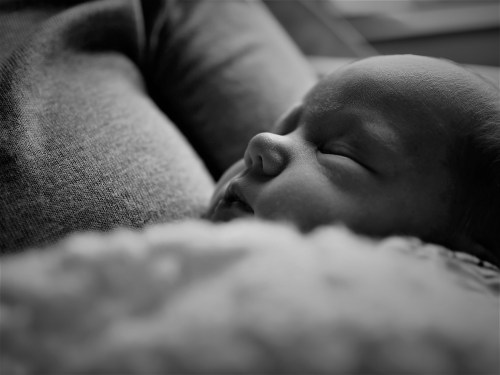
In the final year or so, it became harder and harder to muster these positive emotions. Verbal conversation became a less useful tool and suddenly I felt like I had slipped back to square one – back to being an unwitting bystander to my mum’s journey. At times I found ways around this. After the birth of my son, her grandson, we would sit together with her doting affection and my son performing back a series of giggles and smiles. It is hard, even after years of suffering from Alzheimer’s to not be cheered by the rapturous laugh of a baby. In the final months though we would more often than not sit in silence.
As these final months ticked by, I watched the seasons slip from one to another outside her care home window. This alone was enough to fill me with sadness to think how she once lived her whole life outdoors surrounded by animals. She was now sat in a thermostat-controlled room – I wasn’t sure of much at this stage, but I knew this was not right, and not what she would have wanted.
With the passing of the seasons so the number of neurons and connections continued to quietly drop. Basic functions disappeared but still, at times, there was the unmistakable facial expression or look that was uniquely my mum. In these last few months I spent more and more time feeling awkward and unable to help her. My weekly visits had slipped to every other week and sometimes longer and as a result the progression of her symptom became more pronounced between visits. By the end I would helplessly sit with her unsure if she knew if anyone was with her not.
Coming one time into the uncomfortably warm care home I found her slumped sideways on the chair. A member of care staff who was spoon feeding her explained to me that she had lost control of body positioning. Her eyes were glazed and focused on nothing in the distance. She weighed just over 40 kilograms. The length and severity of the journey she had been on had taken its toll.
Two days later she passed away.
When people now ask me how I am, I say I’m OK; that I feel both relieved and sad. A mix of emotions. But the more I think about it, the more I think this is the wrong question. There are much more pertinent questions to ask. How have I been for the last 8 years? How have I been throughout this long journey? At what point did I feel that the essence of my mum left leaving her body to keep on the journey? When did grief start? What have I learnt over the last 8 years? Do I feel guilty for not having done more? Do I feel proud for doing what I did? How did all those who loved mum struggle in their own ways to interact with this journey?
And then, and only then, a little for the here and now: how does it feel to be setting off on this next stage of life, on my own journey, without a mum that had, up until now, been a constant in my life?
At this stage, I’m not really sure.
Be one of the cool kids and share this article



 Hynd's Blog
A long journey…
My mum, Jackie, with her favourite cow, Emblem.
Yesterday was my mum’s funeral, the end of a long journey that started many years ago. Its initial stages were played out behind the scenes, out of sight, deep inside my mum’s mind. Unknown to any of us, friends or family, the 100 billion or so neurons in my mum’s brain started a countdown. These neurons in her brain threw out neurological branches that connected to more than 100 trillion points, allowing for thoughts and memories to be formed and recalled. Slowly, and completely silently, this number started to drop. With no fanfare, an incredibly awful and utterly incurable process began that would only begin to show itself years later.
When it did show itself, it did so relatively innocuously. It was the odd repeated question, the occasional double take, the subtlest of shifts away from engaging in conversation.
The science behind Alzheimer’s tells us that the areas of the brain most commonly affected early on are those that are used for learning and planning. I remember patiently sitting with my mum trying to explain to her how to use her new mobile phone. The simplest instructions seemingly lost in the seconds following the conversation. In retrospect I can see the folly of trying to explain, and reexplain, something new to my mum. That I failed to mitigate my own behaviour, let alone expectations, to allow for the early onset dementia is both something I regret, and something that makes me feel embarrassed.
How unequipped I was to support my mum in those initial stages leaves a deeper sadness in me now than the ending of her story. She was preparing for one of the hardest journeys of her life, and I turned up with no shoes to walk in, maps to direct me or rations to sustain us. I was woefully ill-equipped.
In retrospect, there was still so much left to celebrate at this stage and instead I was too focused on the immediate problems and challenges in front of me. The fixation on the next steps trying to ‘fix’ these problems blinkered me from spotting the wider landscape of where we were, how we got there and how much further we still had to go.
I remember asking questions about gardening and composting and getting encyclopaedic answers disguised under a subtle humble demeanour of a women with a life time of experiences not used to being asked to share them. The lack of notebook and pen in hand resonates strongly now to illustrate my own failings at the time to appreciate the delicacy of these thoughts that could dissipate at any moment.
By the time I spotted the severity of the journey ahead, my mum had been walking solo for years. Everyday a confusing challenge, walking a journey no one would chose to take. Each day trying to guide herself with sheer willpower through an ever-changing landscape.
To try to support her I took my first significant step in equipping myself for this journey. This was to read Oliver James’ book ‘Contended Dementia’. Although far from the miraculous saviour text some of its proponents make it out to be, it did set me off in the right direction. It was from this that I accepted that parts of my mum’s memory, and what makes her who she is was slipping away. I set about ‘relearning’ my relationship with my mum. This was beyond tiring and involved unlearning a lifetime of habits. My questions soon ceased to be part of our conversations. They were instead replaced with an ever-changing melody of chitter chatter which at times danced as freely as the topics that passed through her mind, while at others were strictly kept to subjects I knew to garner a positive reaction. I learnt the joy of hearing about parts of my mum’s life that were previously never mentioned and my curiosity about the patchwork of her earlier life grew. Even then though I struggled to prevent my focus returning to the ever-growing list of things we couldn’t do or talk about.
In retrospect, if I could change one thing from this whole journey, it would be to spend more time at each stage celebrating all that was left of my mum – the good, the bad and the utter complexity in between.
My mum had a fiercely proud personality, often contradictory in its nature, and a stubbornness that any mule would be proud of and in retrospect she plodded on this journey as any mule would – proudly, quietly and without complaint. She would never ask for help and would scorn the suggestion if anyone ever offered it.
And yet, in my mum’s mid-stage of dementia, I feel like I learnt new ways of interacting that allowed me to better help her. By just being with her and holding a conversation that was not threatening and didn’t highlight the missing memories I felt like, for a short period, I could carry some of the extra weight for her on this journey.
At this stage I began to spot the crucial role that emotions played. If I had a positive interaction with my mum, then I could tangibly see how these positive emotions lived on much longer than the memory of the actual interaction. Equally, if something distressed her it was clear that the anger, or hurt, or confusion would long outlast the initial problem. This moved me onto what I think of as the relentless optimism stage. Regardless of the reality I found a positive moment – the new flower that had just sprung in the garden, the fact that my wife was pregnant, that the sun was shining. The smallest of things resonated.
Again, I wish I had turned some of this optimism and positivity to all that she still had to offer at this stage instead of just distracting from all she couldn’t do. Whether or not this would have been possible I don’t know. I do know that I wish I had tried harder.
Later I would read that this importance of positivity wasn’t just my experience but one backed up by studies. One lead author of a study concluded by saying that “our findings should empower caregivers by showing them that their actions toward patients really do matter and can significantly influence a patient’s quality of life and subjective well-being”. It did for me. For some months, a year maybe, I could visit my parent’s house and let my reality melt away and interact with my mum wherever she was at that time. In her mind, if she was milking cows I would comment how good the fried breakfast was waiting for us. If she was worried about where her Dad was I quipped that I was sure he would have a good story to tell over dinner. If I didn’t know where she was in her mind I would look out of the window and say how special it was to be here at this time of year.
This is not to say it wasn’t incredibly hard work. Each visit I was constantly second guessing what was happening and trying to steer conversation away from any cracks in my mum’s memory road. I suspect though that this was just nothing compared to either her experience of living with the disease or that of my Dad’s experience living with her and for many years being her primary carer.
In the final year or so, it became harder and harder to muster these positive emotions. Verbal conversation became a less useful tool and suddenly I felt like I had slipped back to square one – back to being an unwitting bystander to my mum’s journey. At times I found ways around this. After the birth of my son, her grandson, we would sit together with her doting affection and my son performing back a series of giggles and smiles. It is hard, even after years of suffering from Alzheimer’s to not be cheered by the rapturous laugh of a baby. In the final months though we would more often than not sit in silence.
As these final months ticked by, I watched the seasons slip from one to another outside her care home window. This alone was enough to fill me with sadness to think how she once lived her whole life outdoors surrounded by animals. She was now sat in a thermostat-controlled room – I wasn’t sure of much at this stage, but I knew this was not right, and not what she would have wanted.
With the passing of the seasons so the number of neurons and connections continued to quietly drop. Basic functions disappeared but still, at times, there was the unmistakable facial expression or look that was uniquely my mum. In these last few months I spent more and more time feeling awkward and unable to help her. My weekly visits had slipped to every other week and sometimes longer and as a result the progression of her symptom became more pronounced between visits. By the end I would helplessly sit with her unsure if she knew if anyone was with her not.
Coming one time into the uncomfortably warm care home I found her slumped sideways on the chair. A member of care staff who was spoon feeding her explained to me that she had lost control of body positioning. Her eyes were glazed and focused on nothing in the distance. She weighed just over 40 kilograms. The length and severity of the journey she had been on had taken its toll.
Two days later she passed away.
When people now ask me how I am, I say I’m OK; that I feel both relieved and sad. A mix of emotions. But the more I think about it, the more I think this is the wrong question. There are much more pertinent questions to ask. How have I been for the last 8 years? How have I been throughout this long journey? At what point did I feel that the essence of my mum left leaving her body to keep on the journey? When did grief start? What have I learnt over the last 8 years? Do I feel guilty for not having done more? Do I feel proud for doing what I did? How did all those who loved mum struggle in their own ways to interact with this journey?
And then, and only then, a little for the here and now: how does it feel to be setting off on this next stage of life, on my own journey, without a mum that had, up until now, been a constant in my life?
At this stage, I’m not really sure.
Be one of the cool kids and share this article
11 Comments
Filed under Blogging, Health, Social comment
Tagged as Alzheimer's, Blog, Dementia, personal experience