Tag Archives: Climate Change

Podcast: Brexit, Climate Crisis and The Green Party

I recently had the pleasure of talking to the good folk at The Big Green Politics Podcast. If you are in the small group of people who don’t feel that you hear me voice my opinions enough then you can listen again below.

Do follow the podcast – they offer an interesting international alternative take on the big (Green!) issues of our day. Previous episodes available here >>> and follow them on twitter here >>>

https://soundcloud.com/biggreenpoliticspodcast/uk-politics-special-brexit-climate-crisis-and-the-greens-with-steve-hynd

2 Comments

Filed under Climate Change, EU politics, Politics

Mike Assenti on the need to change the political climate around flooding

With half of the Somerset Levels currently underwater and thousands of lives and livelihoods put on hold, a huge argument has erupted around the Enviornment Agency and what it should have done to prevent the situation.  Mike Assenti writes for Hynd’s blog on climate change, flooding and his growing frustration with the political establishment.
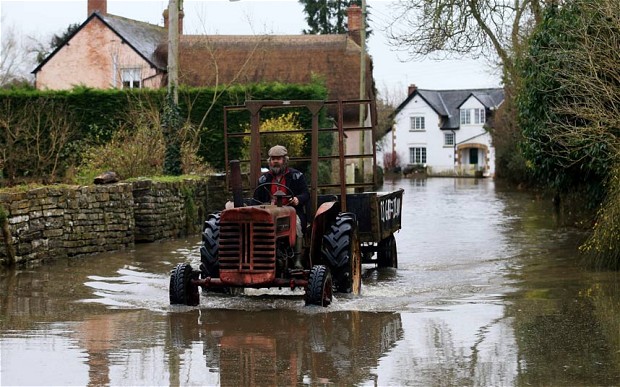
Somerset-floods_2802176b
Suddenly, it seems everybody is an expert in flood management.

Why weren’t the rivers dredged? Should the rivers even be dredged? Did the Environment Agency give the government bad advice, as Eric Pickles has claimed? Is the Environment Agency’s policy the direct result of the Treasury’s rules, as the EA’s Chairman Chris Smith has countered?

Frankly I don’t know.

Unlike Mr Pickles, I’m more than happy to admit that I’m really not well versed on the evidence on the effects of dredging, and I’m most certainly not an expert in flood defences. But, if you’re interested, George Monbiot wrote a fascinating article on the subject last month for the Guardian.

The media is understandably mostly concerned with the striking images of the effects of this weather, and with the terrible personal stories of those affected. (Now that it is the Home Counties which are facing some serious flooding, the tension seems to have ratcheted even higher…but this is a subject for another, more cynical post.)

Much of the focus has been given to the short term effects of the flooding, and even to the medium term causes and preventative measures. Of course, the fact that there is now a political row attached to this aspect will undoubtedly drive further superficial analysis.

What has had far less attention though are the long term causes of this extreme weather. Whether or not this current batch of weather is definitively linked to climate change is almost impossible to say for certain, but the MET Office Chief Scientist, Dame Julie Slingo has stated that, “All the evidence suggests there is a link to climate change“.

Regardless of the provenance of this current batch of storms, climate scientists broadly agree that one effect of climate change is likely to be the increasing frequency and severity of extreme weather.

We have spent years hearing the horror stories of climate change, and even seeing what are supposedly some of the early effects. Agreements have been made as to how best to tackle it, carbon targets set, carbon targets postponed, reduced, and missed. Subsidies have been introduced to encourage the development and installation of renewable power sources, said subsidies then reduced or removed. The leader of a government which came to power claiming to be ‘the greenest ever’, has since been quoted demanding the removal of ‘all the green crap’ from utilities bills.

As an Engineer, I am reluctant to point out a problem without also suggesting a solution. However, in this case my frustration with the attitudes of those in power (both politically and commercially), as well as with a large part of the general public has spilled over from indignant rage into resigned apathy. I don’t know how more clearly the scale of the problem and nature of the solutions to climate change need to be stated before we start to take it seriously. Dozens of solutions to this problem have been mooted, but all of them require a fundamental shift in thinking by those in charge.

Instead of paying lip service to those campaigning for solutions to climate change, we need to start seeing some real action. We need to see real investment in renewables and local storage, rather than incentivising fracking. Countering the assertion of the energy companies that green subsidies are to blame for increasing bills not with (the totally accurate) explanation of how little these subsidies are, but with an explanation of why it is fair that they are paid. Taking more control of public transport, to make it economical to travel by train or bus rather than driving. Appointing an Environment Secretary who isn’t a climate change skeptic would be a good start, not to mention ditching a chancellor who wants the UK to be behind Europe on tackling climate change.

For years now the images of the effects of climate change have been of floods in Bangladesh, typhoons in the Far East and rising sea levels in the Maldives. Now that affluent villages in the South West of England are under water, will we start to see a shift in attitude?

Sadly, I suspect that we will continue treating the symptoms rather than the root cause.

I recently heard an excellent description of climate change skeptics who cite the cold weather in the US as evidence against climate change as standing on the Titanic, claiming, “The ship can’t be sinking – my end is 500 feet in the air”.

Here in the UK, we are ignoring the oncoming icebergs while we argue about drying the bed linen.

3 Comments

Filed under Climate Change, Gloucestershire, Politics

Copenhagen and the 2 degree guard-rail, the wrong goal missed

We are constantly told that if we want to avoid “serious” climate change then we have to stick to below two degrees. Have you ever wondered though where this mysterious 2 degree figure came from or who came up with it? In the next couple of weeks at Copenhagen anyone with any grasp on climate change will be trying to beg, borrow and steal their way to an agreement that would result in us (humans) limiting the average global temperatures to below 2 degrees from 1990 levels. Anything above this and we are doomed! It is thus slightly important to explain why even this target is wholly inadequate.

In 2001 the IPCC (Inter-governmental Panel on Climate Change) came up with the 2 degrees figure using a very sensible method. Simply, they looked at the bad stuff that was likely to happen because of climate change (species extinction through to run-away climate change – this is when tipping points cause further tipping points (http://www.youtube.com/watch?v=WkUaAltxUpg) and worked out how likely at different temperatures it was to happen. At 2 degrees they figured there was very little chance of runaway climate change occurring. There was however still a significant chance of species extinction (there were then events in between that varied in their likelihood of occurring). They considered this to be a “safe” level to aim for.

This all seems very sensible (what’s a few species in the grand scheme of things?). In the run-up to Copenhagen however, the University of Copenhagen produced a report (http://www.pik-potsdam.de/news/press-releases/files/synthesis-report-web.pdf) authored by many of the original IPCC authors highlighting why, in the light of the latest science since 2001, this 2 degree guardrail is wholly insufficient. Essentially they were saying that they had underestimated the temperature at which these reactions to temperature rise would occur. This is hugely problematic.

According to their latest estimates, sticking to 2 degrees would leave us with a moderate chance of experiencing run-away climate change. I cannot emphasize how scary this is. A moderate chance of plunging our entire species into starvation, mass migration, probable war and potential extinction! Why are we not in a state of emergency? Why have I been blogging about the death of the local pub, when soon we will not be able to grow the crops needed for brewing (let alone to feed ourselves)?

This is IF we meet our 2 degree target. What do you think…will our leaders unite together to make the sort of agreement that is needed to make lasting cuts in carbon emissions? I suggest not. Will our leaders buckle to economic and political pressure rather than scientific reality? I suspect so. What does this mean for us as a species…as a civilized society…a community…a family or even as an individuals?

It means that we are facing very very tough times ahead. How tough depends on how we (as a species) act now! How prepared we are for these tough times depends more on how we act as a community, family and individuals. To tackle this issue we need a collective effort like never before (think WW2 and multiply it…the enemy we face now is far scarier than the threat fascism ever posed to humanity…the millions that Hitler wiped out might look like small numbers if we do not act on climate change).

Think of climate change though not as something that is either happening or not happening but as something that is on a scale. I have no doubt that we will witness the extinction of many more species, but how far down this scale towards run-away climate change we slip is really up to us.

British Green MEP Caroline Lucas recently summed the situation up by stating that if we meet the EU’s most ambitious targets then we will leave ourselves a 50:50 chance of experiencing the worst consequences of climate change.  These are odds I am not willing to accept.

We can act now to limit to the consequences of climate change or we can go down in history as the only species that monitored itself into extinction.

5 Comments

Filed under Climate Change, EU politics