Tag Archives: palliative care

Why I will be running for the African Palliative Care Association

APCA_logo final_NEW STRAPIt is important to state from the start, I don’t like running and nor am I any good at it. You would be right then to comment that it seems just a smidgen odd to decide to run 21 kilometres, out of my own free will, however good a cause it is for.

Well let me assure you that it is for an exceptionally good cause. I am fundraising for the African Palliative Care Association (APCA). APCA has been my employer now for the last 18 months. I am not too proud to say though that when I started working for them I knew little about palliative care – let alone palliative care in Africa.

I guess I was a little naive but I never expected the raw reality that I was met with on day one of my job. Literally millions of people suffering the most debilitating of pain because they don’t even have access to basic elements of palliative care such as access to pain medication.

I started to grasp the magnitude of what this actually meant when I went with staff from Hospice Africa Uganda on home visits. I met patients and their family who benefited from having access to oral morphine and who had grappled back a sense of normality in their life.

I remember meeting Bruno on the outskirts of Kampala. I remember how he had said to me that “You cannot be happy to see your dad suffering”. But most of all, I remember how deeply sincere he was when he thanked the hospice staff for coming, for caring and for bringing his monthly does or oral morphine.

This realisation though of how important palliative care services are only truly sunk in when I met someone who, like most Ugandans, did not have access to this service.

That person asked me not to publish her name and I can understand why. She spent 6 months nursing her mother who died of cancer as the rest of the family refused to let her seek medical help because of the financial implications. She watched her mother everyday lie in bed unable to move because of the pain she was in. With tears in her eyes she said to me one of the most powerful sentences that I have ever heard: “When I die, I don’t want to go like that.”

This is what APCA campaigns for. To ensure that no-one in Africa dies without access to palliative care.

Over the last 18 months of working for APCA I have almost every day had a realisation of some sort. Sometimes it is still about how dire the situation is in many parts of Africa. Other times it is about these faceless numbers impact on people lives. But increasingly these realisations come through meeting the varied and wonderful volunteers and staff who working to change all this.

Because of a small band of committed people there are now policies, projects and pain killers popping up all over Africa. The staff and volunteers I have met have at times humbled me but more often than not, they have inspired me.

In South Africa the national association is supporting the training of traditional healers in palliative care. In Uganda they have been training journalists and editors. In Zambia they are engaging the HIV AIDS community. All people who used to see themselves as separate to palliative care all now working to ensure everyone has access to these services.

When the palliative care community reaches out – others cannot help but to respond seeking out what they can do, how they can contribute to helping to end this perfectly preventable humanitarian disaster of untreated pain.

It is a natural response that I too felt.

But what can I, as a non-medical professional, contribute? And that’s when it struck me that even if I was already over stretched professionally, I could always do something that anyone of us could do…run a half marathon to raise money and awareness for APCA’s work.

And so, not only do I want you, if you can afford to, donate to APCA through my ‘Just Giving’ page. I would also love you to help me raise awareness of palliative care in Africa. Can you share this article on facebook, visit APCA’s website, or share this video?

Together I know we can do this – there are already hundreds of talented wonderful people out there doing the most amazing work. It might not be obvious how you can help but believe me, just by reading this article you have taken your first step.

There is a long-way to go and my half-marathon is really just the first few steps but together we can make a real difference.

You don’t have to believe me, just go and listen to patients both with and without access to palliative care and you will soon see the difference it can make.

1 Comment

Filed under Health, Uganda

A visit to Mulago Hospital in Kampala, Uganda

DSC_0004
As we enter the long corridor a strip light overhead flickers for a final few seconds before finally joining some of the other lights in the corridor that have long since given up and now do little more than collect dust. The few remaining lights throw strange long shadows down the corridor next to the wheeled beds that rest head to toe along the side of the corridor. It reminds me of the Kampala traffic jam that stacks up outside the hospital in the choking city heat.

No natural light makes it into the corridor but somehow the faint smell of congested traffic makes it up onto the third floor of Mulago Hospital to intermingle with the smell of humans and disinfectant. Avoiding the few harsh strip lights that still work, patients lie either in the shadow of their own headboards or with their thin sheets pulled over their heads.

As I walk down the corridor I step carefully over the relatives, water bottles, half eaten meals and other day to day items that are dotted across the floor. The patients rely on relatives for not just company but also for a lot of the day to day care they need. The smell as you pass some patients makes it abundantly clear that some patients are not receiving the care they need.

I glance sideways making small talk with my eyes to some of the patients whilst trying to keep moving on and keeping up with the representative of Hospice Africa Uganda who I am shadowing. Dressed in the dark blue shirt with a golden collar that marks her out as a member of the palliative care team my host takes large confident strides that exposes her familiarity with the surroundings.  She doesn’t look down as she steps over brothers, books and broken bits and pieces. Instead she angles her thick note book that she is carrying towards the strip light above and looks over notes of the patients she is there to visit.

DSC_0064
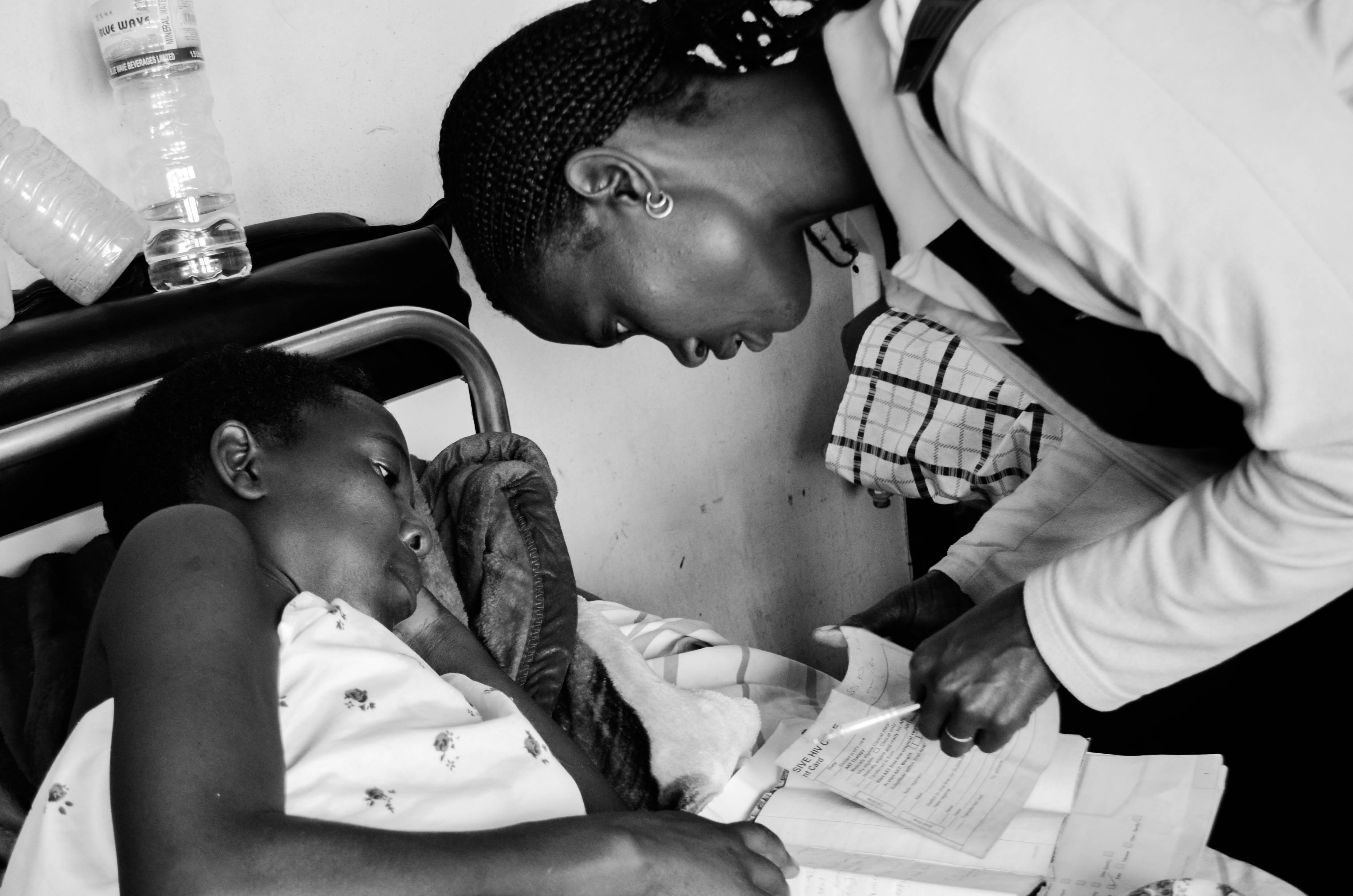
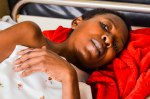
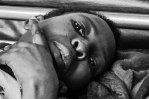
We push through some thick wooden swing doors on our left into a room that has one of the young patient we are there to visit as well half a dozen others. The patient we are visiting has terminal cancer and relies on the visits of the Hospice Africa team to bring oral morphine to help her with the considerable pain she would otherwise be in. My host from Hospice Africa Uganda goes straight to her bedside and lowers herself and her voice as she makes confident but kind eye contact with the patient. Speaking in the local language, Luganda, my host subconsciously runs her fingers over the shoulder of the patient as she speaks.

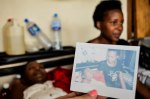
I am told that they ask how bad the patient’s pain is and decide that the current level of morphine is suitable. The sister of the patient, herself barely out of her teenage years, looks on with the juxtaposition of her own youth intermingled with the inevitable death that rests so close to her own, and her family’s, life. Looking as though she is unsure of her role in the nurse/patient dynamic that plays out in front of her the sister reconciles her position by just being physically close to her sister. Both protective and supportive she leans on the bed side throughout the consultation.

DSC_0039
Selfishly my thoughts drift as the Luganda speech drifts around me. I start to think about how if I was diagnosed with terminal cancer I would want to be free, bathed in natural light and surrounded by fresh air not stuck in a overcrowded hospital. Almost immediately I catch myself and realise how ridiculous this thought is – all across Uganda there are patients who are dying of cancer in natural sunlight, surrounded by fresh air with their families who are also in insufferable pain because they have no access to the medical support they need. The pain medication, oral morphine, which the hospice team was there to deliver is little more than an aspiration to most cancer patients in Uganda – let alone early diagnosis and treatment.

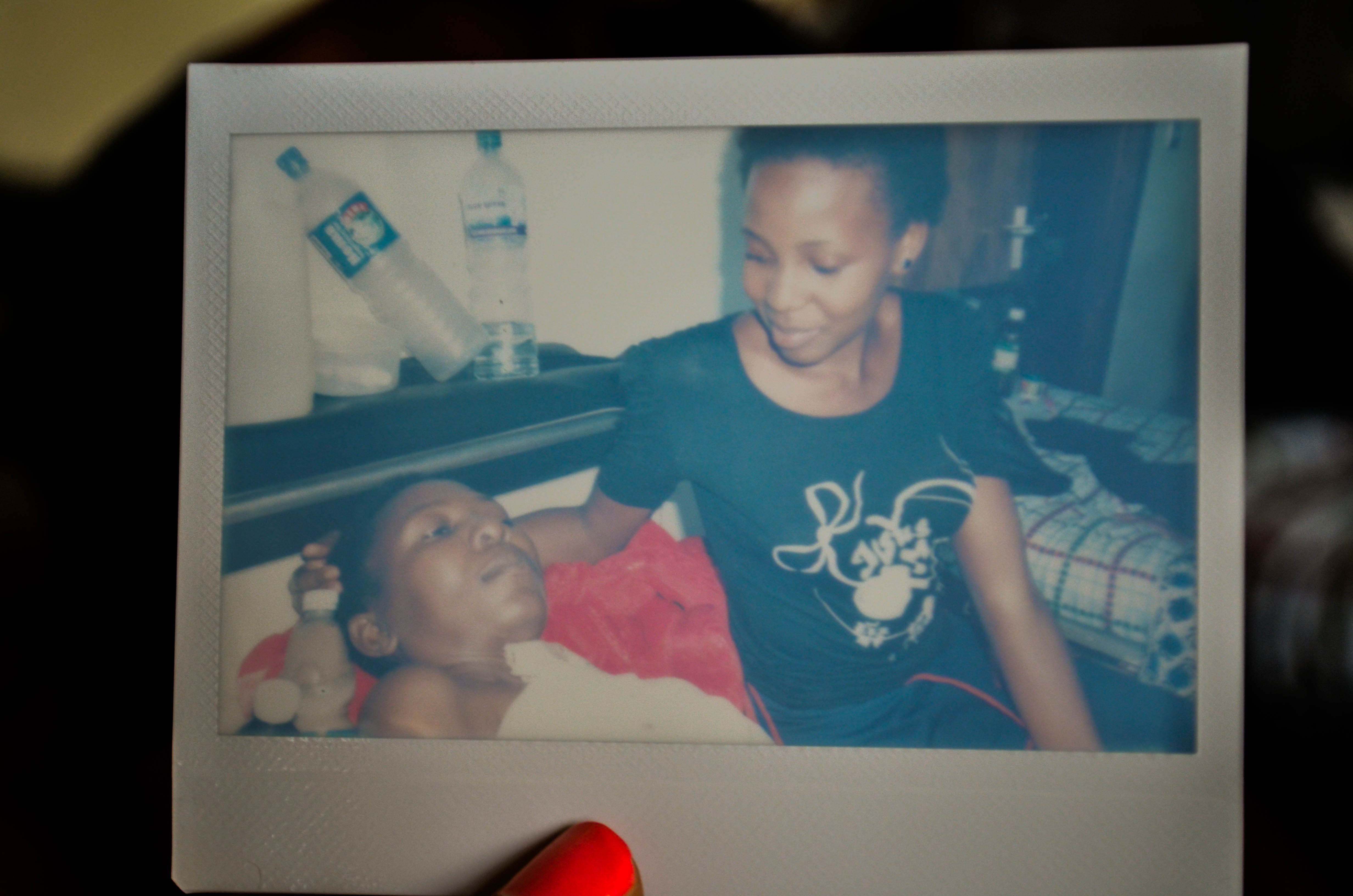
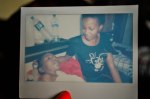
Just before we leave, a colleague from the US organisation ‘Treat the Pain’ asks if the patient would like a Polaroid picture with her sister. For the first time a flicker of excitement crosses the patient’s face and she shuffles a symbolic couple of centimetres up the bed for the photo. Together the two sisters sit with their heads pressed together watching as their own images slowly appears in the Polaroid picture.

As we stand to leave we collect up our belongings leaving nothing but the sister, the patient and the Polaroid picture behind.

Speaking later when we are far away from the cluttered dark corridors of Mulago I talk to my colleague from Treat the Pain and we both reflect on how the photo felt like a symbol of how little we could offer as non-medical staff in such situations. The stories we write, the advocacy we engage in, and people we interact with will hopefully change the lives of many more patients to come, but for that one girl and her sister we could offer nothing more than a Polaroid picture – it felt useless.

I know in both my heart and mind that it is important to record stories, to take down testimonies, to photograph suffering. I know it, but sometimes it is hard to feel it in the intensity of the personal suffering you have barged in on, especially when you can offer so little in return.

DSC_0080


Click to enlarge the photos.

1 Comment

Filed under Health, Uganda

4 year old who featured in Channel 4 documentary on palliative care has passed away

I have today written for ehospice about 4 year old Abdurahmane who featured on Channel 4’s ‘Unreported World’ documentary who has sadly passed away just a few days after the powerful documentary was shown. Like so many that heard his story I am really sad to have heard this news. I am writing now to encourage you to watch this Channel 4 documentary that looks at access to basic pain medications in Senegal.

Abdurahmane has passed away but I hope his death, as his life was, might be part of what brings about the change so desperately needed in many countries around the world – by no means just Senegal! 

unreported world

This is what I wrote for ehospice:

The life of 4 year old Abdurahmane touched the lives of millions. Abdurahmane had retinal cancer and featured on Channel 4’s ‘Unreported World’ documentary looking at shortages of pain medications across Africa and specifically in Abdurahmane’s home of Senegal.

At the time of filming the documentary he had been in the hospital for three months, receiving chemotherapy, which had shrunk the tumour in his eye.

Abdurahmane had also been one of the few people in Senegal to receive morphine to control the pain he was in. The documentary explained that when stocks are low, the hospital pharmacy gives children priority to the morphine. Sadly though, even in this specialist unit the stocks of morphine sometimes run out.

Human Rights Watch last year highlighted that the authorities in Senegal allow only a very small amount of morphine into the country each year. It is thought they import as little as just one kg, enough to treat about 200 cancer patients when there is demand for tens of thousands of patients in severe pain.

It was through the story of Abdurahmane though that this problem was highlighted to the millions of viewers around the world who would have by now watched the documentary.

It was with great sadness then that a few days after the programme first being shown we learnt of Abdurahmane death.

The award winning journalist Krishnan Guru-Murthy who met Abdurahmane and built up a relationship with him broke the sad news on twitter saying:

“Very sorry to say that 4 year old abdourahmane who we filmed about morphine shortages has died”

The impact that Abdurahmane had on the viewers was immediately obvious in the string of responses from memebers of the public.

It is hoped that Abdurahmane life and death will continue to inspire and will drive the change in Senegal that is so desperately needed.

More information:

You can watch the documentary for a limited period on the Channel 4 On Demand facility by clicking here.

Leave a comment

Filed under Health

Channel 4 looks at Africa’s scandalous shortage of pain medications

https://www.youtube.com/watch?v=LhiiIEa7Kl0&list=PLBKfErliSueNJ_4OE2_mUnjvVn5QhLnku&feature=share

“without the political will to change, vulnerable people remain deprived of humane treatment and an end to life free of pain.” 

This is the conclusion of the Channel 4 documentary, ‘Africa’s Drug Scandal’ that I helped to coordinate through my work – the African Palliative Care Association. The documentary is due to be broadcast on Channel 4 in the UK at 7:35pm on Friday 30th May 2014.

I am posting about it here because it strikes me as a rare opportunity to get a large number of people thinking about an issue that is incredibly important to me.

The documentary focuses in on the issue of access to pain medications – predominantly oral morphine. Having access to such medication is something that most people in the UK take for granted. If you were diagnosed with a life-threatening illness tomorrow you would assume that you would be given the appropriate pain control that would firstly enable you to live your life to the full but secondly, would enable you to die a peaceful death.

For the majority of people in the world this is simply not the case. Indeed, as ehospice reported last November, due to a lack of access to inexpensive and effective essential opioids more than 4 billion people, over half the world population, live in countries where regulatory barriers leave cancer patients suffering excruciating pain.

In countries like Senegal where the documentary is set the situation is dire. Last October Human Rights Watch found that the government only imports about one kilogram of morphine each year – enough to treat about 200 cancer patients when there is an estimated need in the tens of thousands of patients!

And so, this is one of the corner stones of my organisations work – to lobby, offer training, educate and empower people to ensure that everyone has access to the pain medications they need.

unreported world

It might seem like an abstract issue, but as Krishnan Guru-Murthy, the renowned Channel 4 reporter finds out, once you see a patient suffering in unbearable but perfectly treatable pain you instantly understand the importance of the issue.

Guru-Murthy concludes the situation amounts to “needless cruelty”.

I find it impossible to see how anyone, when faced with this reality could conclude anything different.

The programme can be watched live online here, on 4OD for 30 days after broadcast here, and you can read a preview in the Radio Times here.

Let me know what you think of it in the comments below.

Leave a comment

Filed under Health, Media

Watch the first of the Al Jazeera series on access to medical morphine

aljazeera011613I occasionally link here bits of my work with the African Palliative Care Association that I think could be interesting to a wider audience.

Here is a short Al Jazeera report on access to morphine in Uganda that I helped coordinate. It serves as a nice introduction to the subject that leaves millions suffering from perfectly preventable pain.

https://www.youtube.com/watch?v=mrRUwTj_EMY

The film was shown on repeat last week. On Thursday they had our Executive Director, Dr Emmanuel Luyirika, on to speak about the subject. You can watch the interview here:

In Uganda, a regional leader in terms of medical morphine availability, only one in ten people who need medical morphine have access to it!

For more information:

Help out:

At the moment millions of Africans suffer terrible pain because they don’t have access to really basic pain medication that many people in Europe take for granted. If you feel like I do that no-one should be left to die in pain then please consider:


1 Comment

Filed under Health, Uganda

On genocide, palliative care and enduring hope

Rwanda1
One of the many reasons I love my current job is because of the amazing people I get to interact with on a daily basis.

When working in palliative care you meet people who are being pushed both physically and emotionally and it never ceases to amaze me how people respond to these challenges with humour, courage and most of all, hope. This is true for both patients and medical practitioners.

Today I feel really honoured to have received an article from Dr Christian Ntizimira from Rwanda that marks International Holocaust Memorial Day by looking at the challenges to providing palliative care in a post genocide society.

If you accept my observation that death can push people in conventional circumstances to their limits both emotionally and physically then it is a small step to observe that genocide has the potential to rip both people and society to shreds.

But what sets Dr Christian’s article apart is not the description of how people’s lives were ripped apart and how millions were killed of displaced but how, in the aftermath of such suffering, Dr Christian has chosen to draw out a narrative of hope and courage.

If I was to draw one thing from this last year of working for the African Palliative Care Association – and more generally with palliative care practitioners – it is this optimism in the face of adversity.

Whatever happens, however bad, palliative care offers a simple framework to be able to help. I have seen this in the care patients receive right up to their last breath and Dr Christian powerfully illustrates this point in his article on genocide and palliative care.

You can read Dr Christian’s article visiting ehospice by clicking here >>>

Leave a comment

Filed under Health, Social comment

Millions in Africa do not have access to morphine and suffer unnecessary preventable pain

This article was originally published on Left Foot Forward, Britain’s No 1 left-wing blog

Palliative care

Palliation – literally, the removing of symptoms of life-limiting illnesses such as pain – has been brought sharply into focus in Africa due to the dual burden of an ageing population and an increased disease burden.

To give just one example, 70 per cent of people living with HIV worldwide live inside sub-Saharan Africa, a region which constitutes only 12 per cent of the global population.

Millions of these people in sub-Saharan Africa require palliative care to address the medical/physical, social psychological and spiritual challenges as a result of the life-limiting illnesses.

Despite the large demand, there is still little palliative care provision across much of Africa. Many countries do not have any element of palliative care: no hospices, no formal training for medical professionals, no or little integration of palliative care into national health systems and often little public awareness.

It is estimated that only 9 per cent of countries in Africa have palliative care integrated into mainstream health services.

One of the largest challenges facing pain relief efforts in Africa is the availability of, and access to, oral morphine. It is thought that Hospice Africa Uganda, a centre of excellence of palliative care in Uganda, can mix a three week supply for a patient for ‘less than a loaf of bread’.

Despite this, oral morphine is still not widely available to most Ugandans, let alone the rest of Africa.

Bernadette Basemera, a palliative care nurse based in Kampala, explains part of the problem:

“Morphine wrongly incites fear: Doctors wrongly fear patients becoming addicted, the police wrongly fear drug related crime, and members of the government fear falling short of international drug control frameworks.”

As a result of this fear, millions do not have access to morphine and suffer unnecessary preventable pain.

In recent years however, there have been signs that this might be a thing of the past. In the last two years alone four countries – Rwanda, Swaziland, Tanzania and Mozambique – have all adopted stand alone palliative care policies.

Although policy development does not immediately translate into oral morphine availability, a number of countries such as Kenya, Nigeria, Zambia, Namibia Ethiopia and a few others have improved access to oral morphine. Meanwhile Hospice Africa Uganda, in a partnership with the Ministry of Health of Uganda, continues to produce and distribute oral morphine whilst at the same time offering training courses to practitioners from all over Africa.

At the heart of these developments are passionate workers like Bernadette. Once again working late, Bernadette describes why she wants to work in palliative care, saying:

“Palliative care is the sort of care that you would hope you and everyone you care about receives. No one wants to think of a loved one suffering unnecessarily.”

Bernadette offers a simple motivation for her work in palliative care. This simple motivation, however, could benefit millions of Africans. Palliative care needs to be rolled out, and people like Bernadette might just be the way to make it happen.

1 Comment

Filed under Health, Uganda

Reflections from a palliative care conference

DSC_0286

Delegates at the joint APCA/HPCA palliative care conference

I have just returned from the African Palliative Care Association and Hospice Palliative Care Association of South Africa joint regional conference in Johannesburg, South Africa and I am inspired.

This was my first palliative care conference. A year ago I didn’t even know what these words even meant. Before the conference started I could have told you about palliative care and perhaps more importantly why it is important. I would quite possibly have waxed lyrical about it being everyone’s right to live a life free from preventable pain. I might even have told you about someone inspiring that I’ve met who has spoken about the importance of palliative care to them.

But, if I am being honest, before this conference I wouldn’t have really felt it.

Something in the way I think about palliative care has changed over the last few days though. Trying to put my finger on exactly what is difficult – so much has happened. It could have though been the moment when a Ugandan journalist who I was sharing a stage with let a single tear drop roll down her cheek as she talked about her Aunty being unable to access basic pain medication in her dying days.

It could also have been when a complete stranger, who I still don’t know the name of, approached me and talked to me about the burden of feeding her bed bound mother every day as she was too frail to feed herself and that the local hospital would not accept her because, so they said, “there was nothing wrong with her”.

It might even have been that unspoken moment when a delegate was asked if she had children and after a moment’s pause she responded that, she “used to”.

But of course it was a cocktail of this and more. It was spending 4 days in close confines with inspirational people who were dedicating their lives to ensuring as many people as possible experience the palliative care that they need.

People who had talked the Bush administration into setting up a fund for palliative care in their HIV response programme. People who had pioneered palliative care in Africa 2 decades ago and were still as passionate and articulate as they ever were. People who felt a guilt for attending a palliative care conference because it meant that they were away from their patients bedsides for just under a week.

The passion and empathy of so many of the delegates from around the world touched me in a way that I didn’t necessarily expect it would.

On the final evening of the conference there was a diner reception. As I was standing watching delegates dance, joke and chatter, I thought to myself that it felt just like a family reunion. There was a tacit acknowledgement that everyone understood, at least on some level, why everyone else was there. Just like a family is bound by the bond of blood so at this conference it felt like there was an unspoken bond in the knowledge of, and passion for, palliative care.

As with all families though, there also exists unspoken traumas that rest just beneath the surface. But standing watching delegates dance I reflected on what I felt to be the strength of this “palliative care family”. Palliative care gave each member the opportunity to be able to share these traumas that we all have with each other. Everyone was accepting and expecting to offer a ear when someone needed to talk about losing a patient, friend or loved one.

During one of the workshops Reverend Rick Bauer made a comment that stuck with me. He said, “When you are talking to a patient the most important thing you can do is be there 100% with them at that moment.” I think what made the atmosphere at this conference so special was that, almost without realising, delegates were 100% attentive to those around them and to others commitment to rolling out palliative care to all those who need it.

Leave a comment

Filed under Health

Peace and palliative care in the DRC

This article was first published on the Africa edition of ehospice

Dr Paul Pili Pili is a representative of the Democratic Republic of Congo’s Ministry of Health. But like many people from the DRC, he has been affected by the war, knows people who have died and more than anything, wishes for peace and stability for his country. Steve Hynd from the African Palliative Care Association met up him to find out more.

Leave a comment

Filed under Health, War

Photo essay – palliative care workers from francophone Africa

I am not a photographer, and would never claim to be. But these are photographs that I took of a few of the participants of the palliative care training course for francophone Africa that is currently being held at Hospice Africa Uganda. Some of these photos are published on the African edition of ehospice.

1 Comment

Filed under Health, Photography, Uganda

“You cannot be happy to see your dad suffering…”

This is an article that I wrote for the Africa edition of ehospice.


Mutagubya Bruno is the son of Lawrence Ssenyonde. Lawrence has cancer of the prostate and needs oral morphine to relieve his pain. Bruno recently talked to ehospice about what life is like caring for a family member in severe pain.

On the outskirts of Kampala, Mutagubya Bruno lives with his mother and father. A small alleyway leads to a neatly kept garden that is lined with palm trees and freshly hung clothes on a washing line. Bruno breaks the conversation he is having with his mother as a small delegation from Hospice Africa Uganda arrive through a side gate to their house.

In the living room, the three health care professionals sit in a line craning their necks to try and listen to Bruno’s father as he describes his pain. As Bruno’s father speaks, one of the nurses sorts through her case notes. She glances at the previous dosages of oral morphine Bruno’s father has received.

Throughout the conversation Bruno sits on the edge of a worn-out arm chair opposite his father looking on.

Read the full article here >> 

Leave a comment

Filed under Health, Interview, Media, Uganda

A visit to Hospice Africa Uganda

This is an article that I wrote for ‘ehospice‘ about my recent visit to a hospice in Kampala.

An incongruous collection of books sit on the shelves next to hand-made jewellery and other bits of bric-a-brac. I stand and flick through the books for a minute enjoying being out of the hot Kampala sun. As I rummage around looking for a bargain the shop assistant, Joy, begins to talk to me about her role at Hospice Africa Uganda.

Joy is one of a dedicated team of volunteers who make it possible for the hospice to carry on offering palliative care services to patients with Cancer and/or HIV/AIDS. Joy, a recently retired surgical nurse, is clearly someone who is driven by the need to help others. When I ask her why she gives up five days a week to help at the hospice she explains:

Read the full article here >>

2 Comments

Filed under Health, Human rights, Uganda

The pursuit of happiness

This is an article that I wrote for the Africa edition of ‘ehospice‘ on the overlap between happiness and palliative care. It marks the first ever International Day of Happiness:

“The pursuit of happiness is enshrined into the US Constitution, the subject of countless books and is now even being measured by governments. Policy makers and development agents are now recognising that ‘progress’ should be about increasing human happiness and wellbeing, not just growing the economy at all costs. In light of this, the UN today marks its first ever ‘International Day of Happiness’.

To read the full article click here >>>

Leave a comment

Filed under Health