Category Archives: Football

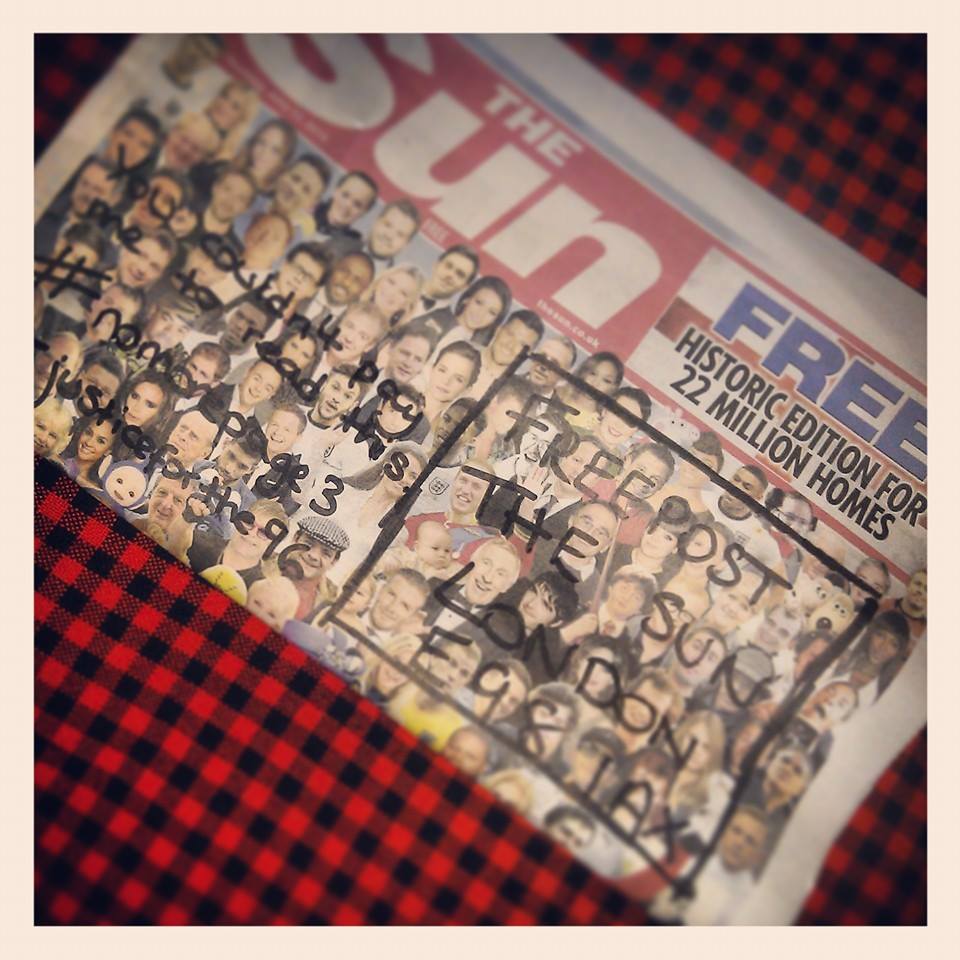
How and why to return today’s free copy of The Sun newspaper

justice
When you get your free copy of The Sun in the post today, you can return it to FREEPOST, The Sun, London E98 1AX.

My suggestion is to write “Justice for the 96” or “You dropped page 3 once, why not forever?” on the front. But I trust Hynd’s Blog readers to think of their own creative slogans as well (suggestions in the comments box below please!).

Let’s get creative and tell The Sun that we don’t want their divisive, misogynistic, lying newspaper in our front rooms.

UPDATE:

Love this from my friend Ellie:

Sun

Wow, the Labour Party has just been entered into the ‘what single tweet has made you most angry/disgusted/disappointed’ competition:

42 Comments

Filed under Football, Media

On Thomas Hitzlsperger, the FA and homophobia in football

hitzlsperger-1-540x304
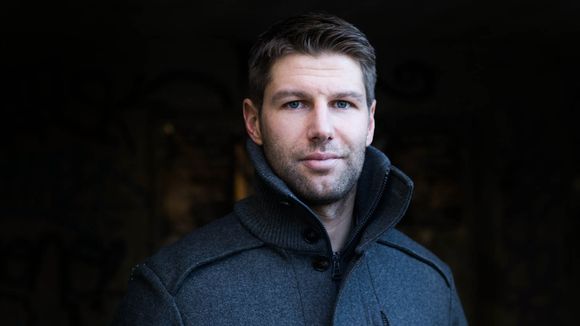
Thomas Hitzlsperger, the former Germany International and Everton footballer has today announced that he is homosexual in an interview with the German newspaper Die Zeit.

I have written before, most recently with diver Tom Daley as the case in point, about the importance of having men and women in the public eye being open and honest about their sexuality. I won’t rehash that article again here.

The point here is an additional one – the impact that Hitzlsperger’s decision may have on his former colleagues -including those in the FA.

In his interview Hitzlsperger stated that part of his reasoning of coming out was “to further the debate about homosexuality among sports professionals”. An admirable aim and a decision that I am sure will impact on players who are considering also coming out.

It is in this light that his decision will have immeasurable ripples – imagine if a current player no longer feels so isolated and decides to come out. Who knows how much of a game changer his decision might turn out to be.

The Premier League is watched and loved by millions all around the world, but it is still bereft of any openly gay footballer. To reiterate this – out of the 25 players in the 20 teams that play in the Premier League, not a single player is openly gay. 0 out of 500 players. This has held true (with varying squad sizes) for the entire history of top-flight football in the UK.

This then begs the question – why? Why has no playing professional ever been able to be open about their sexuality?

Hitzlsperger described the long “difficult process” of coming out. Something which the openly gay sports journalist Musa Okwonga talks more about here.

This process, even when surrounded by support, can be a challenging one. When surrounded by vitriol and hatred, the likes of which can too often be found in the stands, changing rooms and board rooms of British football, this process can transform into a goliath challenge.

It is interesting that Hitzlsperger specifically mentions in the interview that it is “it was not always easy to sit on a table with 20 young men and listen to jokes about gays”. A comment which hopefully all players will take on board.

But this homophobic banter is not just found in the dressing rooms.

One the hardest hitting sections from Graeme Le Saux’s autobiography was not the childish homophobic taunts Robbie Fowler through at him, the crowds obsessive jeering or even the referee’s despicable reaction of booking Le Saux for time wasting, but the FA’s inability to spot the real issue in the situation – institutionalised homophobia.

It is with a touch of irony then that Hitzlsperger’s announcement comes in the aftermath of the FA’s latest embarrassment – their equality adviser, who on national TV called gays ‘detestable’, resigning from his role.

Michael Johnson, the former Birmingham city defender was appointed to his role, one assumes, because of his stellar track record of tackling racism. It is a damning indictment that no one in the FA looked into his views on other pressing equality issues such as homophobia.

John Amaechi, the first former NBA player to come out in public in 2007, hit the nail on the head when he commented:

“the reason that homophobia, antisemitism, racism and other misogyny continue to blight football is that the FA does not understand how to tackle it. You don’t put one person to handle racism and a gay person for homophobia, you pick people who understand that all bigotry is the same monster.”

Today, hopefully, Hitzlsperger will have highlighted to the FA the need to act and to stop letting homophobia be what he referred to as “an ignored issue” in football.

1 Comment

Filed under Football, sexuality, Sport

Is “Death to Arabs” just another football chant?

This article was written for the Football Rascal blog.

“Mavet la ‘aravim” is Hebrew for “Death to Arabs” and is regularly chanted at football grounds throughout Israel. It was recently recorded being sung by some fans after a Beitar Jerusalem victory before the same fans turned on a couple of Palestinian men and attacked them.

A few days later an off duty Israeli soldier in Jerusalem approached me in the street and struck up a conversation about Israeli and European football. He was keen to talk to me about how Israeli football was developing on an international stage. The conversation soured slightly when I asked him what he thought about these ‘Death to Arabs’ chants. His first response hinted at a wider problem, “come on man, those fans are crazy”. He swiftly turned the conversation to why Benayoun was not starting for Arsenal and extolling the virtues of keeping him as captain of their national team.  I tried my luck and once more asked him why this one specific chant is so prolific. He responded bluntly, “Look, it is not nice but it is no worse than what is sung in football stadiums throughout Europe”. Sadly, I know this to be true.

The incident to which I refer was caught on video and shows a few hundred Beitar Jerusalem supporters singing loudly in a shopping mall before the incident escalates. It was reported inHaaretz that some of the fans started to spit at 3 Arab women who were with their children close by. Some men stepped in to help and chased the football fans away but were then turned on themselves and were severally beaten.

One shop owner described the assault saying, “They caught some of them and beat the hell out of them…They hurled people into shops, and smashed them against shop windows”.

The soldier, who asked not to be named, went on to argue that this sort of hatred was a reflection of ‘mindless soccer culture’ and does not represent the views of the majority of Israelis. Although I am sure that this statement holds an element of truth, it misses an undeniable fact that the discrimination that Palestinian Arabs face within Israel is systemic in its nature.

The Mossawa Centre summarizes the situation of Palestinian Arabs (who make up about 20% of the Israeli population) when they say, “the Arab Palestinian citizen of Israel faces direct and indirect discrimination in all aspects of political social and economic life”. In 2011 alone the Coalition against Racism [In Israel] reported that there were 35 pieces of discriminatory legislation in the Knesset, 60 cases of racism committed by elected representatives in Israel and 58 cases of racism committed by the Israeli Army.

The soldier’s assertion that we can write off football chants simply as a reflection of a moronic minority sadly holds a lot of weight in the UK as well as in Israel. Chants, however moronic, do not occur completely out of a social context though. When we hear disgusting racist, homophobic or even anti-Semitic chants on our terraces in the UK they are framed by an undeniable persistence of these problems in our society. The biggest mistake we can make is to pretend that we do not have these problems. Like an alcoholic, the nature of our problem has numbed our ability to spot the problem in itself. We have developed a culture that laughs off problems that when analysed in the cold light of day hold little humour. To acknowledge the nature and severity of the problem is to take our first steps to recovery.

In the UK racism is too often talked about in the past tense as something that John Barnes had to endure back in the ‘bad old days’ (if this season has taught us anything, it is that racism is still alive in British football). There is nothing special about the ‘type of discrimination’ you find inside football stadiums compared to ‘real life’.  The only thing that makes a stadium’s terrace unique is that it can shine a light on a problem which would otherwise lurk in the shadows of society. The sooner we face up to this reality the better.

In Israel we have seen a series of grass-roots initiatives to voice opposition the recent attack and disgraceful chanting. I would suggest however, that the real challenge for Israeli society is to acknowledge the severity of the underlying causes for such chants. The ‘Death to Arabs’ chant (as far as I am aware) is uniquely Israeli but how we tackle prejudice and hatred highlighted through football chants is a universal one. In Israel, I cannot swallow the argument that these chants were just ‘a small moronic minority’ of football supporters – it is clear that this prejudice sits much much deeper. Equally, in the UK I do not accept that we have ‘kicked racism out of football’ any more than we have out of our communities in general.

1 Comment

Filed under Football, Middle East

The universal language of Messi

This article was originally published on Tattooed Football.

In the dusty streets of Jayyus in the West Bank, the language that children use cuts through adult constructed divisions. The names of Abbas or Netanyahu are alien. What rolls off the lips of the children here are the names of Messi, Fabregas and Puyol.

Jayyus is a small farming community situated near the town of Qalqiliya in the West Bank. It has been devastated by the construction of the separation barrier (which is universally acknowledged to be illegal under international law). 75% of the village’s farmland is now on the wrong side of the barrier. Recently, the village has seen a number of Israeli Defence Force incursions that have resulted in a number of local boys arrested.

These events however are just distractions for the children from the more serious business of street football. The challenge is simple – who can get as close to mastering Messi’s majesty as possible. To this goal, the children spend hours trying to match his touch, skill and athleticism. There is one coffee shop in the village where every Barcelona game is watched religiously and you can see every detail being gulped down with enthusiasm. The attendance, dedication and passion given to this cause is unwavering.

In a situation so bleak, it is heartening to see children throw their enthusiasm into football. I am sure it is a more productive use of time than throwing stones at the IDF. Equally, in a time when football seems so personified by casual racists, materialists and playboys, I find it heartening to see Messi being held up as a role model.

Messi manages, both on and off the pitch to balance his enthusiasm with a calm composure.  Messi also represents the dream that every child holds onto. He was taken from his home in Argentina at the age of 13. It is said he was only 4 foot 7 inches when he signed for Barcelona. From this he has developed into undoubtedly the greatest footballer of a generation. Messi has gone from being a small shy boy playing street football to be earning and inspiring millions.

It is this romance that drives children all over the world. Messi provides each child with a chance to dream. Cut off from life chances, it is this hope that keeps children going. This hope is communicated through the language of Barcelona. Football connects the children on the streets of Jayyus to billions around the world. Whatever the language their government or the occupying government speaks – these children will always be fluent in the language of football. No one can take that away from them.

Steve Hynd is currently an EA with EAPPI and is living in Jayyus, West Bank.

1 Comment

Filed under Football, Human rights, Middle East, Sport, War

The day I was ashamed to be a Cheltenham Town fan

This article was published on the Tattooed Football blog.

We were 2-0 down. The collective voice had slipped out of our supporters. We were silent. Spurs fans responded in the only way they knew, to start mocking our silence. They finished with a collective ‘shhhhhhh’ to illustrate the resonating silence coming from us. What happened next shocked me. It shouldn’t have done, but it did. Someone behind me shouted in a thick West Country accent, ‘you’re not in gas chambers now!’

Read the full article here

2 Comments

Filed under Far-right politics, Football, Gloucestershire, Politics, Social comment, Sport