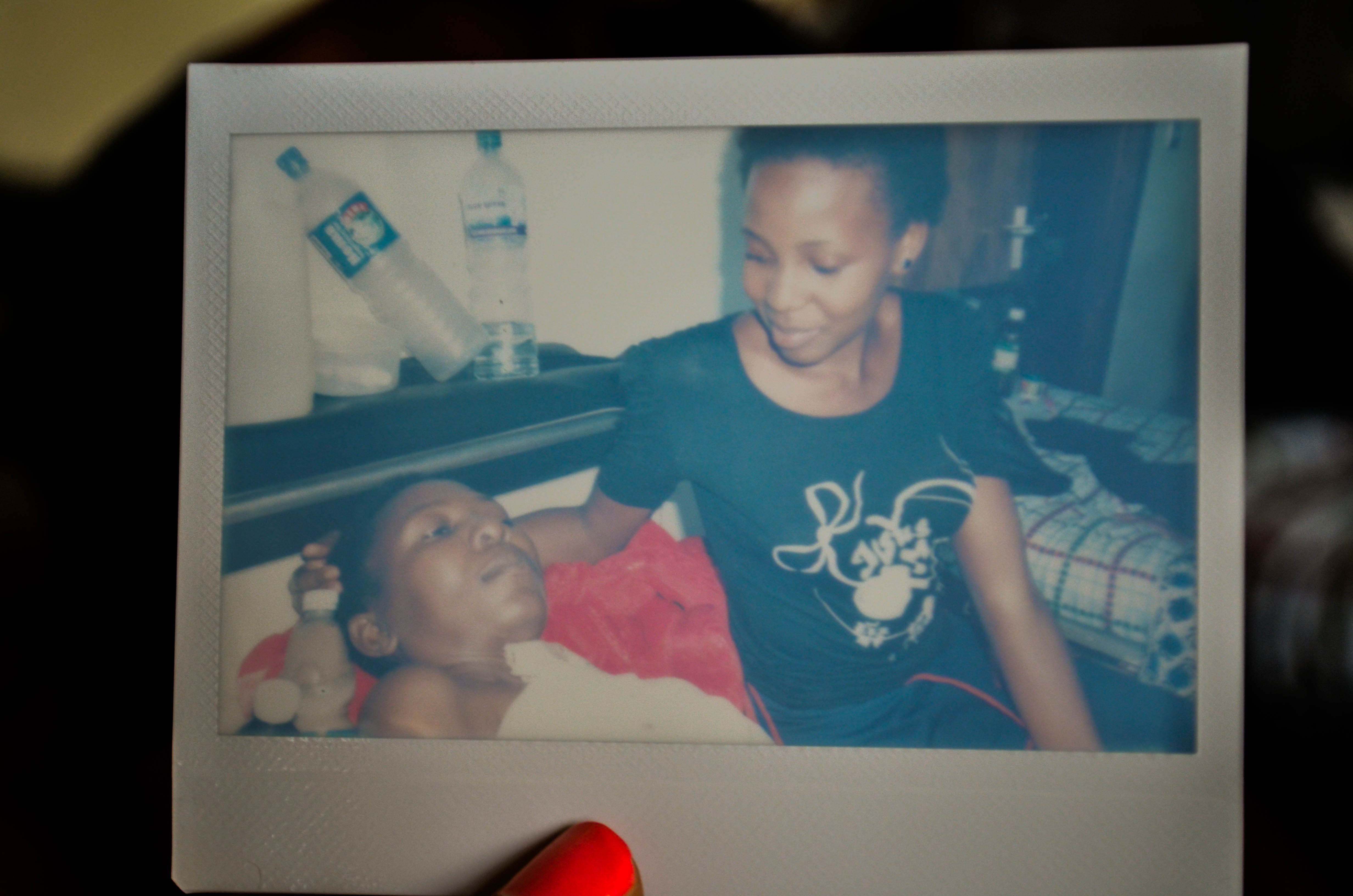
Introducing my baby boy – Arran Idris Hyndside. One week old today.

A quick photo blog to introduce you to my baby boy, Arran Idris Hyndside. Born last week through a planned c-section. These are a few snapshot photos. The first is a few seconds after his birth, the rest follow in rough chronological order. Needless to say, I am one proud Dad and feel really lucky to have so many incredible friends and family around who are supporting us with a seemingly never ending stream of love.

Mum, Dad, and baby boy are all doing well and enjoying this special time together.

*These photos can only be used with specific prior permission. If you’re interested in using them then please contact me.

3 Comments

Filed under Photography

Plynlimon – February 2017

A few photographs of walking up Plynlimon, the highest point of the Cambrian Mountains, in Mid-Wales with a few friends.

Winter-sun, snow and ice on top and no winds made it a perfect day to head to the hills.

For a suggested route click here. Click on any photograph to enlarge.

Please contact me about using photographs elsewhere.

Leave a comment

Filed under Outdoors, Photography

Reflections on my Mum’s advanced dementia

“Death is coming for us all…the day we will have to face the crossing will come sooner than we think. I hope my day is many many years away, but… I don’t want to make the greatest leap in life in a vague dream. I want to have the chance to look it in the eye, to say: ‘You have had me in your sights all your life, but it’s on my terms that I come.’” Hendri Coetzee – Living the Best Day Ever


Sitting across from each other on slightly uncomfortable wooden chairs in the care home I watch my Mum interact with one of the staff. The young girl lays her hand on my mum’s shoulder, raises the volume of her voice slightly and asks if “everything was alright dear” and if my Mum would “like any help?”.

My mum looks up at her and smiles with wide unfocused eyes. The staff member smiles back, hovers awkwardly for a moment trying to decipherer what this blank stare means before finally she walks over to another resident. As she makes her way over to a lady sat hunched in the corner I look back at my Mum and catch just the faintest flicker of a death stare from behind her eyes. It was an unmistakable reflection of something deep within her that these days only occasionally surfaces. Today this was a split second of a “fuck off am I your dear”.

Of course, I could have imagined it, I could have simply wanted to see a bit of her old self and so read too much into a distant stare. But, in that moment I think I saw my Mum: proud, wanting to help others – not wanting to waste people’s time in being helped, and ultimately using anger as a shield to hide away from all the insecurities and uncertainties of her life.

She focuses her eyes back on me, a second of surprise or alarm gives way to a meandering anecdote about the walk she believes she had taken that morning over Dartmoor. I ask if she saw any deer and she responds that she had, but only in the distance. This follows a second of silence and a drop in her eyebrows before she asks if I was OK to count? I promise her that I was more than happy to count to which she scoffs and says she doubts it. I once again miss the nuance of her reality.

Asking questions of dementia patients often only increases distress and confusion and so I try to steer the conversation back onto safe territory and say it was a beautiful crisp winters day outside. Her eyes look at me. One, two, three. Seconds pass with no response. I try a new path. I tell her that I recently spoke with her nephew, my cousin, and that he is happy and doing well. One, two, three. Eyes wide. No response. I try three of four times more and get little in response.

I decide not to push conversation. I sit with her in the weak winter sun surrounded by the stuffy air of the car home. Silence.

In the silence my mind jumps to memories at random. I think back to my mum cutting all the fire wood for the house by hand insisting that she was perfectly happy with her bow saw and no, she didn’t want me to come around with a chainsaw. I think back to her carrying heavy trestle tables out of the local scout hut as all the other mums stood and watched. I think about her slapping down any idea or suggestion that she might in anyway need any help.

With these thoughts in mind I smile at her thinking that I might get going soon. She doesn’t smile back. The staff member approaches and puts her hand on Mum’s shoulder and, just before Mum smiles up at her, she gives her a split second of that recognisable death state. The staff member either doesn’t notice or chooses not to.

The thing I feel saddest about when I leave is that Mum has so little capacity, so little control. Despite both the care home and my family doing all they can, we are no longer able to play by her rules and there is nothing we, or she, can do about it. She is left to be looked after by others. She is clearly being looked after well but they also clearly miss the very essence of her. I don’t think I am sad that she will pass away in the coming, weeks, months, or possibly years. I am just sad that it must be like this, not on her terms.


2 Comments

Filed under Health, Social comment

The simple satisfaction of cycling into work along the River Frome into Bristol

My daily commute follows the River Frome into the centre of Bristol. Or I should say, as close as the modern infrastructure built around the river allows. Every day I pass the same weir, the same log spanning from one bank to another, the same bridge where the river finally disappears below the concrete centre forever from sight.

There is a simple satisfaction in observing how the river responds to the weather and countryside that feeds it. After heavy rains the weir can almost disappear under surging dirty brown water washed from ploughed farmers’ fields. A few days of no rain later, and you will be left with a clear trickle struggling to make it down its shallow path.

On days like today, when the temperature drops below freezing, this slow flowing river begins to freeze over altogether leaving sheets of ice floating in the river’s eddies.

Wrapped in thick coats, scarves and hats, the red flushed faces look out as the dog walkers crunch over the frozen muddy puddles. On one section of path, just south of Broom Hill the puddles perpetually sit never normally fully draining. Today though, they are iced over leaving a crisp brown path slicing through the centre of a frost filled field. The small wooden picnic bench which normally sits opposite a small outcrop of limestone perfect for some climbing in warmer months is today frozen white.

About 2 kilometres north of the city centre the River Frome emerges from the steep valley in which it has been travelling and my commute cuts up through the open expanse of Eastville Park. In these winter months, the sun rises directly to my left, beaming gently through the historic horse chestnut trees that cast long shadows over the frozen ground.

As the river fights its way through the monstrosity of modern out of town shopping my route slips alongside the equally awful piece of urban engineering – the M32, the first real reminder that you’re heading into a major city centre. From here the river dips below concrete in places and the off-road cycle route weaves between skate parks, railway bridges and underpasses.

The embedded heat in the concrete on this stage of the commute means that despite the air temperature being close to minus 4, nothing is frozen. The concrete is grey, the grass green and the sky blue.

Nothing of the surroundings for the last bit of this commute gives any hint of the weather or countryside that surrounds the city. It is then that I feel a huge sense of privilege to have such a commute. Also though, I feel a sadness that for most people, even those whose daily commute is outside of their cars, most people in Bristol would not have seen the frozen field that I cycled through this morning.

As I arrive in the office buoyed by the beauty of the seasons, I can’t help but to wonder what impact it is having on us as a society for most of us to never fully experience or appreciate the changing of the weather, seasons and nature that will always sit beyond our control.

Leave a comment

Filed under Blogging, Bristol, Outdoors, Photography, Social comment

Walking in the South Lake District – November 2016

A few photographs from last weekend’s walking in the South Lake District mainly around Coniston area.

Click on any photo to enlarge.

Leave a comment

Filed under Outdoors, Photography

How you can help the unaccompanied child refugees in Calais

This slideshow requires JavaScript.

On our doorstep, just two dozen miles from the British coast, is a refugee camp that is being demolished leaving people in the most desperate conditions. There are hundreds of children in these camps, many of whom have a legal right to be in the UK. Due to feet dragging, legal technicalities and lack of political will, their temporary shelters are being demolished and they are being left exposed having to fight not just for their rights, but their very survival.

In the next week or two this camp will be fully demolished. Unless our government acts, unless we act, many of these accompanied children will more than likely just go missing and disappear. This happened before, it is likely to happen again. The thought of the exploitation they will likely face should this happen should be enough to inspire us all into action.

Last week I went with the MEP, Molly Scott Cato, who I work with and visited the camp and met with some of the refugees and volunteers. What I saw was the end result of an uncaring and uninterested government. It was simply awful. A policy to do nothing left vulnerable people with nothing. I saw no government representation, no officials offering support, only volunteers where government agencies should have been.

It is worth noting, that the refugee camp in Calais is not, and never was, actually a refugee camp but just a makeshift camp with refugees in. This distinction is important. The former implies order and support and the latter implies disorder and little sufficient support.

Our government’s limited response to this is in the last few days is shameful. At the last minute they generously offer to accept a fraction of the children they are obliged to support. Too little too late. For too long they have been focusing on building a hugely expensive “security wall”.  Perhaps a wall fits better with this governments fortress Britain mentality, but does little to support the children living in the camp. This whole time, rather than resorting too counterproductive Trump-esque style tactics, the British Government could have been registering the children identified to them by NGOs in the camps, to stop them risking their lives trying to get to the UK illegally.

We now face a ticking clock while the camp is demolished. To stop children disappearing, the UK government must step up and process all children with a legal right to be here. This is either through the Dublin III Regulation which entitles them to be reunited with family members living in the UK or under the Alf Dubs amendment which is supposed to bring the most vulnerable unaccompanied children in Europe to safety in the UK.

There are of course children there who don’t have a legal right to be in the UK and for some it may not be in their best interests to come here anyway. For those the UK government needs to be pushing the French authorities to do more in providing reception facilities to these children so they can go through the appropriate asylum process in France.

Whilst in the camp I heard reports of children being turned away by French authorities when they tried to register to claim asylum. Worse still, I also heard numerous reports of excessive use of violence from the French police. Volunteers talked to me about rubber bullets and tear gas being fired directly into groups leaving some minors with serious injuries.

History will judge our own and the French government’s actions and inaction poorly.

This government behaviour has, to some extent, been mitigated against by an army of volunteers that should be highly commended. Until government steps up to its legal and moral reasonability the goodwill of you, I and volunteers is all some have at the moment. If you have not already I urge you to write to your local MP urging government to act urgently. This cannot wait. There is a sample letter here but more powerfully, you can explain why this is important to you in your own words. Secondly, if you can afford to, please send phone credit to the refugees in the camps. This is crucial all the time but even more so during the up-coming demolition. Lastly, if you have time, volunteer either in the UK or the camps yourself.

This is a moral crisis. Primarily a crisis of government but one that touches on each of us. As Dr Seuss said, “Unless someone like you cares a whole awful lot, nothing is going to get better, it’s not.”

I doubt many in government have read Dr Seuss. But you have, so please act.


Leave a comment

Filed under Human rights, Hynd's Blog, Middle East, Photography, Politics, Social comment, War

Visiting the Lofoten Islands – Norway

lofoten

The Lofoten are arctic islands. They are dramatic in every respect. From the jagged mountains that stretch out of the impossibly blue seas, to the never setting sun, right through to the eye watering prices they ask for their locally crafted ales. Incredibly, everyone I meet on these islands seem oblivious to it all, quietly going out to their work which seems to be mainly farming or fishing.

Maybe because of the never setting sun, but these islands hold a timelessness. The islands support some of the oldest mountains in the world that stand as watchman over every day’s activities. Time ebbs and flows intertwined with just the occasional break for dried fish, homemade waffles or, I’m told, the alarming local specialty –lutefisk!

At any time in the never ending day you can glance up in any direction to see mountain peaks. Often they are lit with unworldly pinks and oranges as the sun roller-coasters through the sky dipping precariously close to the horizon before soaring back up to warm this unlikely mild arctic climate.

As you travel along single track roads every house you pass seems to hold the archetype of the Norwegian Grandmother with the smell of waffles wafting through the air by every open window. Step away and this sweetness sits in juxtaposition to the smell of the sea salt mixed with ever present the potent ever present fishing industry clustered around every port.

The coastline dominates both the industry here and the geography. Wherever you are on these small island it seems you’re always close enough to hear the sea perpetually lapping against the shores. The same back and forth that defined these islands for millions of years that offer a reassuring promise that they will do for a millennium to come.

With waffles seemingly cooked continuously and with the sun refusing to set, the need to distinguish between breakfast, lunch and dinner melts away like the soft, sweet brown cheese that melts into the hearts of the freshly cooked waffles. As a visitor, it’s hard not to melt into this routine of existing.

Despite all this, despite the magnificent mountains, despite the crashing sea that stretches out in every direction, despite the spectacular light that shines a warmth gently onto everything we do, despite all this, everyone I meet seems unaware of it. Or at least, only interested only in making sure we, the visitors, are well fed and enjoying our time here.

Dried fish and wet shores, a warm sun perpetually in a cold sky, such massive mountains on such a small series of islands. In a way this juxtaposition of life, land and beauty makes perfect sense. In many ways little seems to make much sense on Lofoten. The one thing you can say for sure though, is that everything on the Lofoten Islands is dramatic and that if you haven’t already, you should visit.

This slideshow requires JavaScript.

Leave a comment

Filed under Photography, Travel

I want my country’s confidence back

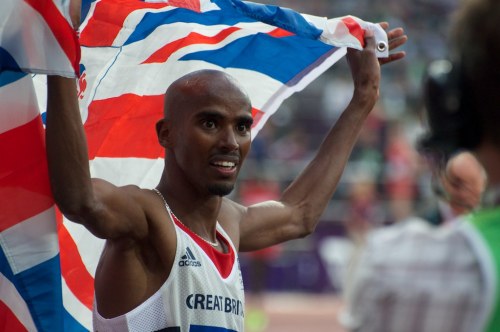
Mo Farah - Jon Connell Fickr

Picture by Jon Connell – Flickr

“I want my country back…”

This is the lazy rhetoric of the Leave campaign. I want my country back…from what, or to when, seem to be questions they are unable or unwilling to answer.

But I think I can though, so here goes.

More than anything I want my country back from the recent poisonous rhetoric of the Leave campaign. When did it become OK in this country to produce political videos depicting refugees as “vicious snakes”? At what point did it become OK to produce political videos that depict a women being raped by a political entity? At what point did it become OK to produce posters so dehumanising, degrading and despicable that they are compared to Nazi propaganda – by the Conservative Chancellor of the Exchequer?

I want this to stop. This isn’t the politics of a country that I am proud of. This is the politics of the gutter.

It hasn’t always been like this though. And that’s what I want my country to return to. Metaphorically speaking, I want my country back to that balmy summer of 2012 when the country came together around the Olympic Games to celebrate our role in the international community.

Do you remember it? Kids playing in the street, spontaneous acts of kindness, citizen ambassadors? I remember the image of Mo Farah flying the Union Jack and how it became a symbol of our nation: confident, energetic, multi-cultural, welcoming, high achieving.

After that incredible summer of the 2012 Olympic Games a study was done to explore what impact it had on our international standing. The results were clear, people from around the world saw us Brits as more “distinctive, daring, charming, energetic, trendy and authentic”.

The world came to us and we embraced them confident open arms.

Skip forward 4 years and we seem have retreated further into ourselves. Without the same confidence we have half-turned our back on our neighbours, arms crossed, protective.

So how do we get our country back to that outward looking, confident country we were all so proud to be part of?

I can tell you it is not going to come from either the mainstream Leave or Remain fear based campaigns. While the Leave camp are hell bent on dog whistling on immigration, the Remain record is stuck on the question of “what if” we leave.

I want to be asking a different question. I want to be asking what it is about the EU that has secured peace for decades, secured a higher quality of environment and worker protections. And, significantly, what was the role of the UK in that process?

When we start to dig deeper we can find a proud history. One that stretches from Churchill’s post-war vision to our leadership through the EU in tackling climate change, promoting human rights, and exporting democracy. A role in the UK plays in the EU that we can be really proud of.

This is what we must be focused on and, crucially, asking how can we look to build on these successes?

I will be voting Remain on Thursday not out of fear but because I want my country’s confidence back. I want us to reclaim that outward facing, confident and positive feeling that gripped us back in 2012. I want us to be leading not leaving the EU. I want us to remain a positive, confident, tolerant country.

1 Comment

Filed under EU politics, Politics, Social comment

In memory of Douglas Nicol – former Bath Councillor

Douglas Nicol was a man who greeted with back slaps, booming smiles and sparking eyes but it was the way he gifted the most subtle of kindness that I will remember him by.

I first met him when working for Don Foster MP in Bath and Douglas was a newly elected councillor. He was as hard working a councillor as he was insistent that I join him in the pub after a day’s work. It is a memory of one of these such occasions that resonates as my main memory of him and what I wanted to share now after hearing of his death.

We were walking through the centre of Bath towards the sort of pub you have to duck through the doorway to get into – all low ceilings and eccentric locals. We were going to meet some of Doug’s friends to watch the rugby and enjoy a few beers, perhaps two of the things he enjoyed the most.

Douglas knew me reasonably well by this point and he also knew that at this time I had less than little money. As we walked Doug stopped to get money from a cash machine and handed me a £20 note. I looked quizzically at the note and then him. With sparkling eyes he said it was so I could buy his mates the first round of beers. The only way he insisted, to introduce yourself to his friends.

Everyone, myself included, would have thought Douglas a top guy if he had gone to the bar and paid for a round for me. But this small act which was more about enabling friendships than anything else optimised his endless thoughtful and unassuming kindness.

This anecdote could have been pulled from hundreds of different examples of his kindness. Someone who didn’t spend enough time with Douglas (or someone who had spent too much time with him) might have missed these small acts, but they were littered into his day to day life, into his actions as a councillor and into the very way in which he approached people.

I am sure he will be missed by many. RIP mate.

Leave a comment

Filed under Bath, Politics

Be outraged! Manchester nightclub hosting ‘free midget’ night

Today I was alerted to the Restricted Growth Association’s Change.org petition calling on the Oxford Club in Manchester to reconsider its decision to host a ‘free midget night’.

I will copy here the reason I wrote for signing the petition so you know why it’s important to me.

“Everyday people with restricted growth get both physical and verbal abuse thrown at them. Part of why this happens is because of a culture that doesn’t value them but instead sees them as entertainment, a point of comedy, a thing for the rest of the world’s pleasure. It is in this mind-set that people think it acceptable to pick dwarfs up, to try and balance a pint of beer on their heads, or in this case, host a “midget night” in an entertainment venue.

Just imagine if those things happened to any other minority? There would be outrage…I am signing this petition because I think there both should be and needs to be outrage in the scenario, please also sign and share this petition.” Continue reading

Leave a comment

Filed under Politics, Social comment

The memory of ‘mischief’

MischiefI’d never buried a photo before. I was expecting it to feel awkward, odd even. Burying photographs was, in my mind at least, the past-time of the melodramatic.

But on this overcast autumnal Thursday morning it didn’t feel odd. It felt completely normal, completely natural, and as I found out, remarkably in common with others who have suffered the loss of miscarriage.

To understand how my wife and I got here I need to talk about a few months ago and the joyful surprise shock of finding out she was pregnant. It was certainly a surprise, but a very welcome one. The prospect of becoming first time parents is as exciting as it is utterly daunting. It is the sort of exciting that sits deep in your belly far away from the rationality of your mind.

Immediately however we were given words of caution. The pain in her gut we were told might be a sign of an ectopic pregnancy (we now think it was actually a symptom of endometriosis – a condition impacting around 2 million women in the UK alone and yet remains one of our societies many unspoken taboos).

There were however weeks, after which the possibility of an ectopic pregnancy was dismissed, where we could see a new life embedded into the womb, living, offering the promise of all that life could lay ahead of it.

There was one particular moment. A moment when my heart skipped a beat, when my life seemed to freeze for a second, when this gloop of cells that we had affectionately started referring to as ‘mischief’ showed a heartbeat, perhaps the most definitive sign of life. It is this moment that is both etched into my mind’s eye and also the one that is now printed on a piece of photographic paper decomposing in compost under an array of flowers.

As soon as we suspected a miscarriage was a possibility, my wife and I talked of a need we both felt to plant something, to grow something, to have something to mark this oh so sad possibility. At the time though I thought this was just us – something that said more about my wife and me than about the experience we were going through. It turns out however that this is remarkably common.

One of the wonderful staff at the hospital who talked to us with the patience and understanding that we needed gently dropped into conversation that decades earlier she had planted a tree. Her main reflection now is that she worries she wouldn’t be able to take it with her if she were ever to move house.

The hospital staff also gave us the compassionately crafted NHS literature on miscarriage which has a whole section on the prospect of burying something to mark the loss and that many also marked this by planting something nearby.

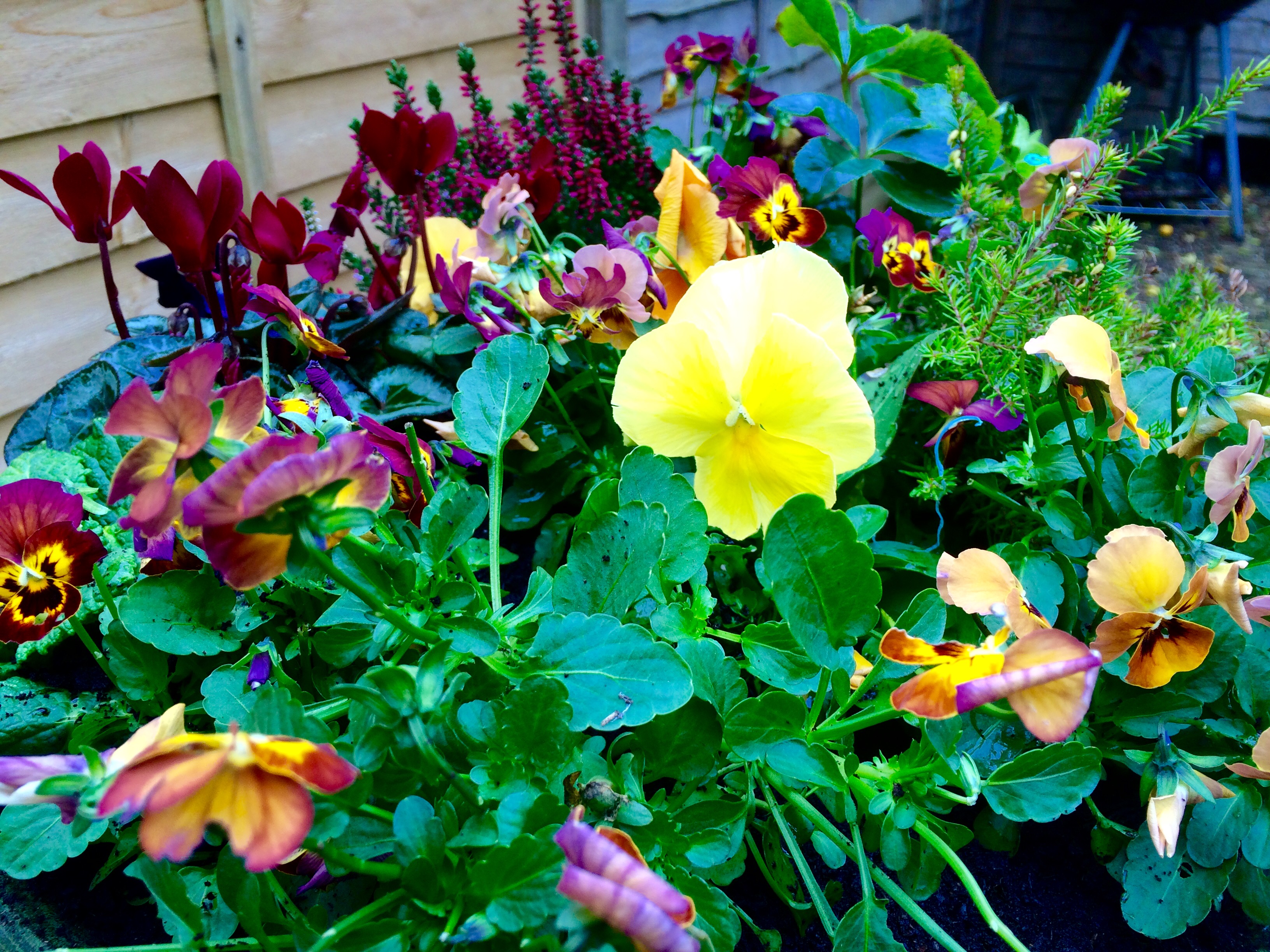
And so this is how we found ourselves folding a small photo of a gloop of mischief and placing it down into pot of moist compost. Mischief was measured in millimetres but sits with a magnitude hard to explain in our hearts. I can’t explain why but it feels right knowing that mischief is buried deep in moist compost surrounded by bulbs of snowdrops, daffodils and bluebells with a medley of late summer flowers sitting on top like a multi-coloured crown.

This is just my reflection of something that has happened to my wife and I, but one in four pregnancies end in miscarriage – which left me thinking how I had lived three decades of my life without hearing someone talk about it. I hope that if someone who has experienced a miscarriage reads this that they feel reassured that they are not alone.

9 Comments

Filed under Politics

The end

It had to come at some point. It just did.

I feel sadder than you can imagine writing this. But this is, for now at least, the end of Hynd’s Blog.

A couple of months ago I wrote about how I hoped to fit blogging into my new job and life back in the UK. It was an ambitious plan that I really wanted to make work because I have, in an odd sort of way, grown to really love this blog.

Sadly though, despite the optimism (something that I like to think optimises the last 5 years on this blog), despite the support from so many friends, family and complete strangers, despite the very best of intentions, I just have not been able to implement this plan.

A number of factors have forced me into this situation. There are two that spring to mind.

Firstly, not having enough time to research topics that are close to my heart has pushed my writing closer and closer to either the descriptive or the repetitive of others opinions. Descriptive and repetitive are two adjectives that act as nails to an analytical blog’s coffin.

Secondly, the metaphorical biting of my virtual tongue that I referred to in my previous post has, sadly, pushed the content on Hynd’s Blog closer and closer to the mundane. Again, not the best adjective to be associated with a blog.

A little about the second point:

I am no longer just having to worry about my own reputation – something that it is easy to be flippant about – but also one of an elected Mayor. Most civilised readers of this blog would find it hard to comprehend the level of sinister attacks some are willing to make against the Mayor. I have little doubt that some of those attacking him would happily do this through personally attacking his staff. It is the opposite of the old adage playing the ball not the player.

It has already got to a stage where not saying something online leads to quite unpleasant personal attacks.

In an effort to not fuel these trolls I realise that I have moved beyond the cautious and into the utterly mundane. With the odd exception, I have not written anything of any particular interest in the last few months.

For someone who is surrounded by inspiration, innovation and interest and who is driven by intrigue into it all, this realisation profoundly saddens me.

I cannot see this situation changing and so part of my decision to end Hynd’s Blog is based on a desire not to see it limp on for the coming months.

Looking back though, Hynd’s Blog is something that I remain profoundly proud of. It has dipped in an out of the top 100 influential UK political blogs, it been visited by hundreds of thousands of people and most of all, it has, on the rarest of occasions, succeeded in convincing people to change their minds on a given subject.

I am proud beyond words of what Hynd’s Blog has grown to be and I hope that at some point, it will have a future.

With all this in mind all is left to say is a huge thank you to you for coming along for the ride – it has been a blast!

Steve

PS – I plan to cross-post anything I publish elsewhere so stay signed up if you want to be notified of when I post these occasional articles!

10 Comments

Filed under Blogging, end of Hynd's Blog, Hynd's Blog

Tell Cameron and Obama to let Shaker Aamer home to his family

Shaker AI
If you, the wonderful reader of Hynd’s Blog, have a spare 30 seconds I would urge you to support an issue close to my heart. Click here to sign the Amnesty International petition calling for the release or trial of Shaker Aamer, the one remaining British resident in Guantanamo Bay.

The petition simply calls for Obama and Cameron to:

  • Secure the release of Shaker Aamer and return him to the UK without delay, if he is not to be charged and brought to fair trial
  • Give Shaker Aamer immediate and regular access to independent medical assessments and care
  • Immediately investigate all allegations that Shaker Aamer has been subjected to torture and other ill-treatment and ensure that anyone found responsible is brought to justice

I, alongside 12,860 people have already signed this petition. Please join us. Then please do also encourage friends and family to do the same.

Together we can raise a voice loud enough that will force the authorities to listen.

Leave a comment

Filed under Human rights, Politics

24 hours in the UK

slad
Last year when my plane touched down at Heathrow coming back from Uganda I was met with a wonderful scene to welcome me back to old blighty. Queuing to enter the terminal building, what the British do best, an elegant determined woman pushed to the front of queue – sacrilege! One chap next to me notices that I have clocked this queue jumping outrage and chips in with the comment, “fucking French huh”.

What a welcome back to the UK – baseless xenophobic queue based hatred all performed to the backdrop tinny Christmas carols under a smattering of drizzle!

This year I was a smidgen disappointed to find no Christmas carols on repeat but delighted to make it out of the airport without witnessing any casual racism.

Once back in the hills and valleys of the ‘West Country’ though I took little time to head out for a walk. Thinking that this is what made the UK amazing I walked with uncharacteristic clear skies and meek winter sunshine hitting the frost covered ground. I was in a buoyed mood striding across farmer’s fields and down hidden valleys following bubbling brooks.

This mood was lifted further though with what truly makes the Great Britain great. With every dog walker passed a friendly ‘good morning’ was chirped followed by a compulsive observation of the uncharacteristically good weather: “wonderful day for it” or “you couldn’t ask for a better day” before then swiftly apologising for their dog who would be eagerly sniffing my trouser legs.

These small interactions last less than a few seconds but make up an integral part of the DNA of British culture.

Warmed by the simple pleasant jollity of rural British life I stopped in the open fire warmth of a local pub – the Woolpack in Slad – where I had arranged to meet family.

Sat sipping local real ales on slightly uncomfortable wooden furniture (why is that both pubs and churches consider it a virtue to have furniture that in other walks of life would be considered completely unfit for purpose?) I watched dogs curl up on the floor close to their owner muddy wellington boots. With a low warm afternoon winter sun breaking through the window I sat back with family around me and listened to the impromptu piano/saxophone performance that only added to the ambiance.

Outside, after a hearty pub lunch, we strode up Swift’s Hill which enjoys some of the finest views in the region down over the Slad Valley across the market town of Stroud and out to the Severn Valley and across to the Black Mountains in Wales. A few clouds clung to the horizon to exaggerate the sunset as wonderful pinks and oranges were thrown over the fields and footpaths.

It felt like the weather was welcoming me back to the UK, giving me 24 hours of pleasure before it inevitably resumed in the monotony of drizzle that everyone seems to perpetually believe might stop at any moment but so rarely does.

Walking back over the fields I make a decision to call into another pub on the way home. Instead of live piano/saxophone renditions, this pub instead has the unmistakable sound of football coming from the TV screens. Excited to be able to watch my national sport with my fellow countrymen I step in and order my pint of warm frothing ale.

Looking for a place to sit I approach a stranger with the prerequisite of “excuse me, I am terribly sorry, but would you mind if I possibly took a seat” motioning towards one of five empty seats surrounding him. Smiling warmly the man looks up from his Daily Telegraph with impeccable replicable manners and says, “Please, it would be an honour”.

How wonderful is that – being told it would be an honour for me to sit next to him.

Buoyed by these little interactions I sit happily watching Arsenal score four goals with the return of their star striker – Giroud. In an unspoken acknowledgment I suggest to the man next to me through nothing more than eye contact that I was happy, that I was delighted to be back in the UK and that in that moment I could think of nothing I would rather be doing.

Responding to this the man next to me commented in a perfect middle England accent, “Typical isn’t it”. “What’s that?” I responded. “The fucking French keeping such an English institution like Arsenal afloat” he sneered.

Sigh.

Leave a comment

Filed under Gloucestershire, Social comment, Travel

Living the best day ever

This is a cross-post of an article that I wrote for the Africa edition of ehospice news reflecting on the lessons learnt from Hendri Coetzee’s book ‘Living the best day ever’. 

kadoma1
Palliative care, by definition, is both a science and an art form that involves accepting the reality of death. What you have left when you accept this is what the profession calls ‘preserving or improving the quality of life’.

Never before though, have I been challenged to re-examine the concept of ‘quality of life’ than when reading Hendri Coetzee’s book: ‘Living the best day ever’.

Hendri Coetzee was a South African living in Uganda perpetually searching for the best day ever. This search led him to become a legend throughout the extreme sports and exploration world.

In 2004 Hendri led the first ever complete descent of River Nile from source (Lake Victoria) to sea (the Mediterranean). The 4,160 mile trip took four and a half months and crossed two war zones.

Coetzee was also the first person to run the rapids above the Nile’s Murchison Falls, a section of river filled with some of the biggest white water in the world, and holding one of the highest concentrations of crocodiles and hippos.

He would go on to complete this section of river a further seven times and he remains the only person ever to run the section by himself. He also ran large sections of the upper and lower Congo River, walked 1000 miles along the Tanzanian coast and was the first person ever to snowboard the glaciers in the Ruwenzori Mountains.

In short, his résumé was one of the most impressive in the business.

It was not, however, his outlandish adventures that makes Coetzee’s book such a challenge for anyone to read, but his burning passion for life. Deep within all of his adventures was an intertwined journey to accept the fullness of life – to be able to appreciate it to its full. Only by understanding and ultimately accepting one’s death, Coetzee believed, can we truly experience a ‘quality of life’.

Speaking to some, and by no means all, palliative care patients I have come across a stillness – a deeper happiness – that I have rarely seen elsewhere. It is a happiness that comes fundamentally from within, a spiritual or psychological wellbeing.

Does this come from an acceptance of one’s own death?

Early on in the book, when undertaking the Murchison Falls section of white water, Coetzee writes: “In our society we avoid the thought of death as if recognition alone could trigger the event. Thinking about your own death is seen as a sign that mentally, all is not well. Some people live their entire lives with the sole purpose of minimising the chances of it occurring to them, instead of preparing for the inevitable. After avoiding the issue for so long, it is almost soothing to invite death on my terms.”

Reflecting on this, I wonder how many palliative care practitioners spend their professional hours encouraging patients to think about their deaths, to make preparations and to become comfortable with the idea whilst then perpetuating the myth in their own lives that life is infinite?

I only speak for myself when I write that I am too often guilty of this self-delusion.

To live a truly high ‘quality of life’ do we have to be comfortable with the idea of our death? I don’t know.

For Coetzee though, this acceptance was clearly linked to the life he chose to lead. Writing about his desire to keep going on clearly dangerous expeditions he wrote: “Psychoanalysts may diagnose a death wish, but missions like these enhance the appreciation of life. It is no coincidence that death and rebirth are related in all forms of religion and spirituality. When you accept that you are going to die, and it will be sooner than you think, it becomes impossible to merely go through the motions.”

Even the acceptance of my own inevitable death cannot push me to actions that so invite the prospect of death earlier than it otherwise would arrive. There is too much to live for to put my life on the line in search of living just that one day to the extreme – in the search for the best day ever.

That said, it is imperative for the palliative care community to understand the full spectrum of thought that exists out there. Just as there are people who are terrified of the concept of their own passing so there are people like Coetzee that can write the following words:

“Death is coming for us all…the day we will have to face the crossing will come sooner than we think. I hope my day is many many years away, but… I don’t want to make the greatest leap in life in a vague dream. I want to have the chance to look it in the eye, to say: ‘You have had me in your sights all your life, but it’s on my terms that I come.’ Tibetans believe that one can find enlightenment at the moment of your death, as long as you prepared yourself for it during life…I have had the best day ever more times than I remember. So yes, I believe I am ready to die if that is what is needed to live as I want to.”

Hendri Coetzee was pulled from his kayak by a crocodile deep inside the Democratic Republic of the Congo and his body was never recovered.

At the end of his last ever blog entry though, after completing a section of river that many assumed impossible to kayak, he wrote: “We stood precariously on a unknown slope deep in the heart of Africa, for once my mind and heart agreed, I would never live a better day.”

I have no idea if – when it came – Hendri Coetzee was prepared for his death. It is clear though, that he lived life to the full and died in way he had to have expected.

Not many of us can say that and for that alone ‘Living the best day ever’ is worth reading. I think we can all learn something from Hendri Coetzee approach to both life and death.

2 Comments

Filed under Health, Social comment, Travel, Uganda

Green Party membership surges past 25,000

On June 9th Hynd’s Blog reported how Green Party Membership was growing in a way that the other ‘bigger’ parties were not. At that time they had just over 17,000 members.

On September 17th Hynd’s Blog reported that Green Party membership had tripled between 2002 and 2014. At that time Green Party membership stood at about 18,500.

On the 3rd October Hynd’s Blog reported that Green Party membership was, for the first time in the party’s history, over 20,000.

Today, 11th November, Hynd’s Blog notes a tweet sent from Derek Wall (former Principle Speaker and now International spokesperson of the Greens):

This is, by anyone’s standards, quite an extraordinary growth in party membership. In their words:

In the last 2 weeks someone has joined the Green Party every 10 minutes”

ten-minutes-450x314
Hynd’s Blog is excited to see this growth in progressive political participation!

Leave a comment

Filed under Politics

70 years of mountaineering in Uganda

An edited version of this article was published in Saturday’s Daily Monitor – Uganda’s best selling independent newspaper. 

11615Summit Speke
As the late afternoon mist draws down the valley the spectacular peaks of the Rwenzori mountain range are left tantalising exposed, reaching high up into the bright warm sky. The image of snow packed glaciers glistening on rocky mountain tops so close to the equator is one of the many wonders of mountaineering in Uganda and is cherished by those lucky enough to witness it.

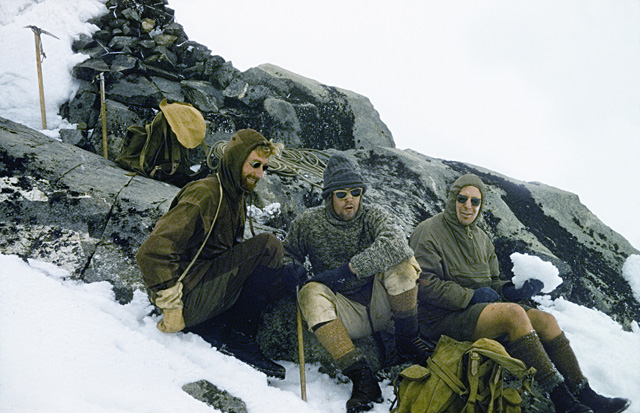
Standing atop these majestic snow covered peaks is an experience that only a few have managed and perhaps, due to melting glaciers, only a few more will have the chance to see. Many perceive these peaks as too cold, dangerous or difficult to reach, but since its inception in 1945 the Mountain Club of Uganda (MCU) has been accessing and documenting the foothills and the peaks of this magnificent mountain range.

Soon to celebrate its 70th birthday, the MCU has undertaken renewed efforts to expand the Club and to fulfil its core mission: to encourage everyone in Uganda to enjoy, explore and celebrate the outstanding natural beauty that Uganda has been blessed with. This inevitably includes the mountaineering jewel – the range of the Rwenzori Mountains, but goes beyond this to cover all areas of the country.

Charlie Langan, the current President of MCU, talks keenly of the diversity of mountaineering in Uganda, saying, “Although the Rwenzoris provide an impressive challenge for anyone, Uganda has so much more to offer. From the hills of Agoro in the north, to the spectacular peaks of the Virungas in the south west, from the crater lakes of Fort Portal in the west to the peaks of Kadam and Napak in the East, Uganda has something for any level of fitness, enthusiasm and experience. At MCU we are here to help people get out and enjoy the outdoors in this incredible country.”

The MCU was first founded in the Geography Room in another of Uganda’s long standing institutions, Makerere University in Kampala.  The Club was originally founded as the Uganda section of the East African Mountain Club by Rene Bere along with students and lecturers but soon developed into the ‘Mountain Club of Uganda’ – a name that it still proudly bears today.

Indeed, it was in these early years that the MCU laid down the foundations for mountaineering in the country. Deo Lubega, the Club’s Patron who has been active in MCU for over 25 years, reminds newer Club members that it was the MCU who between 1949 and 1958 built a circuit of six huts on the Rwenzori Mountains as well as a hut on Mount Elgon and on Mount Muhavura. At the time the Club was dominated by expatriates but very early on decided to offer training for interested Bakonjo porters to offer formal porterage services on the Rwenzoris as an alternative source of income.

As such in 1960 Timothy Bazarrabusa became the first Ugandan to climb Margherita peak, 5,109m above sea level – the highest point in the Rwenzori range and Uganda. Bazarabusa went on to become the President of MCU and later its Patron and a key advocate for mountaineering in Uganda.

In 1972 MCU Presidents Henry Osmaston and David Pasteur published the “Guide to the Rwenzori’s”- a definitive guide to the range and its history and peoples. Along with Andrew Stuart and James Lang-Brown, these were some of the key figures in the history of mountaineering in Uganda who have documented and explored the mountain areas of Uganda.

Since that time the Club has held a commendable but somewhat discontinuous existence, due to political instability and restricted access to the mountains due to civil unrest. Today, as the MCU turns 70 it continues to build on its proud history and to open its doors to members old and new.

Langan, the current MCU President, commented, “In the last few years the Club has grown from a handful of people interested in mountaineering to a vibrant and diverse community of people eager to enjoy the outdoors. We have spread beyond simply walking and climbing and now regularly kayak on the river Nile, mountain bike through forests and villages and of course, meet up regularly to socialise with like minded friends.”

This ethos of encouraging others to enjoy the outdoors has also driven the Club to try and document the potential for climbing, walking and other activities in Uganda. Just as the Club proudly published a ‘Guide to Rock Climbing’ in 1963, so the Club is today editing the final draft of an updated guide to encourage others with a sense of adventure to leave the comfort of Kampala to head out and explore the extraordinary outdoor environment that Uganda has to offer.

More information:

Web: www.mcu.ug
Facebook: www.facebook.com/groups/mountainclubofuganda
Regular events: http://www.mcu.ug/?page_id=19

This slideshow requires JavaScript.

2 Comments

Filed under Outdoors, Travel, Uganda

Out of hand…

My latest poem ‘Out of hand…’

It always started like this for him,
beer in hand, everything in hand,
a few mates just having a laugh,
a vodka chaser, another quick half.

On this night though he was seeing doubles,
a line of then lined up on the bar,
another tequila placed in his hand,
as this runaway night grew out of hand.

Like other nights that had gone before,
everyone out drinking knew the score,
everyone having a laugh and another line,
the same group of mates out for a good time.

On this night, time had slipped away fast,
as each drank what they said was their last,
before lighting a ciggie that burned bright red,
producing a light that leads from bar to bed,

The night tried to end with the kebab in hand,
everything in hand although a little unplanned,
a stumble sideways as he enjoys his last smoke,
before seeing he’s been joined by another bloke.

‘Give us a drag mate’. ‘Nah, you’re alight mate’.

And with that he sees the end game of the night…

…the inevitable fight.

As this big fuck squares up all he thinks is fuck it,
before his hand digs down deep into his pocket,
in those next moments it didn’t feel like taking a life,
any more than what he was holding felt like a knife.

Leave a comment

Filed under Spoken Word

Some reflections on learning to kayak on the River Nile

Paddling past 'The Bad Place' on the River Nile

Paddling past ‘The Bad Place’ on the River Nile

I have always loved the outdoors and growing up I occasionally ventured out onto the flat waters of the River Wye, close to my parent’s house in the UK, to do some paddling with my local scout group.

As much as enjoyed these ventures out into the pleasant surroundings of the Wye valley, kayaking remained for me a sport that failed to conjure the passion or excitement of other sports I loved in my teenage years such as mountaineering, football or skiing.

When I moved to Uganda then, it took me almost a whole year until I was persuaded by friends into trying my hand at white-water kayaking on the River Nile.

In retrospect my biggest regret is that I waited this long to try it. Equally though, it was far from love at first sight, or perhaps a more appropriate axiom, all plain sailing from the start.

Getting off the water at the end of the first lesson I knew that a seed had been planted that had the potential to grow into a real passion. I made a conscious choice, despite feeling apprehensive, to give this seed the best chance possible to grow and booked myself onto an additional four lessons with the kayak school ‘Kayak the Nile’.

At that stage, I can remember distinctly feeling that my enthusiasm for kayaking could go either way. As much as I enjoyed the adrenalin of kayaking my first rapid, I also remember a few hours earlier the less pleasurable spluttering for air as I first attempted an upside-down ‘t-rescue’.

Looking back on the last 10 months of padding, I can see though that it was as much the spluttering for air moments, the times I had to work hard, to persevere at practicing skills as it was the exciting splashing down rapids that have helped grow my initial excitement into a real passion.

The hours I spent alone in mate’s swimming pools practising, sometimes successfully and sometimes not, my flat-water role and the sense of achievement at now rolling in (quite) big white-water stands as just one illustration of this.

Unlike some friends that I see now out on the water I don’t feel like kayaking came naturally to me. It took me a bit longer than what I have observed to be ‘normal’ to start feeling relaxed out on the water and especially upside-down.

Even now, 10 months after starting this sport, I still feel panicked when I move into territories that are new to me. Just last weekend I went to surf a wave that was much larger than I was used to and this filled me with an apprehension that, at least in part, dictated how I kayaked on the wave.

It only seems fair at this point to give a virtual hat-tip to the instructors of ‘Kayak the Nile’ who seemed to instinctively know that when I said my goal was to ‘feel in control on the wave’ I was not just referring to the physical challenge of staying up-right but the psychological one of staying relaxed and confident.

Without the careful and consistent guidance of the instructors I am convinced that my seedling of passion planted on that first lesson could easily have been flushed away at any moment.

For as much as I am grateful to the instructors though it is an interesting reflection to note that learning to kayak is also a lot about learning to understand and control yourself. It is not just about taught new skills.

It might sound like an exaggeration to say kayaking teaches you to ‘learn about yourself’ but from a personal experience I can say that one of the most rewarding parts of learning to kayak has been the journey of learning to stay psychologically more in control (for I still don’t feel 100% in control) out on the water.

My passion for kayaking on the Nile though goes beyond all of this.

There is something really profoundly special about being about being on such a huge powerful expanse of water.

Out the Nile I feel something comparable to how I do in large mountain ranges. I feel a sense of my own size and vulnerability in the grand scheme of nature, I feel a sense of wonder at the amazing beauty that surrounds me and a sense of profound appreciation that I am lucky enough to have experienced it.

Even the experience of being near the Nile the night before feels magical. I love waking up after camping on the banks of Nile to see the strong sunlight breaking through the trees with the sort of intensity you only really get on the equator. I love lying in my tent hearing the powerful sound of the water in the rapids carving itself through the rocks in the Nile. I love the, admittedly quite hippy, idea that kayaking is about harnessing the amazing power of nature and working with it.

DSCN5090

Most of all though I think enjoy sharing this passion with people. I love seeing friends do their first lesson, first roll, or first trick on a wave. I love watching those with less experience than me and seeing them progress as much as I love watching those with far more experience than me and feeling that mixture of aspiration and dread about what I might, or might not, be able to achieve in the future.

When I move away from the paddler’s paradise of the River Nile I have no idea if this passion will stay with me but I do know that at this moment I really hope it does.

Leave a comment

Filed under Sport, Travel, Uganda

First ever self defense programme for people with Dwarfism launched

A good friend of mine and occasional contributor to Hynd’s Blog, Eugene Grant, has launched the first ever self-defence programme for people with dwarfism. This is a cross-post of his article that explains why he sees the need for such a self-defense course. 

Eugene-2

I don’t even remember where I was going. All I remember is looking to my left, distracted by a homeless man asking for change as I walked past. When I turned my head back to the front, a tall man – about 6’ 0” – was advancing aggressively in my direction, just a few feet away, his hands outstretched towards me.

I have Achondroplasia – one of the most common types of dwarfism. In 28 years, I’ve had stones thrown at my head; I’ve been chased by youths on mopeds; I’ve been grabbed and assaulted by strangers. I was frequently bullied at school. The list of instances in which I’ve been verbally abused or threatened is too long to include here.

Now, I make no assumption that my experiences are representative of other dwarfs. But I know I’m not alone.

Throughout my life, I’ve studied boxing, self-defense, and martial arts: Karate, Kick-boxing, Ninjitsu, and Tae-kwon-do, to name but a few. Growing up, these provided a valuable outlet for me as a frustrated and isolated young man, who struggled to deal positively with an environment that felt harsh and hostile towards me.

And yet, over time I realised that so many of these forms of self-defence were completely inapplicable for people with dwarfism. Even at 4’6” – hardly small for a dwarf – my hips are at the height of most people’s knees. I’m never going to get my leg up high enough to kick an attacker in the head – as you’re taught in Taekwondo. Nor, at 7 and a half stone, would I try to grab, trip, and throw him to the floor – as you might in Judo. Like most dwarfs, my arms are short – making boxing difficult (but not impossible…).

I realised that what people with dwarfism, people like me, really need is a self-defense system designed for our body types and the sorts of threats and assaults (being grabbed, picked up, bear hugged, and so on) which, sadly, some of face all too often in our daily lives.

And so SPD – Self-Protection for Dwarfs – was born.

Designed and developed by myself, under the expert guidance and instruction of  Urban Warriors Krav maga Chief Instructor Kelina Cowell, SPD is a unique, practical, and applicable form of self-defense for people with dwarfism. For us, by us; tailored to the modern day environment (not the battlefields of feudal Japan!).

dwarfism dwarf boxing martial arts krav magaOf course there’s a desperate need for us as a society to re-evaluate how we treat those who are different; to think critically about how a dearth of real representations of people with dwarfism – and indeed other disabilities too – in the media perpetuate prejudices and spread stereotypes.

But as Kelina herself has said before, the world will never rid itself of violence, abuse, and discrimination. That we also need to address structural problems like poverty and inequality, social immobility and educational disadvantage, shouldn’t stop us from locking our doors at night to prevent burglars and home invaders.

Urban Warriors Self Protection for Dwarfs is a serious step forwards to helping people with dwarfism be better prepared to look after and defend themselves in times of crisis; to learn new skills and grow as individuals and as a community; and to build our self-awareness, self-esteem, and self-confidence.

To me, that’s truly empowering.

All we have to do now is to spread the word, teach and train others, and watch the movement grow.

Interested? Want to know more? For more information about Urban Warriors Self Protection for Dwarfs, Please like the Urban Warriors SPD Facebook page, follow us on the Urban Warriors SPD Twitter page, or contact us urbanwarriorsspd at gmail.com

Leave a comment

Filed under Social comment