Tag Archives: Uganda

Some reflections on learning to kayak on the River Nile

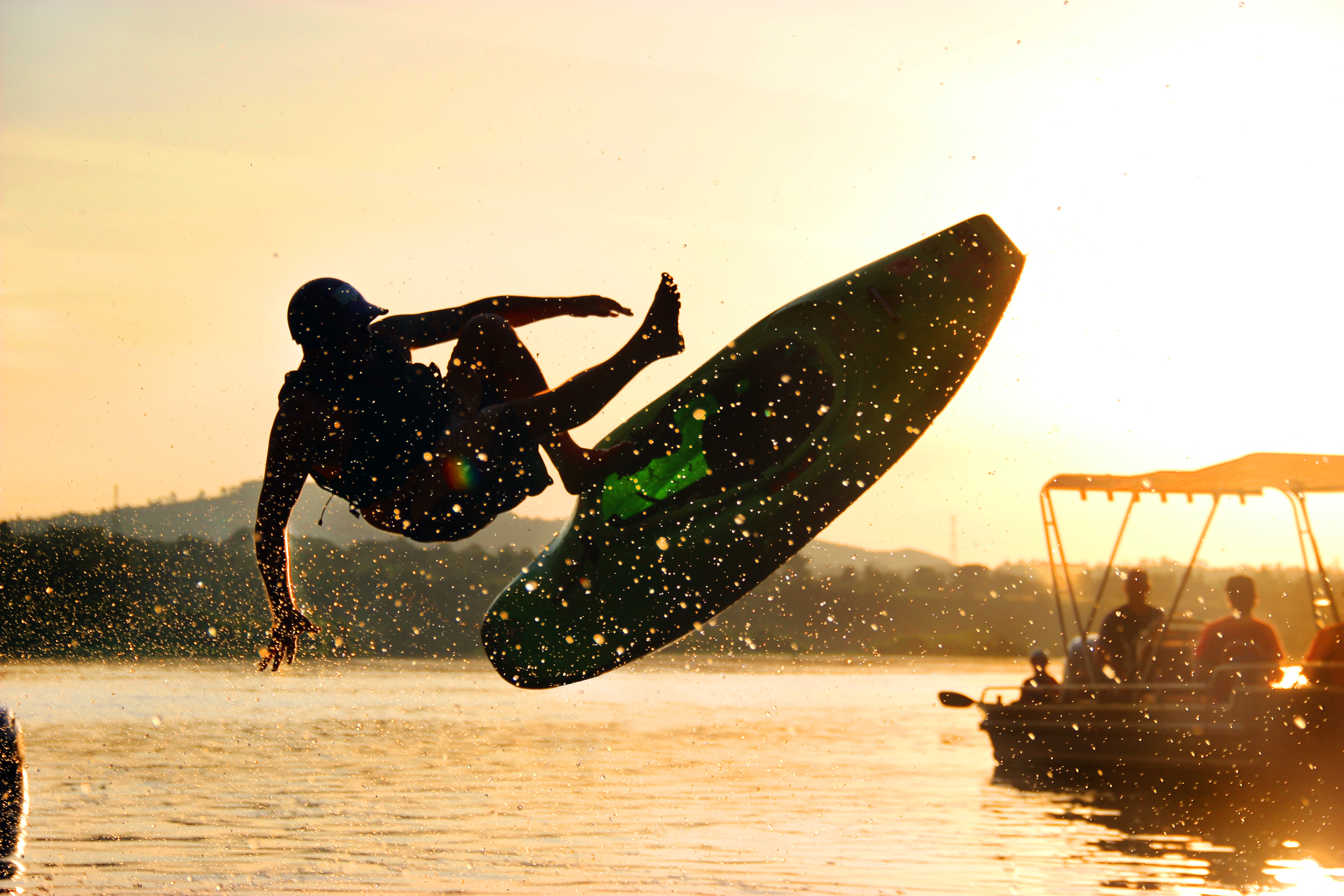
Paddling past 'The Bad Place' on the River Nile

Paddling past ‘The Bad Place’ on the River Nile

I have always loved the outdoors and growing up I occasionally ventured out onto the flat waters of the River Wye, close to my parent’s house in the UK, to do some paddling with my local scout group.

As much as enjoyed these ventures out into the pleasant surroundings of the Wye valley, kayaking remained for me a sport that failed to conjure the passion or excitement of other sports I loved in my teenage years such as mountaineering, football or skiing.

When I moved to Uganda then, it took me almost a whole year until I was persuaded by friends into trying my hand at white-water kayaking on the River Nile.

In retrospect my biggest regret is that I waited this long to try it. Equally though, it was far from love at first sight, or perhaps a more appropriate axiom, all plain sailing from the start.

Getting off the water at the end of the first lesson I knew that a seed had been planted that had the potential to grow into a real passion. I made a conscious choice, despite feeling apprehensive, to give this seed the best chance possible to grow and booked myself onto an additional four lessons with the kayak school ‘Kayak the Nile’.

At that stage, I can remember distinctly feeling that my enthusiasm for kayaking could go either way. As much as I enjoyed the adrenalin of kayaking my first rapid, I also remember a few hours earlier the less pleasurable spluttering for air as I first attempted an upside-down ‘t-rescue’.

Looking back on the last 10 months of padding, I can see though that it was as much the spluttering for air moments, the times I had to work hard, to persevere at practicing skills as it was the exciting splashing down rapids that have helped grow my initial excitement into a real passion.

The hours I spent alone in mate’s swimming pools practising, sometimes successfully and sometimes not, my flat-water role and the sense of achievement at now rolling in (quite) big white-water stands as just one illustration of this.

Unlike some friends that I see now out on the water I don’t feel like kayaking came naturally to me. It took me a bit longer than what I have observed to be ‘normal’ to start feeling relaxed out on the water and especially upside-down.

Even now, 10 months after starting this sport, I still feel panicked when I move into territories that are new to me. Just last weekend I went to surf a wave that was much larger than I was used to and this filled me with an apprehension that, at least in part, dictated how I kayaked on the wave.

It only seems fair at this point to give a virtual hat-tip to the instructors of ‘Kayak the Nile’ who seemed to instinctively know that when I said my goal was to ‘feel in control on the wave’ I was not just referring to the physical challenge of staying up-right but the psychological one of staying relaxed and confident.

Without the careful and consistent guidance of the instructors I am convinced that my seedling of passion planted on that first lesson could easily have been flushed away at any moment.

For as much as I am grateful to the instructors though it is an interesting reflection to note that learning to kayak is also a lot about learning to understand and control yourself. It is not just about taught new skills.

It might sound like an exaggeration to say kayaking teaches you to ‘learn about yourself’ but from a personal experience I can say that one of the most rewarding parts of learning to kayak has been the journey of learning to stay psychologically more in control (for I still don’t feel 100% in control) out on the water.

My passion for kayaking on the Nile though goes beyond all of this.

There is something really profoundly special about being about being on such a huge powerful expanse of water.

Out the Nile I feel something comparable to how I do in large mountain ranges. I feel a sense of my own size and vulnerability in the grand scheme of nature, I feel a sense of wonder at the amazing beauty that surrounds me and a sense of profound appreciation that I am lucky enough to have experienced it.

Even the experience of being near the Nile the night before feels magical. I love waking up after camping on the banks of Nile to see the strong sunlight breaking through the trees with the sort of intensity you only really get on the equator. I love lying in my tent hearing the powerful sound of the water in the rapids carving itself through the rocks in the Nile. I love the, admittedly quite hippy, idea that kayaking is about harnessing the amazing power of nature and working with it.

DSCN5090

Most of all though I think enjoy sharing this passion with people. I love seeing friends do their first lesson, first roll, or first trick on a wave. I love watching those with less experience than me and seeing them progress as much as I love watching those with far more experience than me and feeling that mixture of aspiration and dread about what I might, or might not, be able to achieve in the future.

When I move away from the paddler’s paradise of the River Nile I have no idea if this passion will stay with me but I do know that at this moment I really hope it does.

Leave a comment

Filed under Sport, Travel, Uganda

Why I will be running for the African Palliative Care Association

APCA_logo final_NEW STRAPIt is important to state from the start, I don’t like running and nor am I any good at it. You would be right then to comment that it seems just a smidgen odd to decide to run 21 kilometres, out of my own free will, however good a cause it is for.

Well let me assure you that it is for an exceptionally good cause. I am fundraising for the African Palliative Care Association (APCA). APCA has been my employer now for the last 18 months. I am not too proud to say though that when I started working for them I knew little about palliative care – let alone palliative care in Africa.

I guess I was a little naive but I never expected the raw reality that I was met with on day one of my job. Literally millions of people suffering the most debilitating of pain because they don’t even have access to basic elements of palliative care such as access to pain medication.

I started to grasp the magnitude of what this actually meant when I went with staff from Hospice Africa Uganda on home visits. I met patients and their family who benefited from having access to oral morphine and who had grappled back a sense of normality in their life.

I remember meeting Bruno on the outskirts of Kampala. I remember how he had said to me that “You cannot be happy to see your dad suffering”. But most of all, I remember how deeply sincere he was when he thanked the hospice staff for coming, for caring and for bringing his monthly does or oral morphine.

This realisation though of how important palliative care services are only truly sunk in when I met someone who, like most Ugandans, did not have access to this service.

That person asked me not to publish her name and I can understand why. She spent 6 months nursing her mother who died of cancer as the rest of the family refused to let her seek medical help because of the financial implications. She watched her mother everyday lie in bed unable to move because of the pain she was in. With tears in her eyes she said to me one of the most powerful sentences that I have ever heard: “When I die, I don’t want to go like that.”

This is what APCA campaigns for. To ensure that no-one in Africa dies without access to palliative care.

Over the last 18 months of working for APCA I have almost every day had a realisation of some sort. Sometimes it is still about how dire the situation is in many parts of Africa. Other times it is about these faceless numbers impact on people lives. But increasingly these realisations come through meeting the varied and wonderful volunteers and staff who working to change all this.

Because of a small band of committed people there are now policies, projects and pain killers popping up all over Africa. The staff and volunteers I have met have at times humbled me but more often than not, they have inspired me.

In South Africa the national association is supporting the training of traditional healers in palliative care. In Uganda they have been training journalists and editors. In Zambia they are engaging the HIV AIDS community. All people who used to see themselves as separate to palliative care all now working to ensure everyone has access to these services.

When the palliative care community reaches out – others cannot help but to respond seeking out what they can do, how they can contribute to helping to end this perfectly preventable humanitarian disaster of untreated pain.

It is a natural response that I too felt.

But what can I, as a non-medical professional, contribute? And that’s when it struck me that even if I was already over stretched professionally, I could always do something that anyone of us could do…run a half marathon to raise money and awareness for APCA’s work.

And so, not only do I want you, if you can afford to, donate to APCA through my ‘Just Giving’ page. I would also love you to help me raise awareness of palliative care in Africa. Can you share this article on facebook, visit APCA’s website, or share this video?

Together I know we can do this – there are already hundreds of talented wonderful people out there doing the most amazing work. It might not be obvious how you can help but believe me, just by reading this article you have taken your first step.

There is a long-way to go and my half-marathon is really just the first few steps but together we can make a real difference.

You don’t have to believe me, just go and listen to patients both with and without access to palliative care and you will soon see the difference it can make.

1 Comment

Filed under Health, Uganda

A visit to Mulago Hospital in Kampala, Uganda

DSC_0004
As we enter the long corridor a strip light overhead flickers for a final few seconds before finally joining some of the other lights in the corridor that have long since given up and now do little more than collect dust. The few remaining lights throw strange long shadows down the corridor next to the wheeled beds that rest head to toe along the side of the corridor. It reminds me of the Kampala traffic jam that stacks up outside the hospital in the choking city heat.

No natural light makes it into the corridor but somehow the faint smell of congested traffic makes it up onto the third floor of Mulago Hospital to intermingle with the smell of humans and disinfectant. Avoiding the few harsh strip lights that still work, patients lie either in the shadow of their own headboards or with their thin sheets pulled over their heads.

As I walk down the corridor I step carefully over the relatives, water bottles, half eaten meals and other day to day items that are dotted across the floor. The patients rely on relatives for not just company but also for a lot of the day to day care they need. The smell as you pass some patients makes it abundantly clear that some patients are not receiving the care they need.

I glance sideways making small talk with my eyes to some of the patients whilst trying to keep moving on and keeping up with the representative of Hospice Africa Uganda who I am shadowing. Dressed in the dark blue shirt with a golden collar that marks her out as a member of the palliative care team my host takes large confident strides that exposes her familiarity with the surroundings.  She doesn’t look down as she steps over brothers, books and broken bits and pieces. Instead she angles her thick note book that she is carrying towards the strip light above and looks over notes of the patients she is there to visit.

DSC_0064
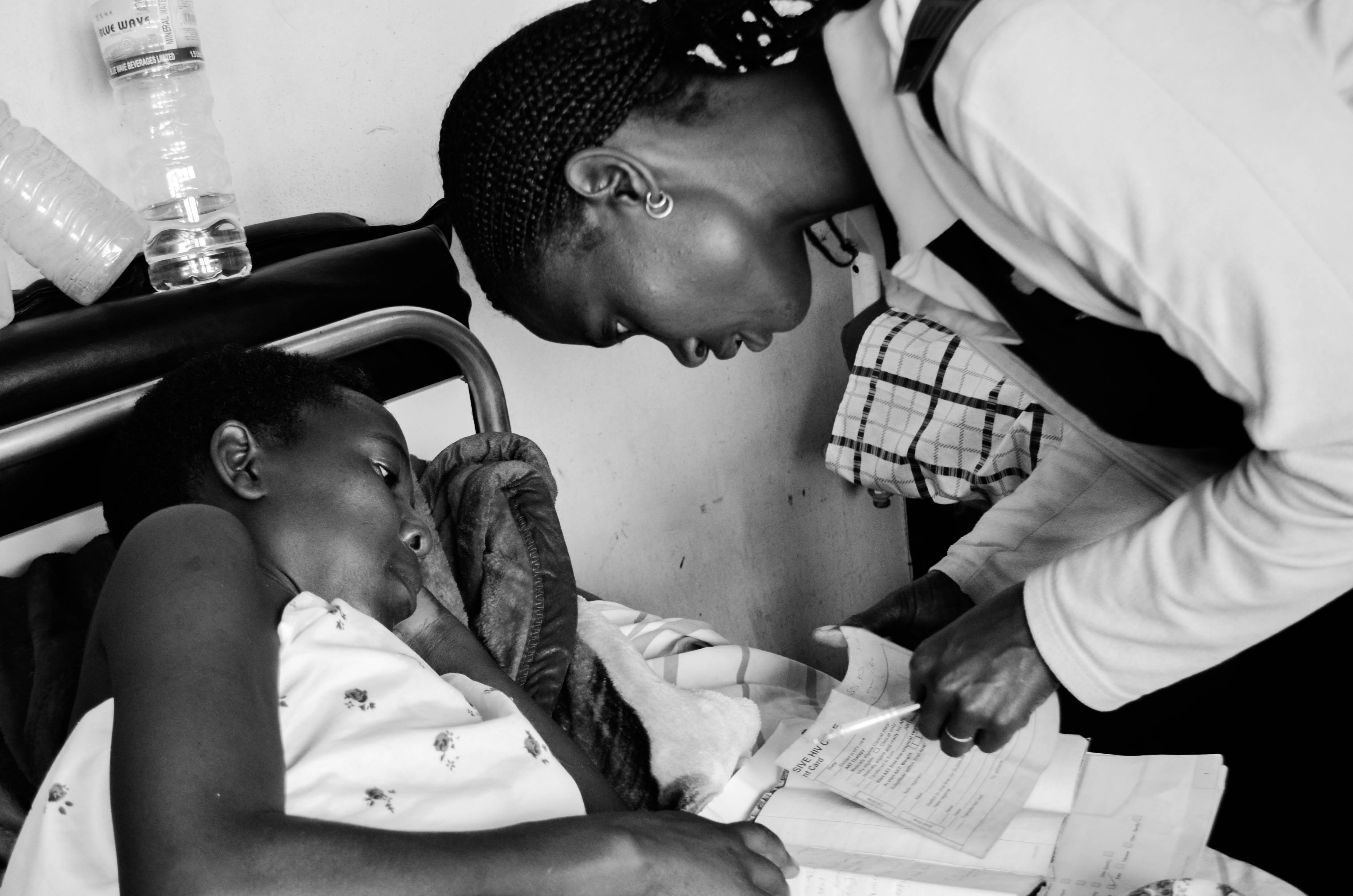
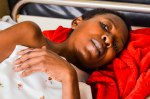
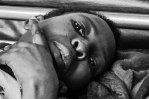
We push through some thick wooden swing doors on our left into a room that has one of the young patient we are there to visit as well half a dozen others. The patient we are visiting has terminal cancer and relies on the visits of the Hospice Africa team to bring oral morphine to help her with the considerable pain she would otherwise be in. My host from Hospice Africa Uganda goes straight to her bedside and lowers herself and her voice as she makes confident but kind eye contact with the patient. Speaking in the local language, Luganda, my host subconsciously runs her fingers over the shoulder of the patient as she speaks.

I am told that they ask how bad the patient’s pain is and decide that the current level of morphine is suitable. The sister of the patient, herself barely out of her teenage years, looks on with the juxtaposition of her own youth intermingled with the inevitable death that rests so close to her own, and her family’s, life. Looking as though she is unsure of her role in the nurse/patient dynamic that plays out in front of her the sister reconciles her position by just being physically close to her sister. Both protective and supportive she leans on the bed side throughout the consultation.

DSC_0039
Selfishly my thoughts drift as the Luganda speech drifts around me. I start to think about how if I was diagnosed with terminal cancer I would want to be free, bathed in natural light and surrounded by fresh air not stuck in a overcrowded hospital. Almost immediately I catch myself and realise how ridiculous this thought is – all across Uganda there are patients who are dying of cancer in natural sunlight, surrounded by fresh air with their families who are also in insufferable pain because they have no access to the medical support they need. The pain medication, oral morphine, which the hospice team was there to deliver is little more than an aspiration to most cancer patients in Uganda – let alone early diagnosis and treatment.

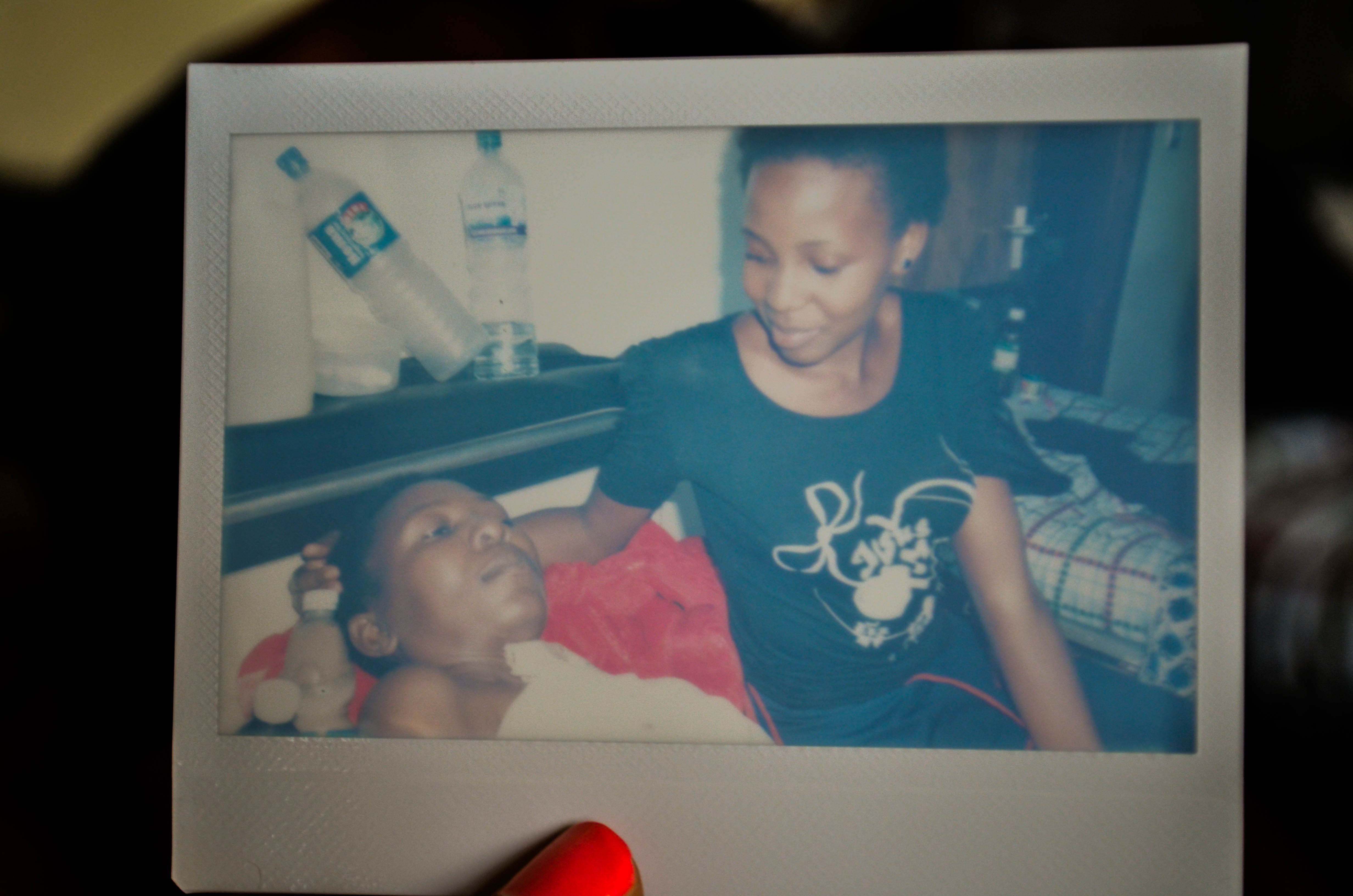
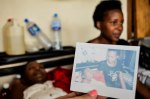
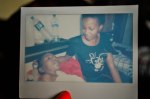
Just before we leave, a colleague from the US organisation ‘Treat the Pain’ asks if the patient would like a Polaroid picture with her sister. For the first time a flicker of excitement crosses the patient’s face and she shuffles a symbolic couple of centimetres up the bed for the photo. Together the two sisters sit with their heads pressed together watching as their own images slowly appears in the Polaroid picture.

As we stand to leave we collect up our belongings leaving nothing but the sister, the patient and the Polaroid picture behind.

Speaking later when we are far away from the cluttered dark corridors of Mulago I talk to my colleague from Treat the Pain and we both reflect on how the photo felt like a symbol of how little we could offer as non-medical staff in such situations. The stories we write, the advocacy we engage in, and people we interact with will hopefully change the lives of many more patients to come, but for that one girl and her sister we could offer nothing more than a Polaroid picture – it felt useless.

I know in both my heart and mind that it is important to record stories, to take down testimonies, to photograph suffering. I know it, but sometimes it is hard to feel it in the intensity of the personal suffering you have barged in on, especially when you can offer so little in return.

DSC_0080


Click to enlarge the photos.

1 Comment

Filed under Health, Uganda

Watch the first of the Al Jazeera series on access to medical morphine

aljazeera011613I occasionally link here bits of my work with the African Palliative Care Association that I think could be interesting to a wider audience.

Here is a short Al Jazeera report on access to morphine in Uganda that I helped coordinate. It serves as a nice introduction to the subject that leaves millions suffering from perfectly preventable pain.

https://www.youtube.com/watch?v=mrRUwTj_EMY

The film was shown on repeat last week. On Thursday they had our Executive Director, Dr Emmanuel Luyirika, on to speak about the subject. You can watch the interview here:

In Uganda, a regional leader in terms of medical morphine availability, only one in ten people who need medical morphine have access to it!

For more information:

Help out:

At the moment millions of Africans suffer terrible pain because they don’t have access to really basic pain medication that many people in Europe take for granted. If you feel like I do that no-one should be left to die in pain then please consider:


1 Comment

Filed under Health, Uganda

10 incredible pictures from the white-water kayaking Nile River Festival

1 by Alexey Dudkov
I wrote a short report for The Great Outdoors (TGO) magazine of the Nile River Festival 2014

Click here to read the article and to see the 10 incredible photos.


Leave a comment

Filed under Outdoors, Uganda

Millions in Africa do not have access to morphine and suffer unnecessary preventable pain

This article was originally published on Left Foot Forward, Britain’s No 1 left-wing blog

Palliative care

Palliation – literally, the removing of symptoms of life-limiting illnesses such as pain – has been brought sharply into focus in Africa due to the dual burden of an ageing population and an increased disease burden.

To give just one example, 70 per cent of people living with HIV worldwide live inside sub-Saharan Africa, a region which constitutes only 12 per cent of the global population.

Millions of these people in sub-Saharan Africa require palliative care to address the medical/physical, social psychological and spiritual challenges as a result of the life-limiting illnesses.

Despite the large demand, there is still little palliative care provision across much of Africa. Many countries do not have any element of palliative care: no hospices, no formal training for medical professionals, no or little integration of palliative care into national health systems and often little public awareness.

It is estimated that only 9 per cent of countries in Africa have palliative care integrated into mainstream health services.

One of the largest challenges facing pain relief efforts in Africa is the availability of, and access to, oral morphine. It is thought that Hospice Africa Uganda, a centre of excellence of palliative care in Uganda, can mix a three week supply for a patient for ‘less than a loaf of bread’.

Despite this, oral morphine is still not widely available to most Ugandans, let alone the rest of Africa.

Bernadette Basemera, a palliative care nurse based in Kampala, explains part of the problem:

“Morphine wrongly incites fear: Doctors wrongly fear patients becoming addicted, the police wrongly fear drug related crime, and members of the government fear falling short of international drug control frameworks.”

As a result of this fear, millions do not have access to morphine and suffer unnecessary preventable pain.

In recent years however, there have been signs that this might be a thing of the past. In the last two years alone four countries – Rwanda, Swaziland, Tanzania and Mozambique – have all adopted stand alone palliative care policies.

Although policy development does not immediately translate into oral morphine availability, a number of countries such as Kenya, Nigeria, Zambia, Namibia Ethiopia and a few others have improved access to oral morphine. Meanwhile Hospice Africa Uganda, in a partnership with the Ministry of Health of Uganda, continues to produce and distribute oral morphine whilst at the same time offering training courses to practitioners from all over Africa.

At the heart of these developments are passionate workers like Bernadette. Once again working late, Bernadette describes why she wants to work in palliative care, saying:

“Palliative care is the sort of care that you would hope you and everyone you care about receives. No one wants to think of a loved one suffering unnecessarily.”

Bernadette offers a simple motivation for her work in palliative care. This simple motivation, however, could benefit millions of Africans. Palliative care needs to be rolled out, and people like Bernadette might just be the way to make it happen.

1 Comment

Filed under Health, Uganda

Driving in Uganda – fun, but not always easy

Rachel (185)The windscreen started misting up as the sun finally disappeared over the horizon leaving the four of us in pitch darkness. Both the wheels on the right side of the car were in a foot deep ditch. The mud that surrounded the car was comparable only by the amount that was inside the car carried in by feet and hands after an unsuccessful attempt to dig and then push the car free from its ditch.

We were sat a few kilometres inside Kidepo National Park in the north-eastern corner of Uganda. Famed for its packs of lions, buffalo and hippos, we could have chosen better places to have got stuck after dark.

We could also have chosen worse though. We had just completed a 12 hour drive through the remote Karamoja region of Uganda from Sipi (in the very south east) up to Kideop (in the north east). The drive had been beautiful but also, at times, very remote. At least here in the national parks there was Uganda Wildlife Authority staff to help us out.

Over the phone:

“Hi, we are stuck in a ditch, could anyone come and pull us out?”

“Of course”

“Great, thanks. How long will you be?”

“Maybe 2 hours, we have to wait for the river to go down.”

“Oh”.

This was first we had heard of any river. Normally I wouldn’t have balked at a river crossing. Truth be told, I actually quite like them. The problem on this occasion was that the windscreen, after 12 hours a shudders and judders now moved about an inch to the left and right and, significantly, about 1/4 and inch back and forth.  Our short term solution, with the kind help of a chap that called himself a mechanic, was to stuff strips of cut up flipflops between the dashboard and the windscreen.

I can tell you now, this is/was a less than adequate solution. When splashed going through puddles, pools of water seeped in to the car. As such the foot wells were soaked.

In short I just wasn’t convinced about going through a river that needed to go down before anything (tractors/army trucks etc) could get through.

The water though remained a secondary concern to the immediate issue of being stuck in a ditch.

Helplessly we sat and waited out the 2 hours until Major Livingstone turned up with 15 soldiers and pulled us free from the ditch. As we departed we asked about the river. Their response:

“There is nothing to worry about, there is no river. Just go straight.”

So, we ventured on through the thick mud. In about 700 meters, we came to a river that in our headlights looked alarmingly fast flowing and had downstream from the crossing a meter or so high waterfall.

Again on the phone:

“We’ve reached the river”

“Don’t cross it”

“We weren’t going to”

“I will get the tractor to pull you through”

“Thanks”

Half an hour later and the tractor turned up. 10 minutes later but over 15 hours from the start of our drive we arrived at the campsite.

The next few days were filled with wonderful safari drives around the park. Lions were spotted and generally a good time was had by all…that was…until…we got a puncture.

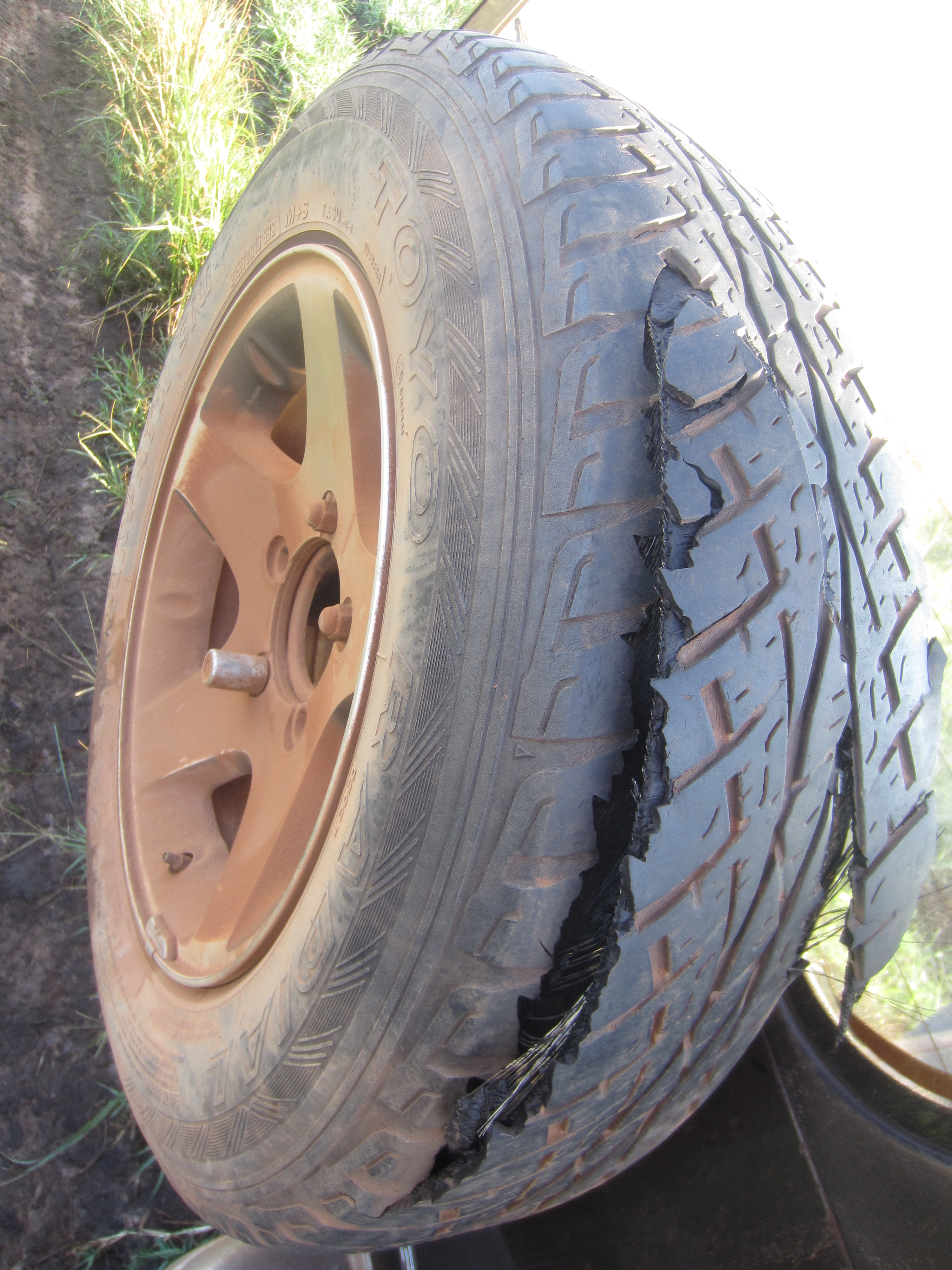
Of course, a puncture is a bit of a regular occurrence driving in Uganda and so, eager to be all manly, I jumped out of the car to change the wheel. I pulled the spare wheel cover off to be met with, not the spare that I had checked just weeks before, but a blown out a tyre.

The only explanation I can think of is that someone must have swapped it at a garage when we weren’t looking. As a swore under my breath it was pointed out that a second hand spare tyre might fetch you about 125,000 UGX (just under £30),or to put into context, about half the average primary school teacher’s wage.

So, back on the phone:

“Hi, yeah. It’s us again.”

“Hello”

“We have a flat tyre”

“Sorry”

“And our spare tyre has been swapped for a bad tyre”

“Sorry”

“Can you help?”

“We will send someone”.

Two hours later, some very friendly UWA officials did turn up and then drove us an hour outside of the national park to the nearest trading centre (to the untrained eye it might have just been a small village but we were assured it is a trading centre).

Half an hour and 15,000 UGX (£3.50) later our tyre was fixed and back with us.

As the UWA staff left us, they departed with eternal advice:

“Please try to not get stuck again”

Exploring Uganda is incredible fun and it holds a variety and depth of beauty unmatched by anywhere I have travelled but, and this is a big but, it is not always easy.

Leave a comment

Filed under Travel, Uganda

My love affair with Kampala

I am on an elongated honeymoon with city in which I live, Kampala. A rational mind living in this city would see the congestion, the number of motorbike accidents, and the levels of petty theft, but the mind of a lover is anything but rational.

My mind sees green hills, standing pert overlooking the beating heart of the city centre. It sees the taxi buses that serve as the blood flow of the city, bringing life to each of its extremities.  It sees the millions of people swarming through this landscape, each like an atom of the body, for a limited period, an inseparable part of this wider being – Kampala.

The irrationality of my mind was brought into focus a few days ago when I was walking back from work over one of Kampala’s hills. On this occasion the weather was close and heavy. It had been raining most of the day and it felt like there was more to come.

On this day, a thick mist was rising from the sodden ground and dancing in the air with the heavy low clouds. Walking through this was like entering a steam room as the thick air stuck to the inside of my lungs.

For most in Kampala, their thoughts in these few minutes were on finding shelter before once again the heavens opened. My mind though, was caught in that moment, enjoying it, literally breathing it in.

I stopped and stood, just for a few seconds, and watched the moisture lift from the ground and glide through the overhanging tree branches. Through the mist I caught glimpses of other houses and people making preparations for the inevitable downpour. But for those few seconds, it felt like I was alone in the city.

The air of Kampala was slipping into me, dissolving the distinction between the two of us, for a few seconds making us one.

Of course the sky then opened dropping heavy thunderous balls of rain. Every other resident was dry under shelter as I was striding through the streets with thick red mud clinging to my feet.

Somehow though, I didn’t mind, I still enjoyed it.

As with every honeymoon, I know this will all end. I know there will be a day where I will be walking the streets and feel my wallet slip from my pocket as the sun burns that bit harder onto the back of my neck  and I will long for nothing more than the soft comforting embrace of the temperate valleys from which I am from.

But that day is not here yet and so, just like every other lover around the world, I will continue forwarded, blinkered by the beauty of all that sits around me appreciating it to its fullest.

1 Comment

Filed under Travel, Uganda

Time travelling in Uganda

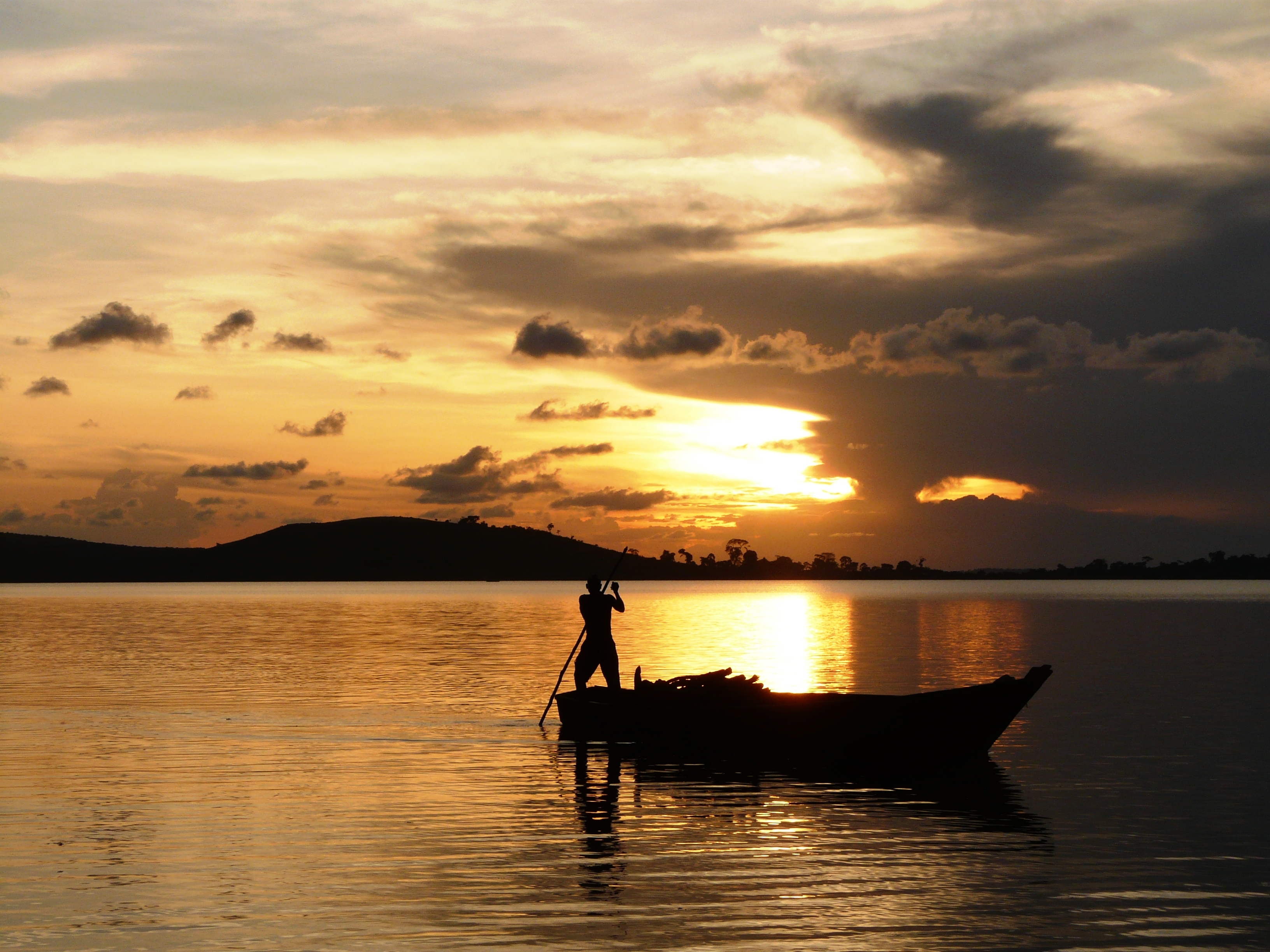
Ssese 1There is a generation for whom Goa (circa 1990s) holds a certain reverence – a timeless perception of freedom. The sight of bronzed bodies tattooed with Indian gods bouncing in near hypnotic ecstasy on Goa’s beaches is an image that is engrained onto a generations psyche.

These days are gone though. Today Goa has replaced the hallucinogenics for chilled beers and cocktails. And it is not just the mind altering substances that have changed. So too has the music and perhaps more importantly – the ethos.

The freedom of Goa (circa 1990s) is gone and it is a fool’s game to try and replicate it. It was with hesitance then that I walked into the Hornbill Campsite on the Ssese Islands in Lake Victoria, and my first thought was ‘Goa’.

On first impression, the ‘Goa ethos’ seems alive and well in this run down beachfront campsite.

The German owner sits in a string hammock, his grey hair pulled back into a lose ponytail. He wears ripped jeans and a t-shirt that proclaims the divine nature of cannabis and looks very, well…’Goa’.

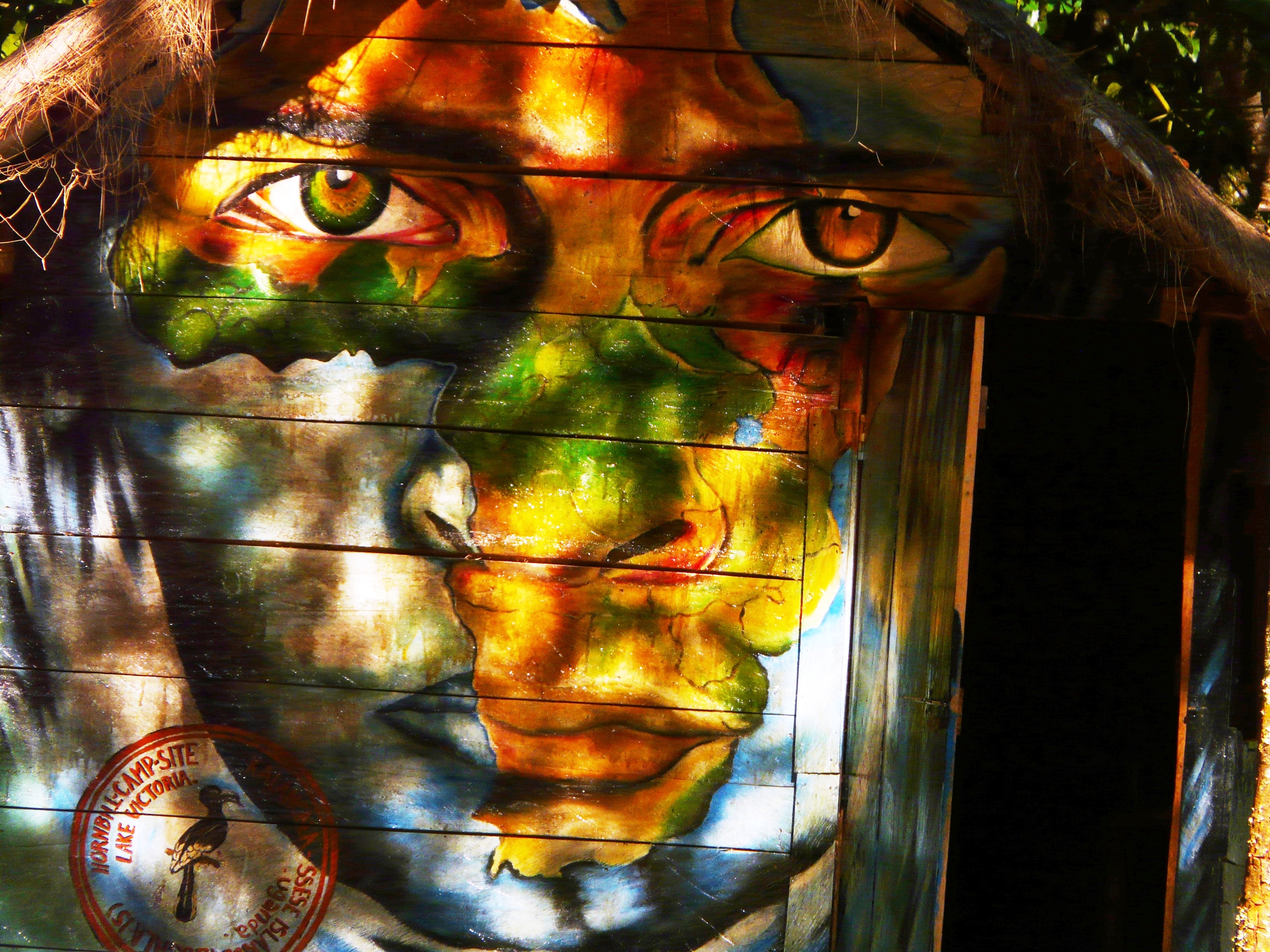
Across from the owner a wooden hut’s door swings on its hinges in the afternoon breeze. Inside the hut sits a simple single bed that can be hired for a nominal charge. The outside of the hut is painted with murals of faces that stare out through integrated maps of Africa and are decorated in a psychedelic array of colours.

Ssese 2In the early evening light, the owner’s eyes follow an abundance of wildlife that drifts through the campsite. Birds flitter between tree branches, chickens scratch and peck in the lake-front soil and monkeys rustle in the bushes just behind the bar.

Walking into the Hornbill campsite really does feel like you have time travelled back to Goa circa 1990s.

On closer inspection of this alternative reality though you begin to see that at best, this isolated campsite is a reflection of something that has come and gone.

The hammocks look older than their owner and the murals painted on the wooden shacks are fading in the sunlight.

As the sunsets on this small strip of idyllic beachfront, so what remains of the ‘Goa illusion’ also disappears.

Next door a Justin Timberlake club remix shatters the night’s silence and reminds everyone within the near vicinity that these islands are not just a hippy get away but are also used by a growing group of Ugandan fasionistas.

Sat around the campfire that night, bottles of cheap red wine are passed around between strangers as the conversation meanders over the top of distant music.

Speaking to others sat around the fire it is clear that the Islands get mixed reviews. For some the Ssese Islands are a flashback to an ethos and way of travelling that has come and gone. For others though, this flashback is a faded reflection and the Islands are crying out for new energy, infrastructure and most importantly, investment.

Uganda is not going to be the next Goa, but it has got the most earth shatteringly beautiful Islands perched in middle of one of the biggest lakes in the world that could be the perfect backpackers get away. To utilise this though, something though has to change.

Ssese 3

2 Comments

Filed under Travel, Uganda

From war zone to tourism: the transformation of northern Uganda

The people of Agoro in northern Uganda were some of the worst hit by the Ugandan civil war. As the village slowly recovers, Steve Hynd from the Mountain Club of Uganda visits Agoro to explore the surrounding mountains and what role tourism might have in the regions recovery.

The car pulls up next to two piles of red mud bricks. Behind are a handful of thatched mud huts that mark the edge of the village of Agoro. Ahead, beyond the mud bricks , is another collection of mud huts. The latter are UPDF army barracks. The pile of red mud bricks is the checkpoint into the barracks that cannot be passed until ‘clearance’ has been approved.

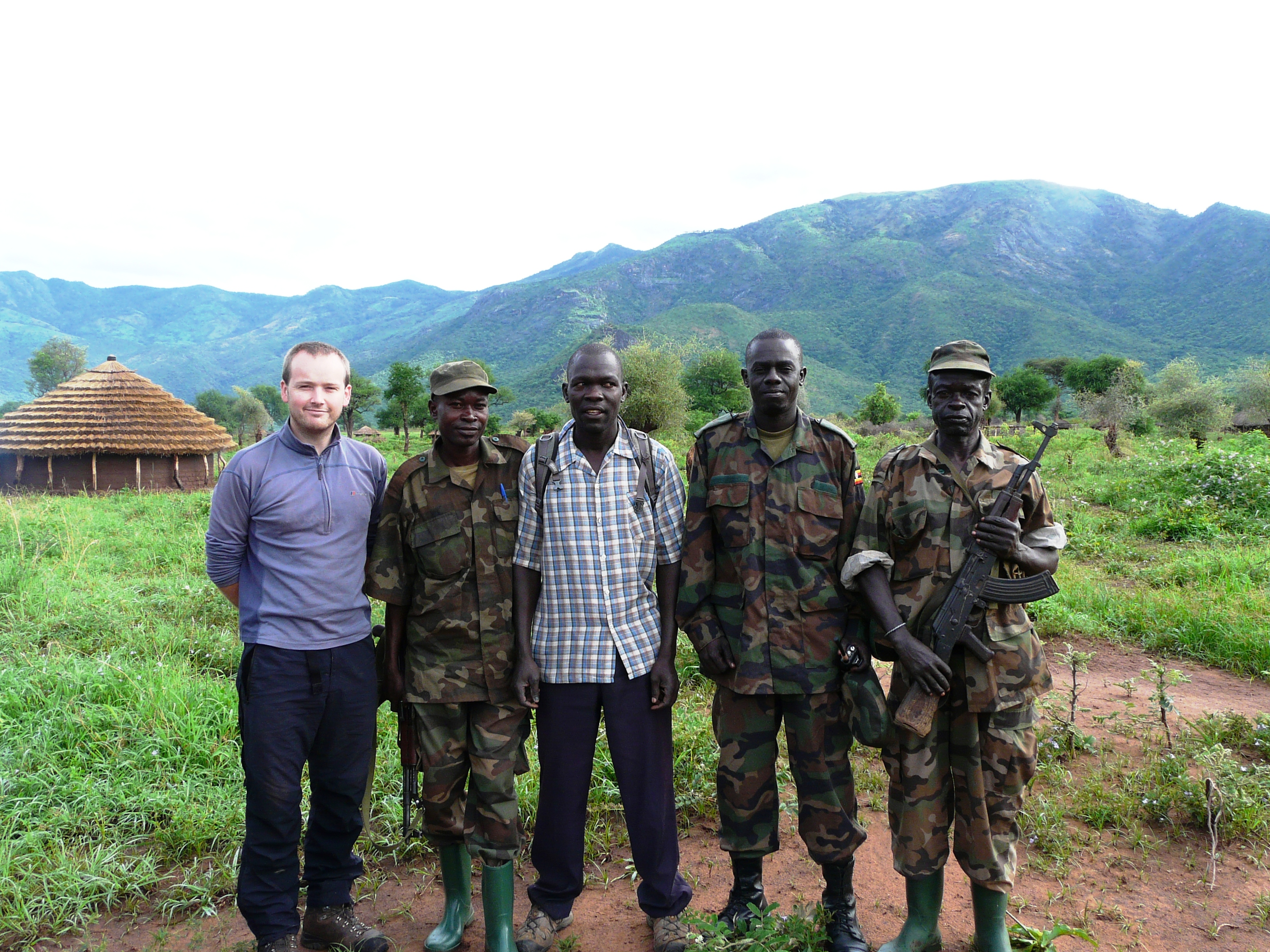
A smartly dressed soldier appears and waves the car through. The soldier introduces himself as Lieutenant Everest. Dressed in ironed khakis and polished leather boots Lt Everest stands tall with his chest puffed out. His appearance would have been archetypically military if it wasn’t for his curious grin and unashamed enthusiasm.

When the prospect of climbing the surrounding mountains is mentioned, the aptly named Lt Everest describes in some detail the security challenges. He talks about the landmines that line the border with South Sudan and claimed a UPDF soldier’s life in 2011 and countless other lives during the civil war. He also talks though about the ‘potential’ of armed conflict breaking out from over the border.

The village had been spooked recently by reports that Kony, the wanted Ugandan war lord, is being harboured by Sudan.

The village which is two hour’s drive north of Kitgum, the most northerly town in Uganda, has every reason to be on edge. Agoro has been devastated by 17 years of almost continuous civil and tribal conflicts. Many people have been killed or forced into fighting for rebel factions including Kony’s notorious Lord’s Resistance Army.

Human Rights Watch (HRW) have documented wide spread human rights violations including reports of cutting the lips and breasts off women who dared leave the internally displace people (IDP) camps.  Agoro’s children were also hit particularly hard.

The Lord’s Resistance Army, notorious for its use of child soldiers, operated heavily in the area. One 12 year old child from Agoro told HRW how he was beaten until he agreed to kill a civilian. His experience is sadly not unique.

In light of this very recent history, Lt Everest’s opinion that armed guards were a necessity for any mountaineering expedition had to be taken seriously, despite the relative stability and peace of recent years.

Pub 4Two soldiers, carrying nothing but dust covered AK-47s led the way through the fertile fields in plastic wellington boots with the local guide, Jeffery, following suit. As Jeffery walked he pointed with obvious pride the varied fruit and vegetables that flanked the small path that he was walking.

This pride stems from both the villages new 680 hectare irrigation system and, in contrast, the near starvation that many in the village faced just a few years previously. The International Rescue Committee described Agoro’s recent history saying:

“Most of Agoro’s residents had been driven from their homes into a makeshift camp that grew up around the local trading center. These displaced farmers, with little space or incentive to grow their own food, lived on relief rations provided by the United Nations.”

It is no surprise then when Jeffery takes pride in both being able to walk freely through the fields but also being able to reach up and pick some mangoes from near-by trees.

These agricultural fields sit in the bottom of a valley which is encircled by imposing mountain peaks, the highest of which on the Ugandan side of the border stands at over 2,800 meters.

As the agriculture gives way to uncultivated bamboo forest though, so the path soon disappears. The soldiers though march on insisting that they regularly walk these routes for ‘surveillance’. The pace of the walk drops only occasionally to drink some water or to stand for a nervous few seconds as everyone waits for a snake to slither off.

The higher up the ‘path’ goes, the less apparent the ‘path’ becomes.  So, the last hour before summiting is spent scrambling through thick grass up improbably steep slopes. The soldiers who at the bottom seemed at best bemused about why anyone would want to go to the top of the mountain are now clearly enjoying themselves.

Standing on top of the peak the soldiers explain that we cannot go any further in case the South Sudanese soldiers see us. “It might cause problems” says the younger of the two soldiers as he pulls a cigarette out of his shirt pocket.

As he explains this though, he does not look up to the border of South Sudan but instead he looks out over the plains that stretch for miles out to the south. The plains are dotted by the volcanic mountains that hint at the potential for other walks in the area.

Pub 7Just as the agriculture of the plains is booming in this formally ‘no go’ area of northern Uganda, the potential for tourism is also growing.  The Ugandan Tourism Association has documented the so far mainly untapped tourism potential of northern Uganda. There is no reason to think that Agoro could not be at the heart of this tourism revival.

The village of Agoro has seen an unimaginably difficult couple of decades loosing men and women and children in a bloody conflict. This history requires visitors to be sensitive to such loss, but should not stop them from coming.

As we leave Agoro, we say good bye to Lt Everest and thank him for his help. We pull up at the pile of red bricks that mark the entrance to the army barracks and Lt Everest, now in civilian clothing, beams a smile at us and says, “Tell your friends to visit, they too can be our guests.”

Steve Hynd is a freelance journalist based in Kampala and is a member of the Mountain Club of Uganda

6 Comments

Filed under Outdoors, Travel, Uganda, War

Fish and Chips in Uganda

Think you know about fish and chips? Think again. I used to think I knew about fish and chips, that wonderful institution of the British diet, until I visited Uganda that was.  

“This is good, I mean really good”, said my partner glancing up from the massive plate of fish and chips that sat between us.

I however was not wasting crucial seconds with peripheral tasks such as talking; after taking another swig of my ice cold beer I was straight back in, my fingers pushing together the crumbling bits of perfectly cooked Taliapia.

As we scoffed down our freshly cooked food, the smoke from other barbecued fish drifted through the packed restaurant and out into evening sun. We were sat with views out onto the very northern tip of Lake Victoria just outside of Kampala.

The restaurant in which we were sat was lined with charcoal barbeques cooking that day’s intake from the lake. All around us small groups of local guys were huddled around old rickety wooden tables on which large shared platters of fresh fish rested.

We had been lucky, when we arrived after a day’s walking, all the tables were taken. Within seconds of entering into the shade of the restaurant though, what looked like a full table had been rearranged and we had been squeezed onto the end.

We shared our table with three Ugandans, two locals from Kampala and another just visiting from the Karamoja region in the east.

All three of the men sat with that happy contented look on their faces that gave away the culinary experience they had just enjoyed. Looking around I could see this same look on faces of men all around me. Each sat leaning back on their plastic chairs, one hand on their belly and the other around a cold beer bottle.

I struggle to think of an image that better embodies the Ugandan understanding of contentment.

As I ate, I listened to the guys sat at our table chat about how Ggaba had the best fish and chips, not just in Kampala or even Uganda but, so their beer induced conversation went, in the world.

As they spoke I found myself thinking though, “What about British fish and chips – our national dish?”

Then it dawned on me, these fish and chips were, by far, the best fish and chips I have ever had in my life. No country pub, inner city chippy or homemade meal from the UK had ever come close. They were simply delicious and they were supported by the most wonderful of ambiences.

In a conciliatory backlash to my own thoughts, I joined in the conversation with the comment, “these fish and chips are even better than in the UK you know.”

The guy on my left responded, “Really?”

I half joked, “yeah, and we invented the dish.”

My new Ugandan friend from Karamoja, a restaurant worker himself it would turn out, swiftly responded, “ahh, I am afraid that is a common misconception my friend. Fish and Chips were bought to the UK by a Jewish immigrant in the late 19th century.”

I responded dumbly, “oh”.

A later Google search would tell me that there is at least an element of truth in his assertion. Who would have thought that it would take a Ugandan to educate this Brit on his supposed national dish?

I left the restaurant that evening with the sun slipping behind the hills. The air was light and there was a low level of noise in the fruit and veg market that surrounds the harbour.

I don’t think I could imagine a nicer place for a wee Ugandan style culinary master class.

7 Comments

Filed under Food and Drink, Travel, Uganda

“You cannot be happy to see your dad suffering…”

This is an article that I wrote for the Africa edition of ehospice.


Mutagubya Bruno is the son of Lawrence Ssenyonde. Lawrence has cancer of the prostate and needs oral morphine to relieve his pain. Bruno recently talked to ehospice about what life is like caring for a family member in severe pain.

On the outskirts of Kampala, Mutagubya Bruno lives with his mother and father. A small alleyway leads to a neatly kept garden that is lined with palm trees and freshly hung clothes on a washing line. Bruno breaks the conversation he is having with his mother as a small delegation from Hospice Africa Uganda arrive through a side gate to their house.

In the living room, the three health care professionals sit in a line craning their necks to try and listen to Bruno’s father as he describes his pain. As Bruno’s father speaks, one of the nurses sorts through her case notes. She glances at the previous dosages of oral morphine Bruno’s father has received.

Throughout the conversation Bruno sits on the edge of a worn-out arm chair opposite his father looking on.

Read the full article here >> 

Leave a comment

Filed under Health, Interview, Media, Uganda

A moment, nothing more

This is just a moment of my life, nothing more…

I was sat with a cold beer in hand. The evening air was still warm and insects collected around the lights that were illuminating the garden in which I was sat. There was live music in the background but I had predominantly let it slip over me as I sat with some friends chatting happily. Half a dozen new friends in this new country sat in my immediate circle, all their shadows cast inwards from the overhead light. Dotted around the garden though were a dozen other similar groups, most of whom were newly made friends of mine.

What caught my attention and drew me out of this social haze though was the silence, the break in the music. The silence rippled into other’s conversations and soon heads were turned to look at the silent small stage.

One friend, the person who had perhaps made the biggest effort to make me feel welcome when I arrived to this new country was on the stage. She was due to leave in the coming weeks to head back to her home, Holland. The stage lights shone up on her and those who had been dancing looked up expecting, waiting, and anticipating.

Then it happened, that moment….

She broke out with the impromptu band with the most earth-shatteringly-good voice. Everyone was either in silent awe or whooping in delight. She held a presence on stage that is hard to describe. Her voice though carried in the night air, each note hanging for an improbably long time. The dancers in front of her half danced and half stood transfixed.

Personally, I sat towards the back, unable or unwilling to move. I sat transfixed as her voice glided effortlessly around the silent circles of friends. I sat back on the garden furniture and sipped my beer. I think that I was, in that moment perfectly contented.

Leave a comment

Filed under Travel, Uganda

A visit to Royal Pride school in Kampala

Heavy balls of rain lash down, their weight and intensity exaggerated by the tin roof under which we shelter. Looking out, the playground which minutes earlier had swarms of children playing in is now inches under water.

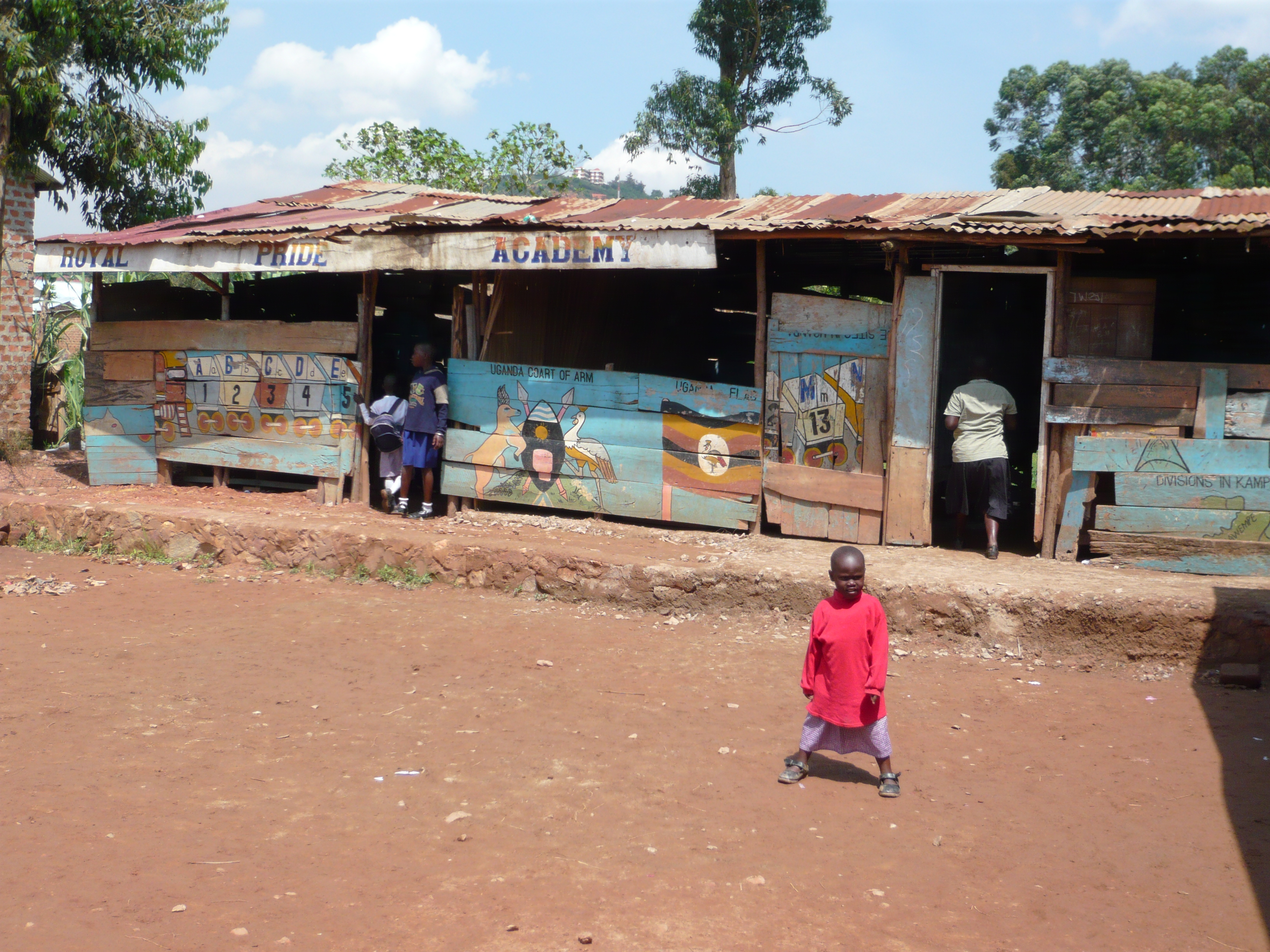
P1000317Godfrey, the headmaster of Royal Pride School looks out and predicts that it will “stop in 30 minutes”. I wonder to myself how he can know this, but chose not to question and stare out at the black brooding sky.

I begin to ask Godfrey about his school. He tells me that it is only eight years old and takes in about 280 children. Looking at the 8 small classrooms, 4 of which look under disrepair, it is hard to imagine that so many kids could fit into such an improbably small space.

Inside one of the small classrooms we are met by a swarm of children running and shouting, each waving their exercise books at me showing me their work. As I start to run out of unique adjectives to praise each child’s work, the teacher steps in and starts the process of trying to calm the children. It proves to be close to impossible while the ‘muzungu’ is still in the room so I follow my colleague out into the court yard leaving cries of “Muzungu muzungu” behind me.

Uganda September 009Back in the headmaster’s office I ask what the biggest challenges are to the children’s education. Without hesitation, Godfrey responds, “The biggest challenge that these children face is not education, but finding the money for their education. It costs them 30,000 Ush [£7.30] a term. I want them to come for free, but I need to pay the teachers a small salary”.

Indeed, a small salary it is. Some of the teachers earn as little as 90,000 Ush (approximately £22) per month.  Despite the small salary, all of the teachers look engaged and enthusiastic interacting with the children.

With no electricity all of the teaching is done with a blackboard at the front of the class. From the headmasters office I can just see one teacher writing, “My name is…” on the board while a hoard of youngsters eagerly copy.

For many children education of this description is nothing more than an aspiration. 18% of children don’t enrol into basic primary education. Of those that do attend, there is an average dropout rate of 66%.

Uganda September 008I ask Godfrey about this high dropout rate and he tells me that one of the best ways to keep kids coming to school is to offer food. Twice a day at Royal Pride kids get a bowl of porridge as well as access to running water.  This enough to keep them coming back, as Godfrey explained:

Many of the children who come to the school don’t have the basics in their houses. They don’t have water, or food. We can give them that”.

Inevitably, teaching in this environment can be a challenge. The teachers have to think about basic sanitation as much as they do mathematics or English. I asked Godfrey if the teachers stayed at the school for long. He answered saying, “When a teacher comes to work here, we sit down together and discuss the types of children we have here. They have to know what kind of community we are in.  We have to put aside our own time to go and visit each family at home”.

The more I talked to Godfrey the more I became inspired by the incredible work he was doing with these kids. The place struck me as much as a social project as it did a school.

P1000314

I asked Godfrey what drove him to want to be a Head Teacher of a school. Godfrey is only 32 years old and I was curious as to what led him to Royal Pride.

With a wry smile, Basiime Godfrey looks out into the driving rain and says:

This is a long story. I have no mother, I have no father. I was with an organisation”. He breaks off for a second to compose himself before continuing, “Sorry, when I speak about this, I feel like crying”.

Tears start to dwell up in his eyes and roll down his cheeks and I tell him that we don’t have to continue. He takes a step back and says, “Where I came from, it was a sad situation. I was living under a tree. Some people came to us and paid for [me to] go to school. This is all I want to do.  I’m sorry…”.

I break off the interview at this point and let all the pieces drop into place around us. Godfrey turns away from me and wipes tears from his eyes. Water drips down onto some paper work through the tin roof as we stand in silence.

Godfrey is someone who has worked tirelessly for these kids because, as he had said to me earlier, “I know what it’s like for these kids”.

As I walk up the hill away from Royal Pride there is open sewage running down the hill to the valley bottom where the school is located. Kids who are not in school peer out at the white people walking in the rain and openly stare in amazement.

I stare back and raise a half smile. Only now does it dawn on me that the kids at that school are the lucky ones.

3 Comments

Filed under Uganda

A Sunday Morning in Kampala

“Praise the Lord, feel his love rushing though you. Feel him touch your soul. You are saved brother, you are saved”.

I wearily look up from my scrambled eggs and rather soggy toast. The church next door to my hotel has been going for over 3 hours now.

At one point there is a rather terrifying scream before there is an impressively drawn out chorus’ of ‘hallelujahs’.

I leave the last bit of soggy toast on my plate and make my way out into the mid-morning sun.

I sharply step sideways off the potholed concrete road into the red earth gutters as motorcycles and 4X4s swerve perilously close. All the time trying to keep an eye on the on-coming traffic and an eye on the fabulous views that stretch in front of me.

The sprawling city centre sits in the distance as I make my towards the notorious ‘Kabalagala’ area of town.  I pass men opening their shops opposite bars that are still going from the previous night.

The bass from a reggae bar seeps out onto the street. It feels like electricity is passing through the tarmac. As I pass each bar I peer in to watch the revellers who are still going, still enjoying the bars of Kampala – the city that truly never sleeps.

Short skirts and crumpled suits zigzag across the dance floors and prop up the bar as they refuse to accept that their night is over.

I walk on only stopping to buy some mango on the side of the road. The seller beams a smile back at me as I hand over about twenty per cent more than a local would – the ‘muzungo’ price.

With sticky fingers I finish my mango and make my way past one of Kampala’s 24/7 traffic jams. Nut sellers squeeze through improbable gaps in the traffic risking their life, quite literally, for peanuts.

These nut sellers seem to move with ease in and out of the traffic as I wait trying to find a break in the wall of traffic to cross into the shade on the other side of the street.

In the shade I am conscious of how quickly the sun has risen. On the equator sunrise is like sitting in a bath as it fills up with hot water – immersing you, the heat surrounding you.

The sun now shines hard on the red earth and strips through any pretence that the new day has yet to start.

This Sunday morning will be spent sleeping off last night’s excess for some, praising the lord for others and for me at least, exploring the maze of streets in the city centre.

As I make my way into the centre, a small minibus with its bumper hanging off stops to offer me a lift. On the front windscreen the words ‘TRUST ONLY GOD’ are printed. On this occasion I decide to take the advice and say I am happy to walk.

3 Comments

Filed under Travel, Uganda