

The village of Kafr Qaddum in the West Bank was the scene of some of the worst violence I saw during my half year working as a human rights monitor there.
The village holds weekly demonstrations to demand that their main road be reopened. It was closed by the Israeli military authorities in 2002 to prevent Palestinians from travelling on roads designated for use only by Israeli settlers and adds on nearly 20km to their travel to the main town.
These demonstrations are violent affairs. This is my account of a ‘not so peaceful protest’ which includes footage of a Palestinian being mulled by an Israeli military dog (see below) as well as multiple protesters being shot directly by heavy metal tear gas canisters. This is my account is of a 17 year old boy who was relearning to talk after being shot in the head by a tear gas canister.
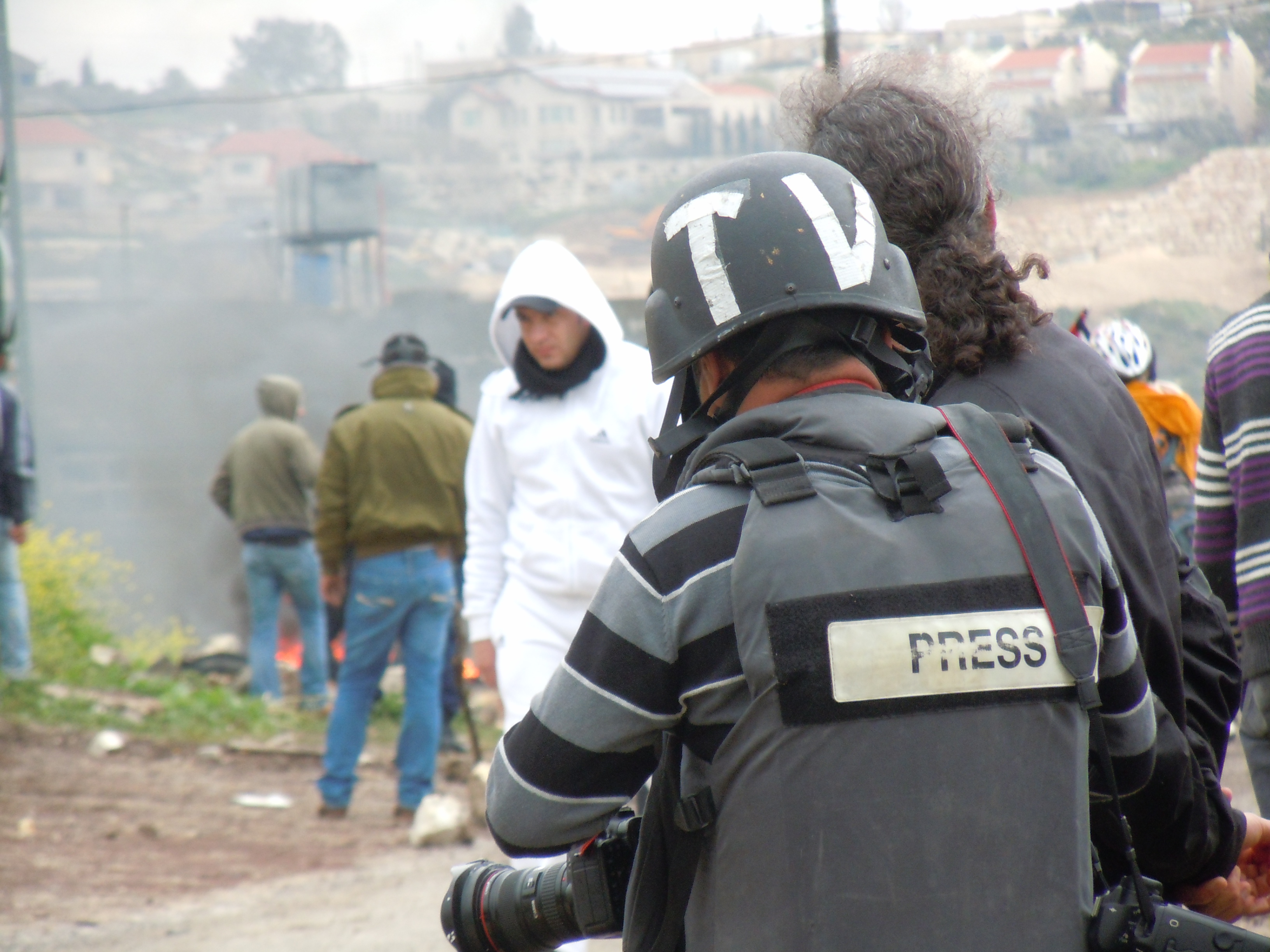
As I said – the demonstrations are violent affairs littered with human rights abuses. It is not surprising then that on a number of occasions the Israeli military tried to stop human rights monitors and members of the press from entering the village. On one occasion before a particularly brutal response to the protest I had to travel through the olive groves to avoid the Israeli military checkpoint to gain access to the village.
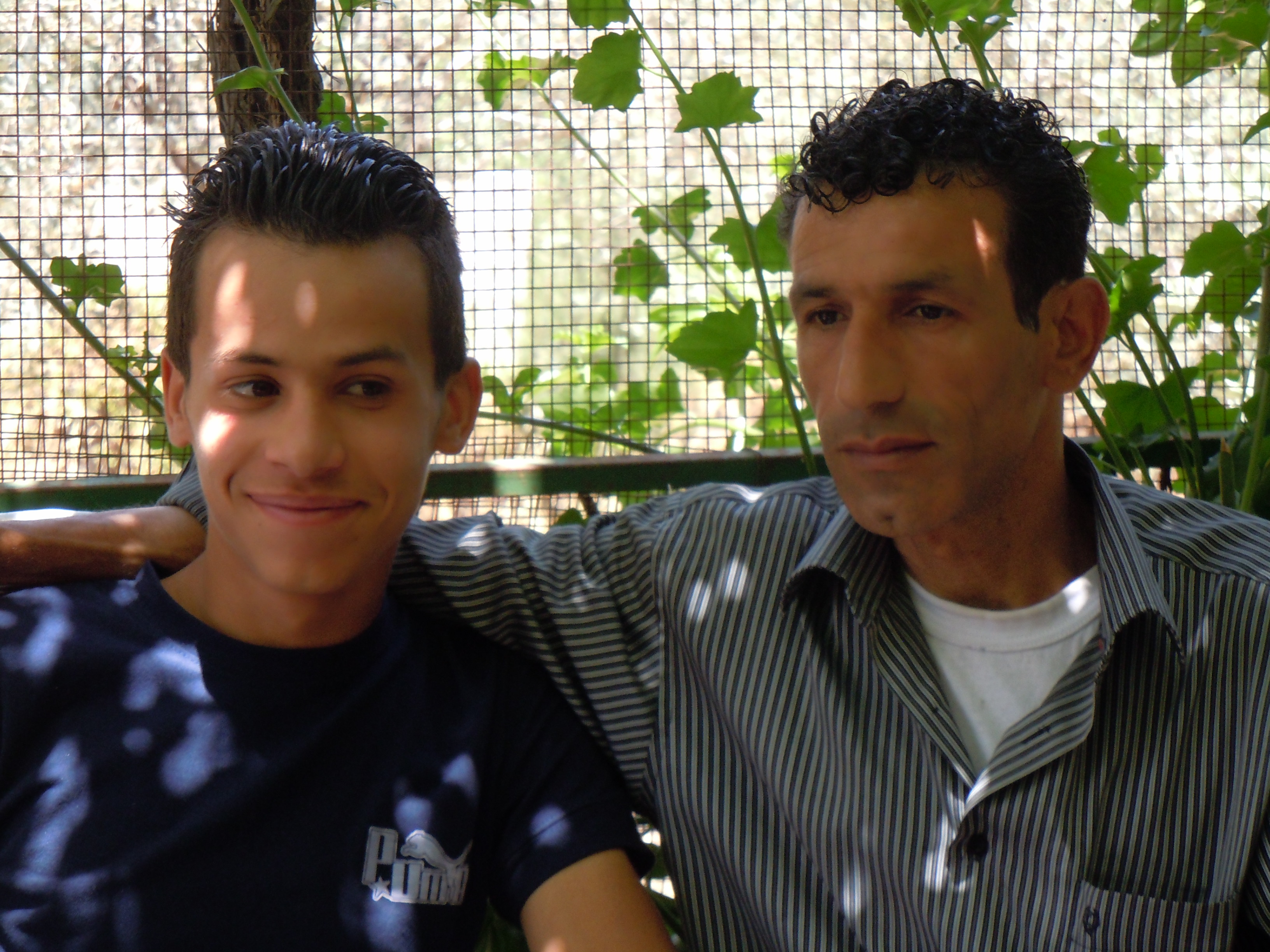
In midst of this madness trying to marshal events was the figure Murad Shtewi. Murad is (was) a leading activist in the weekly demonstrations held in his village. I met him on a number of occasions normally over strong Arabic coffee and cigarettes to discuss what had occurred in his village during the previous week. Invariably the conversation focused on army raids and arbitrary arrests (painfully common events across the West Bank) but this was juxtaposed to Murad’s middle-eastern understanding of lavish hospitality and his talk of non-violence resistance.
I liked Murad for having optimism in the face of such continued violence (violence that Murad experienced first hand, in the video of the dog attack you can see Murad being pepper sprayed in the face for trying to intervene in the dog attack on his nephew).
Despite witnessing so much violence Murad was also committed to non-violence. This commitment to non-violence is one of the key criteria for Amnesty International who now consider Murad a ‘prisoner of conscience’ after his arrest at around 3am on 29th April of this year (arrests in the middle of the night are common place in the West Bank – even when detaining minors).
Murad is charged with organizing a demonstration without a permit, causing a public disturbance, and throwing rocks during a demonstration. Amnesty International has responded to these charges saying:
“In Amnesty International’s assessment, the charges of rock-throwing and of causing a public disturbance are unfounded. Murad Shtewi has been persecuted for expressing his non-violent opinions and for his role in the peaceful protests in Kufr Qadum against Israel’s illegal settlements. His arrest and detention are a measure to punish him and stop him and other village activists from exercising their rights to freedom of expression and to peaceful assembly.”
As such Amnesty International is calling for Murad Shtewi to be released immediately and unconditionally, as ‘he is a prisoner of conscience, detained solely for the peaceful exercise of his right to freedom of expression’.
This is a call that I am happy to publicly back. On every occasion that I went to Kafr Qaddum I never once saw Murad throw a stone. On a number of occasions I did see him telling others not to throw stones. I also talked to him at length about the importance of non-violent resistance.
This is also the third time Murad has been arrested (each time released without charge) in the last few years, the first was after the dog attack on his nephew.
Simply put, I can’t see how this latest arrest of Murad has any purpose other than to try and deter him from organizing legitimate protests against the Israeli policy of segregation in the West Bank.
It is in light of all this that I ask you to take a few seconds to send this sample letter to Prime Minister Benjamin Netanyahu that significantly not only calls for Murad’s release but also to:
‘take effective measures to prevent the use of unnecessary and excessive force by Israeli forces against peaceful demonstrators’
Please help me help Murad by taking this small action.
For more information:
- Read Amnesty International’s background notes to Murad’s case and the village’s situation.
- Read everything that comes up on my blog if you search ‘Kafr Qaddum’ including a short video of Murad.
 In the past few days thousands of people have seen the image on the right: a




 The former legal advisor for Judea and Samaria,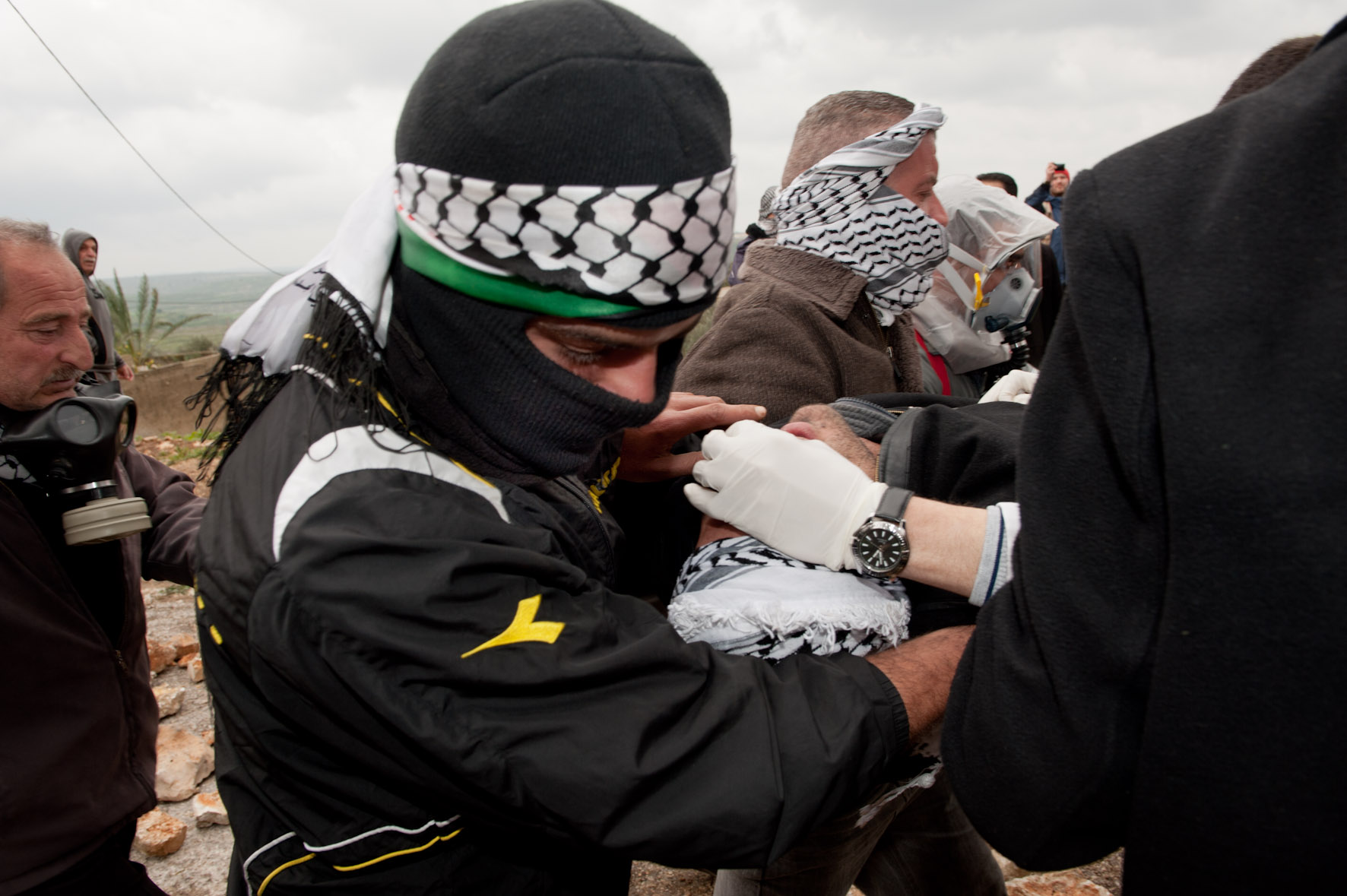






 Hynd's Blog
A British identity crisis in Palestine
Sat side by side, 7 internationals looked on into a dimly lit room. Four swedes, one Norwegian and two Brits huddled together on a worn out sofa that was creaking under the collective weight. Our host, Ahmed Jaber welcomed us into his house which was due for demolition any time in the coming days. He was anxious and he eyes darted between us. As is customary he started by asking his guests to introduce themselves:
Swede 1: “My name is Alex, I am from Sweden”
Ahmed: “You are welcome and thank you for everything you and your country is doing”
Swede 2: “My name is” etc etc
Ahmed: (laughing) “Your country does so much, they send many people”
The perceived comedy in this situation is amplified as a third and then fourth person introduce themselves as Swedish. Eventually though the introductions moved on:
Norwegian: “My name is Helene and I am from Norway”
Ahmed: “You are welcome and thank you for all that your country has done – apart from Oslo of course” (Cue a little bit more laughter)
Me: “My name is Steve and I am from Britain”
Ahmed: “Oh” (awkward silence) “You know this is all your fault, do you know about Balfour”
I smiled, nodded and let the proceeding silence, accompanied as it was with a wee bit of awkwardness fill the room.
This awkward “you know it is all the British fault” moment wasn’t a new experience for me. Believe or not, a couple of centuries of imperialistic foreign policy have left some less than positive impressions around the world. Almost a century later most Palestinians have not forgiven our then Foreign Secretary, Lord Balfour, for offering Zionists a homeland in what was then British Mandate Palestine.
What makes the Israel/Palestine conflict different though is that both sides seem to hate the British – our history does not lend itself to friendship with either side.
Things could be worse though, I could be German. A German colleague I worked closely with regularly had the uncomfortable situation of being told by Palestinians, “I love Germany, Hitler was great but he should have finished the job”. How do you respond to that? On occasion I responded saying, “please don’t joke about such things” knowing all too well that many were not joking.
These experiences left me with a minor identity crisis. Was I English, British, White, Christian, European or what? I tried a couple of times, “my name is Steve and I am from the people’s free republic of Gloucestershire” but this was invariably met with a look of confusion.
The problem is that I don’t feel very “British” – I have little or no connection with 50% of Britain (Wales and Northern Ireland). My father’s Scottish and I have a ginger beard as a result, but I don’t feel very Scottish. Yet, in many ways I have more in common with my Scottish family than I do with most people living in England. This is without starting on the sociological question of what makes someone “English/Scottish/British”.
I don’t have anything in common with Balfour other than the fact that we were born on the same Island. This connection, nearly a century later, is enough to define my relationship with a Palestinian man whose house was about to be knocked down by the “Israeli Defence Force”. Somewhere in this anecdote there is all the material you need for illustrating just how mad the concept of nationalism is.
Throughout the meeting with Ahmed I sensed hostility towards me. I might have been being over sensitive but I know from experience that the hatred of the role Britain played in Palestine’s history is part of the modern national psyche. Ahmed’s darting eyes spent the rest of the meeting occasionally fixing themselves on others in the room, but interestingly never me.
My name is Steve, I was born in Gloucester hospital, I like cups of tea and walks in the countryside. If this makes me English/British then so be it but I don’t feel it.
Be one of the cool kids and share this article
5 Comments
Filed under Middle East, Social comment
Tagged as Britain in Palestine, British Identity, England, Palestine