
Nestled in amongst beautiful rolling hills you find a small micro-brewery with a revolutionary spirit. The Brewery was established with the intention of supporting the local economy and to use only the finest natural ingredients. This, for those of you who know me, could easily describe Stroud Brewery, my former employer.
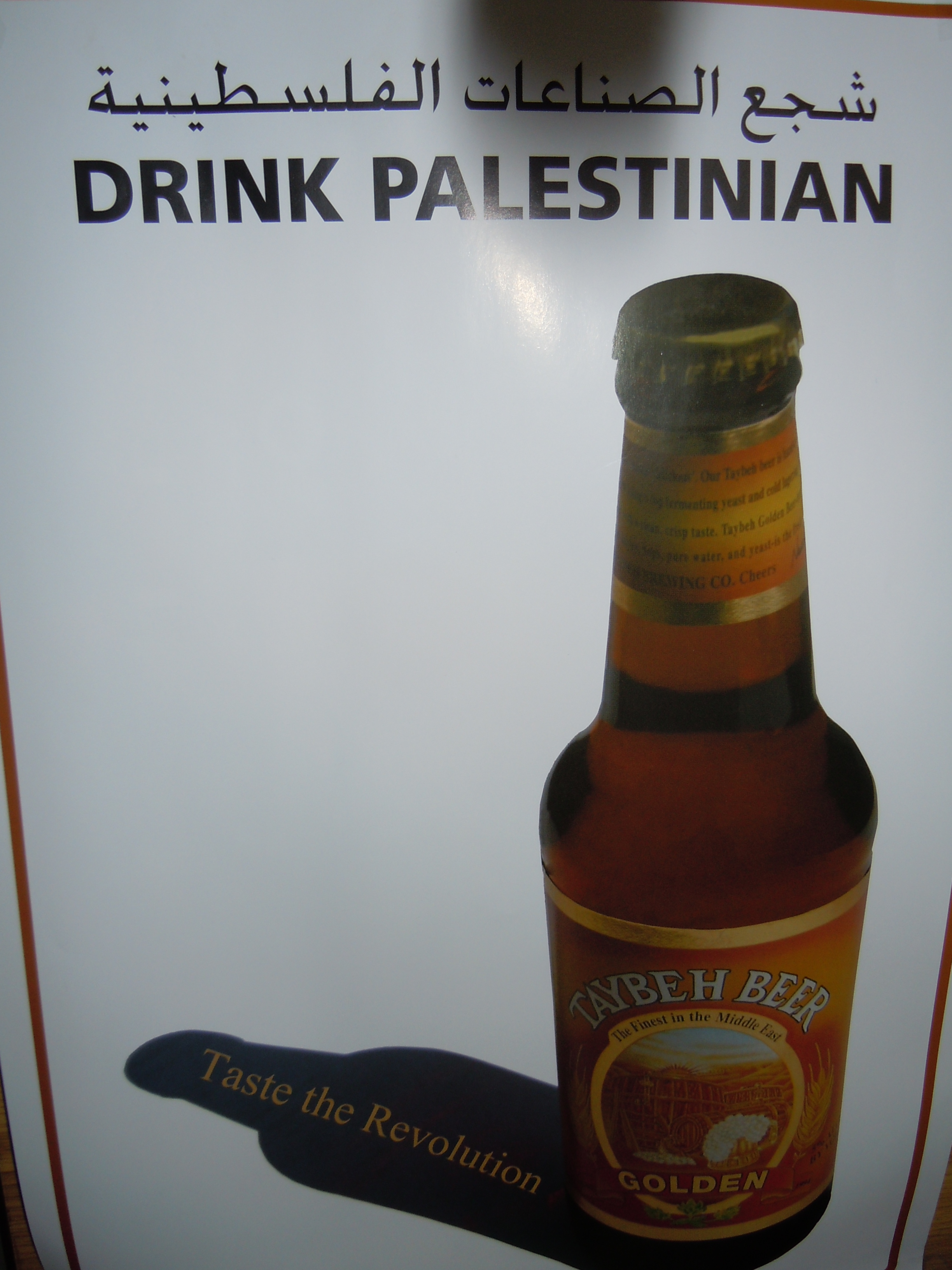 Today however, I am describing the only micro-brewery in Palestine – Taybeh Brewery. It is based in the village of Taybeh (aptly meaning ‘delicious’) just outside of Ramallah, the de facto administrative capital of the West Bank.
This may seem an unusual place to stumble across a brewery. When you think of a micro-brewery, Palestine is not the first place to spring to mind. To suggest that brewing might not ‘belong’ in the middle-east is an idea that head brewer Nadim Khoury has evidently heard one too many times; It is near to impossible to leave the brewery without picking up the fact that beer was first brewed in the Middle-East up to 5,000 years ago.
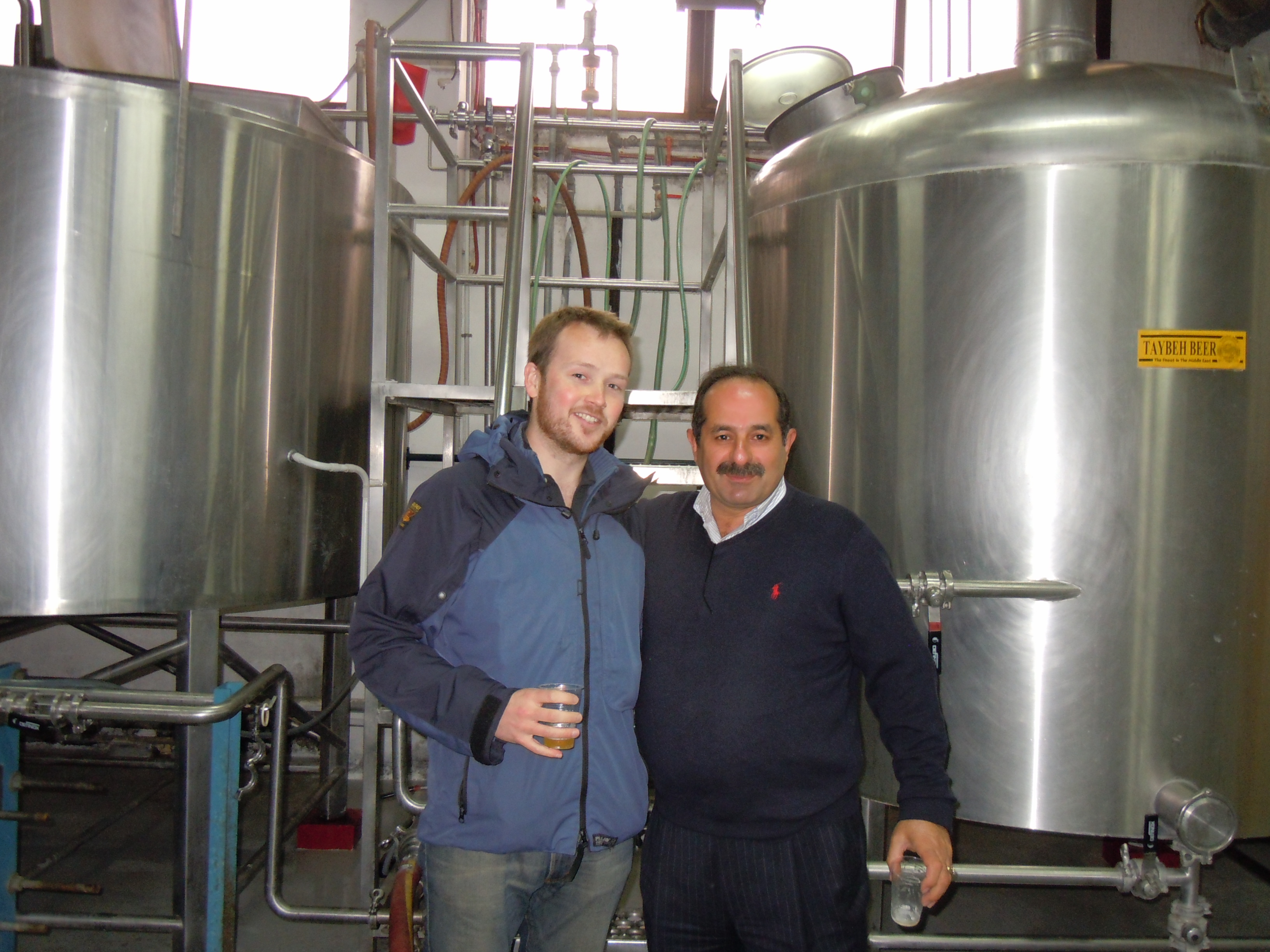 Nadim is a man who is hard to dislike – when he strides into his brewery you can feel his passion, warmth and enthusiasm rush towards you. His big bushy moustache has no chance of hiding his beaming smile as he asks you if you would like a beer – you just know that he wouldn’t mind one himself. Nadim is clearly very proud of his brewery and so he should be. The story he has to tell is truly remarkable.
In 1994 just after the signing of the Oslo Accords, Nadim and his brother David invested some 1.2 million US Dollars into the brewery (all the equipment had to be specially imported). Nadim started this brewery with no more than some home-brew experience. Nadim set up the brewery in his home village of Taybeh determined to support the ‘new’ emerging Palestinian economy. He described people’s attitudes at the time by saying, “people thought I was crazy”. I smiled and he cackled a crazy man’s laugh and started to walk away muttering, “really crazy”.
 There are a few very good reasons why anyone other than Nadim might think twice before setting up a brewery in Palestine. Indeed, it has to be noted that Nadim is currently the only person to have taken on the task (with considerable success I might add). He has had to overcome large cultural and religious issues as well as the small issue of living and working under military occupation. I was eager to find out the source of his success.
“It was crucial to get Arafat on board with our vision” Nadim says gleaming at a picture of him shaking hands with Arafat. “With Arafat on board I knew that I could make this work”. The subtext that is never spoken here is clear – with the endorsement of Arafat, overly zealous locals who might have otherwise taken an objection to a brewery opening remained quiet. Today, the majority of people who drink Taybeh beer are Muslims – not Christians, secularists or Jews. I suspect that’s one lingering stereotype that Nadim is happy to have broken.
 Taybeh however is a Christian village. I asked Nadim what relations are like with his immediate neighbouring ‘Muslim villages’ and he responded positively highlighting the importance of the brewery to all of the surrounding local economy. “In the 2 days that people from all over the world come here for our ‘Oktoberfest’ local traders sell more of their produce than in all of the rest of year”. Quite a claim – I can see why the locals might have a soft spot for the brewery.
The brewery attracts a wide spread of support from the significant Palestinian Christian population right through to the droves of internationals that make their secular pilgrimage to this site. Israeli activists have also been known to show their support of the brewery.
 Life has not always been easy for Nadim or the brewery though. On a number of occasions the brewery has been on the brink of closure due to a terrible mix of dropping demand (during the second intifada for example) and continued restrictions on movement of people and produce (he has to drive the beer for hours to a checkpoint in the south of the West Bank to ‘export’ his beer to Israel). At this point he shows me a cask that he has cut in half – he uses it to illustrate to IDF soldiers what the inside of a cask looks like. Now, whenever his beer passes a checkpoint it has to be weighed (more that 3 kilograms either way and it does not get pass). I don’t think any other brewery in the world faces these sorts of challenges.
As if this story is not remarkable enough, another twist to the tale walks through the door – Nadim’s daughter and now the first ever female Palestinian brewer. She is articulate and shares her father’s passion for brewing. I talk with her about the beer industry in the UK and how it is so dominated by men and ask what challenges she faces here in the West Bank. She answers sincerely saying “some of the older customers prefer to deal with my father but most have got used to it by now”. Another stereotype being chipped away at?
 As we leave (with a handful of bottles) I over hear the rest of family (all who have various roles within the business) chatting. One of them is being interviewed by a reporter about a film she produced highlighting the issue of domestic violence in Palestine. Nothing surprises me now. This brewery is breaking down boundaries built up by prejudice. At the same time it is building and laying the foundations for the future. At the heart of whatever the future holds for this region there has to be a stable economy. Taybeh Brewery is busy laying the foundations for this future.
As I wait for a taxi to take me back to the reality of the rest of the occupied territories, I consider how, for me at least, I cannot think of more appropriate way support local people than to raise a glass of Taybeh beer. When people ask what you can do help resist the occupation and help people survive, I reckon this has to be one of the easier asks. Click here and have a beer – cheers!

 The former legal advisor for Judea and Samaria,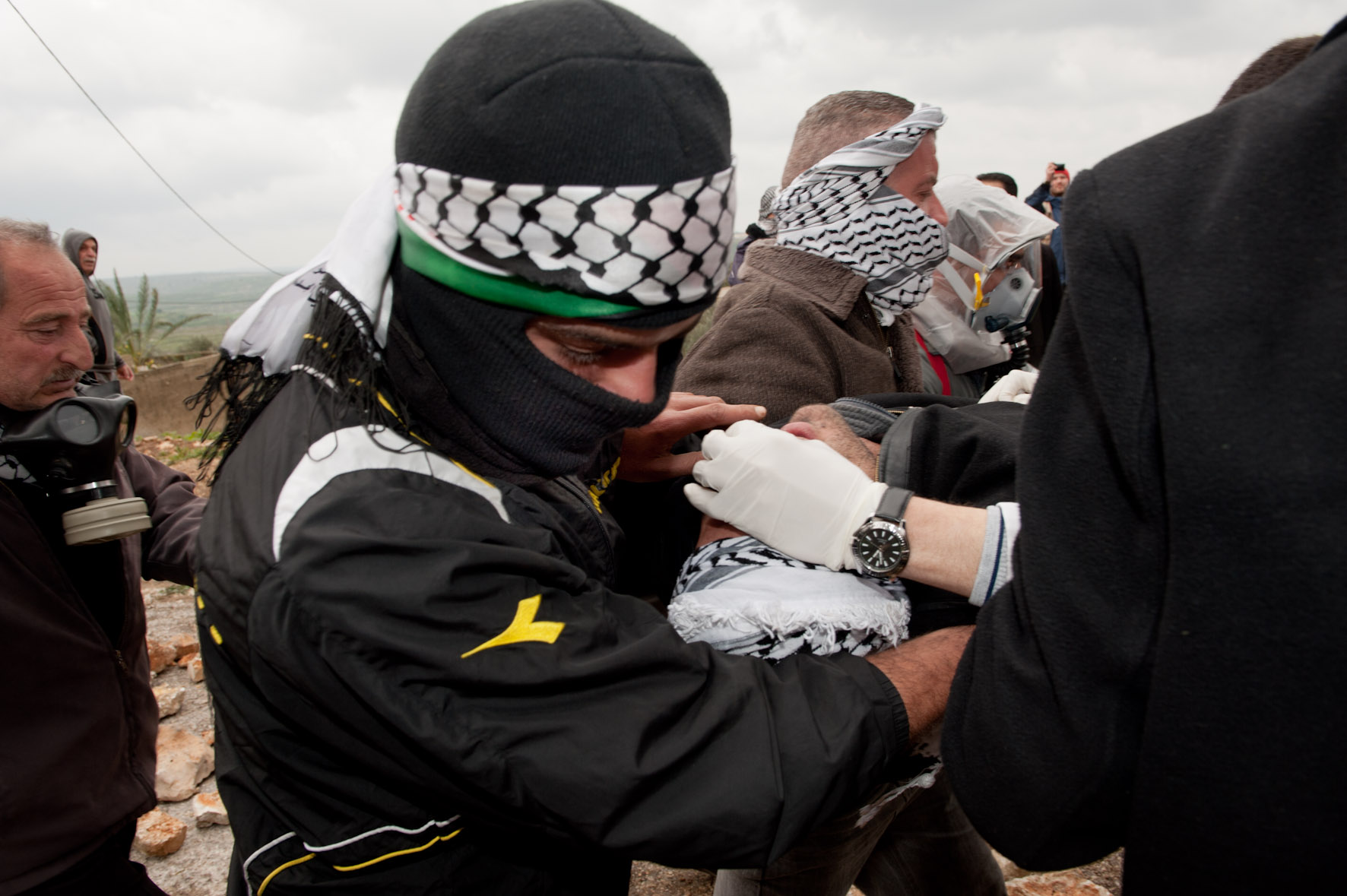
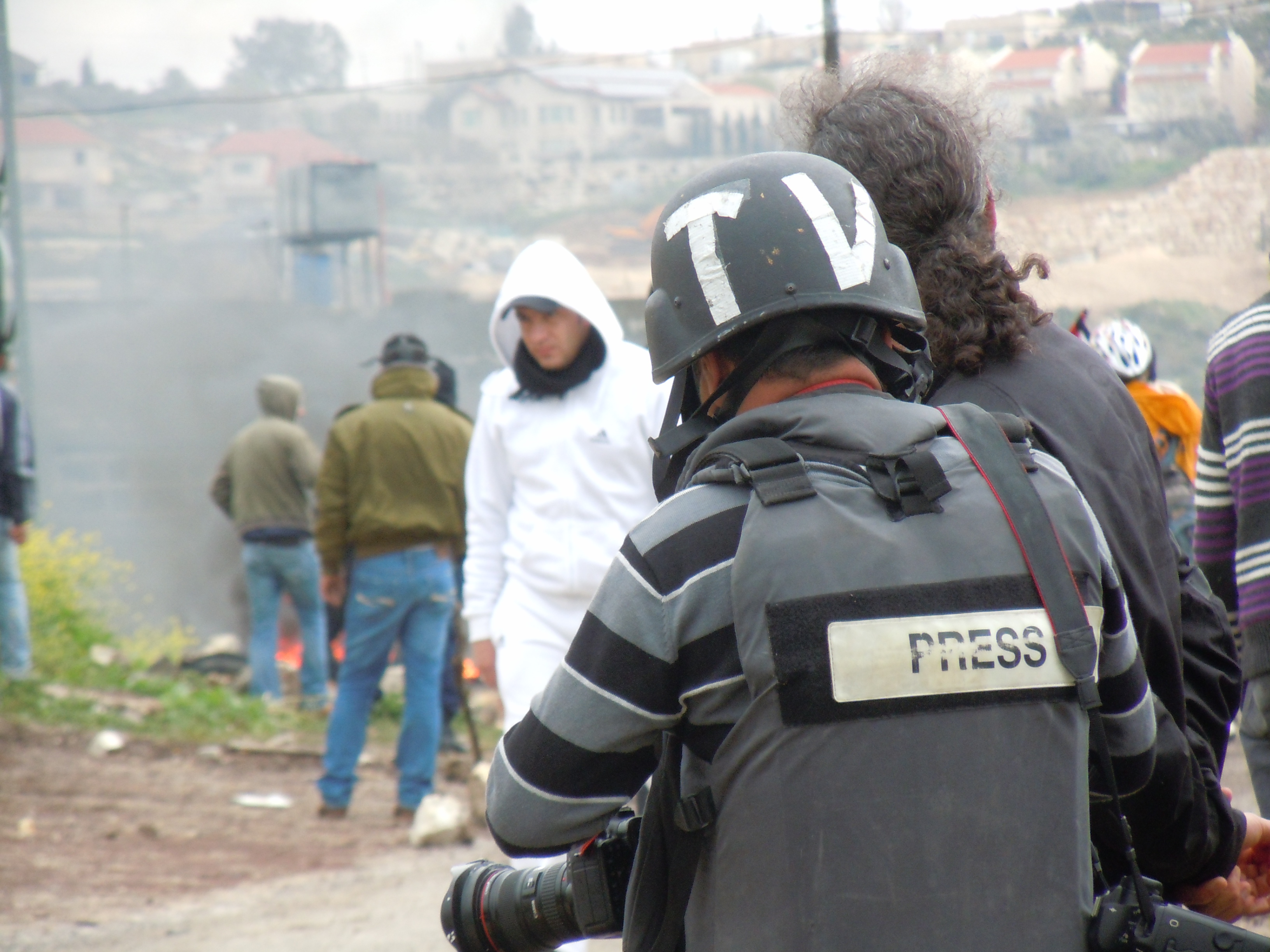

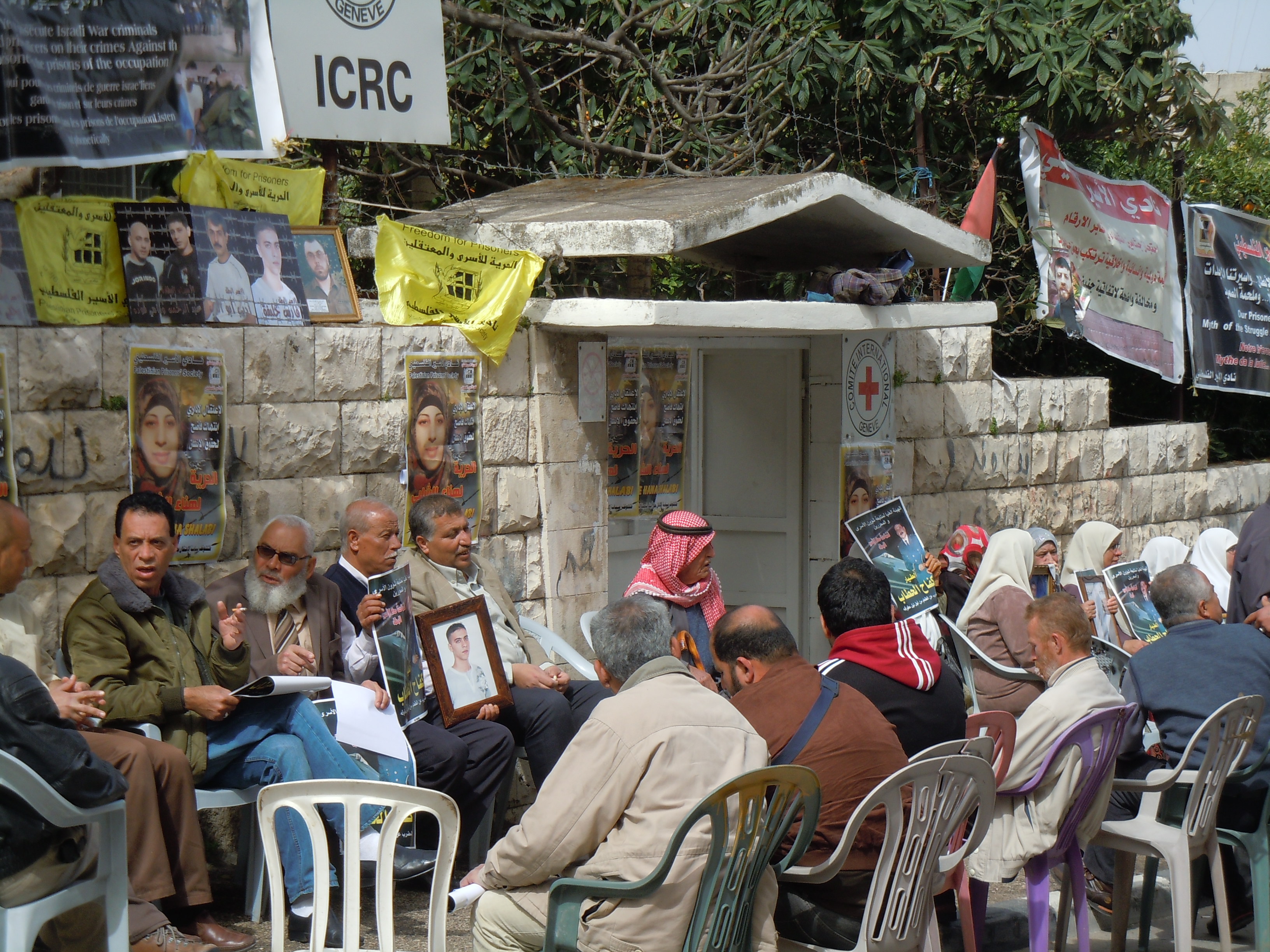
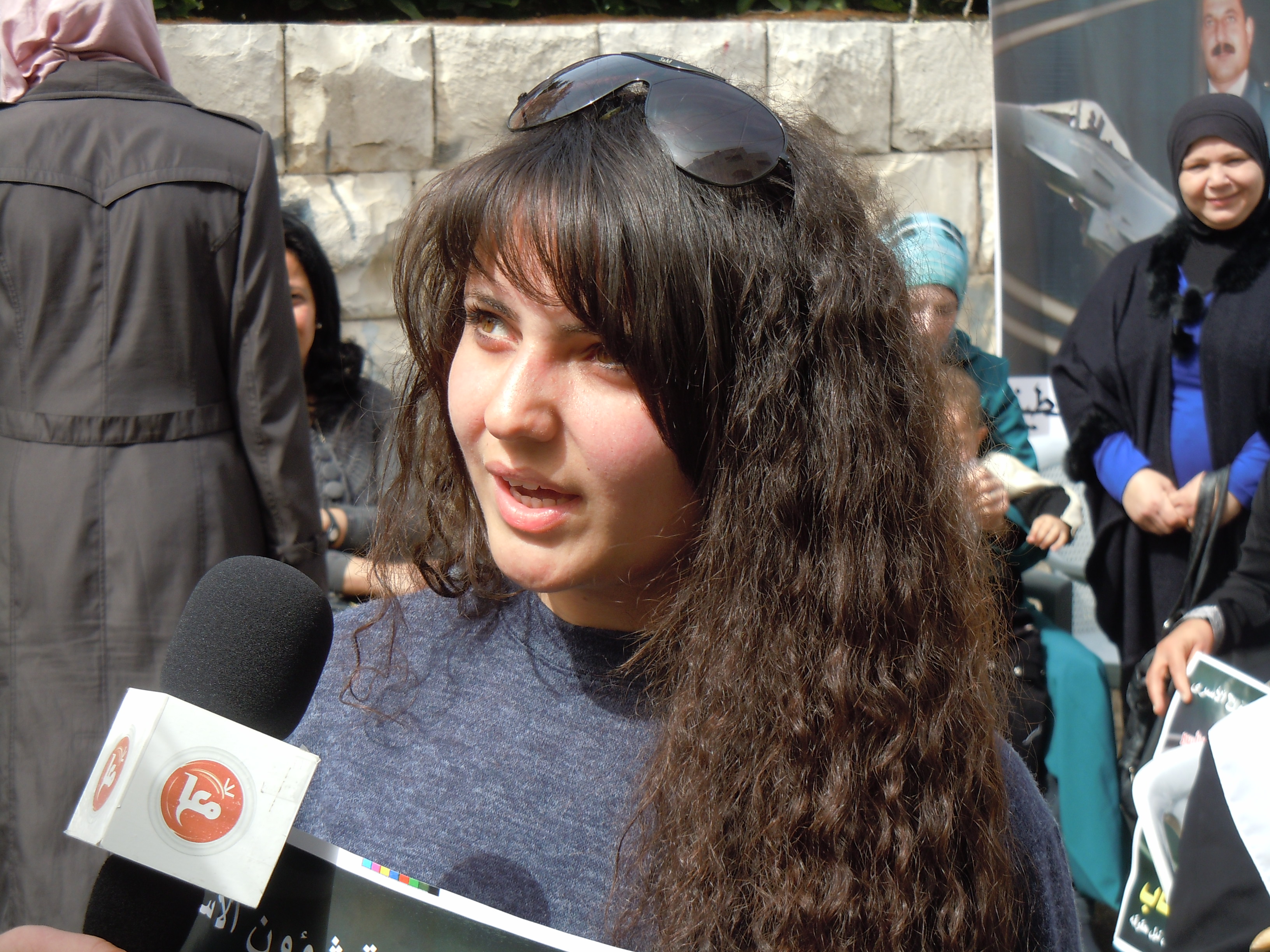


 By invitation from the Qalqiliya branch of
  EAPPI teams do not actively participate in demonstrations, but attend to show sympathy and talk with people. Sometimes we find eloquence without the use of words.
 In the small town of Qalqiliya, more than two hundred attended the demo. Not bad!
 There is beauty to be found on the West Bank. Administrative detention is not among these. The life of Khader Adnan is on the line; a very thin line. Should he die in illegal detention, scenarios including disruptive, violent response are more than probable. Israel’s Supreme Court will hear an appeal for Khader’s release today.





Still here, still occupied
This article was written for the Occupied Times newspaper.
On BBC 5 live, Michael Richmond (also of OT fame) was debating the Occupy movement when one of his opponents shrilly suggested, “no one suffers in this country, we have a welfare state”. I felt like I had just ran into a brick wall. This sort of view could only come from someone who has never spent time with the homeless, the destitute or the desperate. The comment oozed a certain complacency that is replicated across middle England. I passionately believe that the challenge for us is to help people understand issues that are alien to their existence. Issues that they have not, and possibly never will, personally experienced. This is no easy task.
I am currently sat in my house pondering the very same conundrum regarding a very different type of occupation. I am currently living in Jayyus, a small farming village in the West Bank which has been living under occupation now for over 45 years. Every aspect of life here is controlled, restricted and made unreliable. Whether we are talking about access to water, employment or education; it can all be taken away at a snap of the fingers.
I passionately believe that part of the problem that enables this occupation to continue rests in European and Israeli citizens inability to imagine what life is really like for Palestinians living here. This is part of the reason why I am here – to try and tell the stories of those living under occupation to those who can affect change, you!
Equally, I believe we face a similar challenge within the Occupy movement. Most people cannot feel what it is like to be on the negative end of our unfair, unequal and deeply discriminatory economic and social system. When we try to reach out to suburbia and tell them the system is falling apart around their ears, they look through their double glazed windows and wonder what on earth we are talking about. We have no choice, it is time to get personal!
It is in light of this that I wanted to share with you a recent experience I have had. Through this experience I hope that I can explain to you the devastating affect that the occupation here in the West Bank is having on ordinary people’s lives throughout the occupied territories. I hope to get you to open up your European double glazed windows and to see the occupation for what it is.
I met with Haney Ameer just a few days ago. Mr Ameer lives on the outskirts of Mas-ha just outside of Qalqiliya in the West Bank. Back in 2003 his house was situated on the path of the proposed separation barrier, 80% of which is built on Palestinian land. When he refused to leave his house, the Israeli government decided to build the barrier around him. His house is now surrounded on all four sides by either walls, fences or the separation barrier. He lives in what looks like a high security prison except he now holds the keys for the one small gate that provides access to his property.
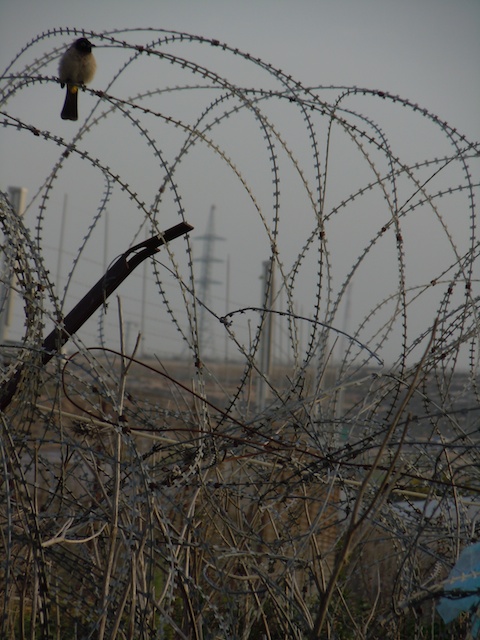
On one side of his house is the 8 meter high concrete separation barrier that scars the landscape for as far as the eye can see. On the other side of his house there is an illegal Israeli settlement which is cut off from him by a barbed wire fence. Flanking each end of his property are locked security gates leading to the military road that track the separation barrier. He is hemmed into his small plot of land on all sides.
Between 2003 and 2006 he lived in his property not owning these keys to access his own property. For three years he relied on the IDF to let him through the security gate each day to return to his own property. It was not uncommon in those days for friends to throw food parcels over the wall so he could feed his wife and children.
I sat outside his broken and bruised property in the fading evening sun just a few days ago. He explained to me he cannot fix any of the broken windows, crumbling walls or holes in the roof as he cannot get a permit off the Israelis to ‘build’ on his own land.
The Israelis offered him a lot of money and a chance to rebuild a bigger and better house on more land wherever he wanted in return for his land. He refused. Why he refused is a mixture of a connection to a family home that has been with him for years, and a slightly more harsh reality. The Palestinians who lived nearby warned him that if he sold up to the Israelis he would no longer be considered a ‘Palestinian’, he would be isolated. An ironic threat given his circumstances.
The meeting comes to a close and he walks us back to the rusted metal gate in the wall. Unlocking the padlock he looks up at the separation barrier and then at the floor. His body forgets what he is doing for a brief moment but his hands are still unlocking the door they have unlocked everyday for the last 6 years.
Mr Ameer lives in the most unimaginable conditions. And this is the point. They are unimaginable. The occupy movement now faces a challenge, to make the unimaginable a reality. We have to make all those who sit behind their double glazing understand that there are people across the UK who are suffering unimaginably because of the gross inequalities in our society. Just as most of you dear readers will struggle to give two hoots about Haney, so most of suburbia will struggle to give two hoots about you! This is our challenge. We have to make people care. This challenge is not related to the degree to which people are suffering, but our ability to enable people empathise with those that are experiencing the suffering.
Be one of the cool kids and share this article
Leave a comment
Filed under Human rights, Middle East, Politics, Social comment
Tagged as Israel Occupy, Michael Richmond, Occupy Palestine