Tag Archives: Steve Hynd

Why we’re fighting dirty against microplastics in our fertiliser and food

This article was written for The Grocer. Please do check them out. If you want to know more about Fighting Dirty click here, if you want to know more about the legal case and would consider supporting it, click here.

We don’t know how many microplastics we eat. This is, in and of itself, alarming. We do have some best estimates: one University of Newcastle study found we consume a credit card’s worth of plastic (5g) every week through inhalation, food, and beverages.

We do also know plastic additives such as bisphenol A (BPA) and phthalates have been found in human urine, that microplastics are in human faeces and, terrifyingly, in our blood. One study hit the headlines by showing how microplastics can pass through the placenta to unborn babies. Perhaps the bigger unknown is the harm they are doing, although initial small-scale studies show some alarming results, such as disrupting the barriers that surround all cells – which may affect their functioning.

One significant, and yet rarely talked about, source of microplastics is that of sewage sludge – the output from sewage treatment works, dried and sold to farmers as a fertiliser. One study shows 1% of slurry is made up of microplastics that have been directly removed from raw sewage sludge at water waste treatment plants. The result is an estimated 31,000 tonnes to 42,000 tonnes of microplastics, or 86 trillion to 710 trillion microplastic particles, contaminating European farmland each year. This study dubbed European farmland the “biggest reservoir of microplastics in the world”. Crucially, the UK was shown to potentially have the highest concentration of microplastic in its soils.

These toxins are not only polluting the soil but are being washed into rivers, ingested by wildlife and entering our food systems.

How has this been allowed to happen? In the UK, the Environment Agency is meant to regulate sewage slurry, but the testing of sewage sludge has not been updated since 1989. This means there is no current checking for plastic particles or most other synthetic chemicals. Worse, a study by the Environment Agency found the sewage sludge being spread on our farmland contains a cocktail of carcinogenic chemicals including PFAS, benzo(a)pyrene, dioxins, furans, PCBs and PAHs.

On the back of this, the Environment Agency published its Strategy for Safe and Sustainable Sludge Use in March 2020. At the time, it committed to taking the necessary steps to bring sludge under the Environmental Permitting (England and Wales) Regulations 2016 by 2023. In other words, they promised to start testing for this cocktail of chemicals so farmers would at least know what it was they were buying to spread onto their land. However, on 1 August 2023, the Environment Agency changed the strategy and removed its commitment to achieve legislative change by 2023, and failed to adopt an alternative timescale.

It was this decision that Fighting Dirty, the new organisation I founded with campaigners George Monbiot and Georgia Elliott-Smith, is now challenging through judicial review. Represented by the environmental team at law firm Leigh Day and Matrix Chambers, we’re arguing that the Environment Agency, as a very minimum, needs to be mandating and enforcing tests to look for microplastics and other toxic chemicals.

This is a crucial part of the puzzle to help us piece together the sources of microplastics, how they make their way through our food and drink into our bodies, and the impacts this might have. Without this basic regulation in place, we continue a status quo that results in huge quantities of microplastics being spread onto our land, much of which is washed off into our rivers, and some of which is taken up into our soils and food we eat.

< Fighting Dirty doesn’t come cheap. I have taken on this legal case myself with George and Georgia. If you can help us fund this case, please do donate through our Crowd Funding page. Every pound helps. >

Leave a comment

Filed under Climate Change, Environment, Food and Drink, Plastic

Bursting the balloon on the new Tory war on drugs

This article was written for Ecohustler. Please do check out the writing on their site.

It’s no laughing matter. When this government referred nitrous oxide, aka laughing gas or NOS, to its so called ‘Advisory Council on the Misuse of Drugs’ (ACMD) one assumed it was because they wanted to be advised. The reality is anything but.

Last week possession of NOS became a criminal offence. As a class C drug, possession can now carry a sentence of up to two years in prison. Those done for supply could face up to 14 years in prison. I will come onto the folly of imprisonment in a bit. But for now, let’s stick with the decision to stick it to the experts. For such a drastic move one would assume the evidence was clear. Far from it.

Ask an expert

The AMCD – you know, the experts – reported on the associated risks of NOS use and were very clear, saying: “Based on this harms assessment, nitrous oxide should not be subjected to control under the Misuse of Drugs Act 1971”. Because they argued, that the “current evidence suggests that the health and social harms are not commensurate with control under the Misuse of Drugs Act 1971”.

And so, after considering this expert advice closely, they of course wasted no time and … did the exact opposite.

To be abundantly clear, this was a political decision devoid of expert backing. First it was the Home Secretary in the form of Patel and then Suella Braverman who supported the criminalisation of laughing gas. But the nail in the coffin of common sense came when the Prime Minister himself backed the move.

In retrospect when Michael Gove quipped in 2016 around Brexit that “people in this country have had enough of experts” it might be fair to assume that by “people” he meant, “The Conservative Party”. Never have we been led by people less equipped to listen to expert advice. Those in power have suckled on their own mind-altering cocktail of extreme arrogance and entitlement combined with a nauseating populism. Like a night out that’s gone off the rails, the consequences are disastrous.

Eton mess

As easy it is to watch this like a melodrama play (and much how Laura Kussenberg’s “State of Chaos” presented it – detached from consequence) it’s essential we focus now on the harms this policy will do and think how best we can mitigate against them.

Firstly, this affects a lot of people. In England and Wales, nitrous oxide is the third most used drug after cannabis and cocaine. And this is heavily weighted towards young people. In the years leading up to COVID (where the numbers dropped for obvious reasons) about 8% of 16-24 year olds used laughing gas.

But, as with so much that relies on the criminal justice system, we know that marginalised and disadvantaged groups will be impacted the most. Trust me when I say we’re not going to see the future Prime Minister’s dormitories in Eton raided anytime soon.

Lock em up

One of the reasons the conspiracy ridden QAnon demand of “lock her up” garnered support was because of an unspoken assumption – that those in power don’t get locked up for serious crimes while others do for minor crimes. As if to cement this idea our political elite sometimes pass laws that threaten prison sentences for relatively innocuous crimes like, say, possession of laughing gas.

The ONS reports that the prison population of England & Wales quadrupled in size between 1900 and 2018, with around half of this increase taking place since 1990. 61% of our prison establishments are now deemed to be overcrowded. 

But dig down deeper and you see trends emerge and who we are locking up – according to the radical hothouse, the House of Commons’ briefing 27% for example identified as an ethnic minority. And research shows a disproportionate number have low levels of literacy (62%] which is four times higher than in the general population. Around 47% of people entering prison have no prior qualifications. I repeat – raids on Eton are not what we are going to see on the back of this legislation.

Our prisons are overcrowded and ill-equipped. While prison sentences generally are known to have a long-term and negative impact on employability, they also can have negative impacts by disrupting family relationships and even putting accommodation at risk.

Snorting in derision

It seems mind blowing that people can’t spot the issue here with politicians on record talking about their own drug use sat in a building that had cocaine residue in 11 out of the 12 toilets tested saying that young and marginalised people should face imprisonment for the possession of a drug that has lower reported harms that many legal drugs such as alcohol.

Regardless, we’re left with a steaming pile of government policy that barely makes sense. For one individual convicted of possession it will cost us an approximate £48,000 a year of taxpayers’ money. A high cost, but nothing compared to the havoc it will wreak onto the lives of those convicted. The war on drugs teaches us that the damage of imprisonment will reverberate through their lives and erode their employability, expose them to serious criminals, potentially risk them losing their home, and put relationships at risk. Oh, and like a duff unregulated drug, it will do nothing to impact the associated harms of drug misuse.

Further reading from people who actually know what the fuck they are talking about:
Transform Drug Policy Foundation’s response
The Advisory Council on the Misuse of Drugs’ updated harms assessment
Crew – A Scottish Charity has a good page on harm reduction measures if you are taking NOS
Drug Policy of The Green Party of England and Wales as an example of what evidence based
policy looks like

Leave a comment

Filed under Health, Human rights, Politics

For fork’s sake: A whole ‘year of inaction’

This article was originally published on Green World.

Stood alongside colleagues from Greenpeace and 38 Degrees on the steps of 10 Downing Street, I held onto the giant cardboard cutlery that held our campaign City to Sea slogan: #CutTheCutlery. Our ask was simple, for the Department of Environment, Food and Rural Affairs (Defra) to ban the most polluting single-use items, like plastic cutlery – just like they have done in every other country in Europe. 

We were there to hand in our petition – which received over 118,000 signatures – to mark the end of the Defra consultation. We had coordinated over 50,000 people to respond to the consultation response. At one point over the Christmas period, we got a slightly panicked phone call from Defra saying they weren’t used to so many responses. So, we summarised it all for them and the findings were clear. 

Steve Hynd and campaigners outside 10 Downing St

Image credit: City to Sea, Greenpeace 

Most respondents backed a ban on all the items being considered – such as cutlery, plates and polystyrene food containers – with support at 96 per cent or above across the board. Crucially, almost two-thirds (64 per cent) said the ban should kick in sooner than the Government’s April 2023 start date, with 35 per cent agreeing with the proposed date. Just 2 per cent said it should be later. 

Importantly, 61 per cent also said that bio-based, compostable and biodegradable plastics should also be banned – something that the campaigners have dubbed ‘critical’ for tackling plastic pollution. The wide-scale use of material substitutes such as bioplastics should be regarded with caution. Bioplastics can be harmful to the environment and won’t shift people or companies away from a culture of throwaway packaging. 

This all seems like a long time ago now. Boris Johnson was still Prime Minister. And I assumed that when the consultation was closed Defra would work through the data, publish a summary and then get to work on their stated timeline for delivery (something which we already said was too slow). Instead, we’ve had a year of inaction – literally nothing. 

I can’t stress this next point enough. The overlapping plastic and climate crises demand action, urgently. Globally, between 8 – 12 m tonnes of plastics leak into the ocean every year and this is likely rising as plastic production from the biggest polluters also keeps on rising. Plastic production has continued to spiral widely out of control (as have the number of Defra ministers supposedly responsible for this!) and we simply can’t wait any longer to introduce these hugely uncontroversial basic first steps.  

England now stands as the only country in Europe without legislation in place to ban polluting single-use plastics such as plastic plates, cutlery and expanded and extruded polystyrene cups and food containers. As I’ve said before, this lack of action is a ‘dereliction of Brexit promises’ and also a dereliction of duty to our natural world.  

In the meantime, Scotland has introduced a law banning these items and Wales has published its draft legislation to do the same. 

This stands in contrast to the origins of these measures. If we think back to the heady days of our membership in the European Union we will see how our political representatives played a key role in agreeing on the EU Sigle-Use Plastics Directive. And for a short time, it looked like the UK was making a concerted effort to be keeping up with these standards. In October 2020 the UK banned some of the same items like plastic straws. 

But alas, that was the last significant shift in this policy space directly looking to reduce the amount of plastic we produce and consume (why all the noise around recycling is a red herring is another article for another day). And that’s why we have once again gone to the media to demand action. And it is why we also need you to join us in our calls. 

If you’ve not already done so, contact your MP asking them the very simple question: “Why has this government not banned polluting plastics like plastic cutlery when; 1) it was promised over a year ago and 2) every other country across Europe including Scotland and Wales have managed to do it.” 

We were promised a Green Brexit. Instead, we’re spending years chasing Defra to implement the very basic environmental standards that have been in place across Europe now for years. Their foot-dragging approach to tackling plastic pollution stands in stark contrast to the rhetoric of being ‘world leaders’ in tackling plastic pollution. It’s time for us to play catch up with our nearest neighbours and then, and only then, can the conversation move to the wider question of how to tackle plastic pollution in its entirety (you can read some of my thoughts on that in the article I wrote for Green World earlier this year).

Leave a comment

Filed under Climate Change, Environment, Food and Drink, Plastic, Politics

The plastics crisis: a fork in the road moment?

This article was originally published on Greenworld.

Steve Hynd, Green Councillor and Policy Manager at City to Sea, explores what the next steps are for the Government in tackling plastic pollution.

‘For fork’s sake, ban the most polluting single-use plastics NOW’. That was the message on our placards outside Downing Street as we handed in a petition with over 117,000 signatures calling on the Government to ban some of the most polluting single-use plastic items now, like plastic forks. 

After we launched this petition, the Department for Environment, Food and Rural Affairs (Defra) launched a consultation proposing a ban of single-use plastic forks, plates and polystyrene food containers. There can be no doubt this is a big step forward in our efforts to tackle plastic pollution. In response, over 51,000 City to Sea and 38 Degrees supporters responded to the Defra consultation supporting the ban, arguing that it needs to be introduced asap, not in 2023 as the Government currently plans. 

Megan Bentall, Head of Campaigns at 38 Degrees, who is used to dealing with large public outpourings of support said: “There’s no doubt about it – this is an absolutely massive show of public support for finally banning these unnecessary and polluting plastic items. 

“The fact that more than 50,000 people have taken the time to participate in a detailed government consultation on this issue is the clearest demonstration yet that we are simply done with these plastic items polluting our environment.” 

The UK: a world leader in tackling plastic pollution?

With a sympathetic government department, huge public support and a pressing environmental crisis, I am confident that we will see these most polluting single-use plastics banned. Undoubtedly a huge win. Our political leaders tell us then that this positions us as world leaders in tackling plastic pollution. 

This last point is far from the truth. The reality is that we are struggling to keep up with the very minimum standards mandated to EU member states through the EU Single-Use Plastics Directive – the same bans that Scotland has said will introduce a year before England, leaving serious questions about internal UK markets divergence. The reality is that this ban, which is being introduced with dragging feet, is the first baby step on a much longer journey. 

It’s with this in mind that I wrote a letter with Allison Ogden-Newton OBE, Chief Executive at Keep Britain Tidy and Jamie Peters, Interim Director of Campaigning Impact at Friends of the Earth to the Environment Minister, George Eustice, outlining the next steps we felt the Government needs to take if they are serious about tackling plastic pollution. 

The letter argues that the Government needs to go beyond just banning the odd item and instead set ambitious targets in the Environment Act. These, we argued must include: 

  • An at least 50 per cent reduction in non-essential single-use plastics by 2025.
  • An overarching plastics reduction target, including but not limited to single-use plastics. This would ensure a progressive reduction in the overall use of all non-essential plastics, building towards preventing plastic pollution of the environment as far as possible by 2042. This must address those harder to tackle plastics from vehicles tyres and brakes and from clothes among others, and the specific problem of microplastics.  
  • Reuse targets of at least 25 per cent of packaging being reusable by 2025, rising to 50 per cent by 2030. This would guarantee that a large proportion of the reduction in plastic pollution is met by an increase in the market share of reusables, and make sure substitutions of single-use plastics for other damaging single-use materials are avoided. 
The solutions of the future

Let’s take each of these points in turn. The first is to set a legally binding target to reduce single-use plastics by 50 per cent by 2025. Sure, the ban on the most polluting items will go some way towards this. But it is also an acknowledgement that our waste and resource systems are stretched to breaking point and we cannot just recycle our way out of this crisis. We need to reduce the amount we produce. When we are flooding the world with plastics, we can’t just need to mop the mess up – we also need to turn the taps off.  

Secondly, we called for an overarching plastics reduction target, including but not limited to single-use plastics. This acknowledges that a lot of plastic pollution does not come from plastics we can see and touch like bottles and plastic forks. Instead, microplastics and nanoplastics are shed directly from clothing and car tyres. This isn’t a small change either, the microplastics from car tyres are responsible for more than 200,000 tonnes of microplastics entering our oceans every year. A recent study that found nanoparticles dating back to the 1960s at both poles were surprised to find a quarter of the particles were from vehicle tyres. 

This problem needs to be addressed head-on as part of our wider efforts to tackle plastic pollution. And this is why we sought reassurance and sight of the Government’s plan to tackle plastic pollution in its entirety, not just as a waste and resource question. Do they even have one? 

We, politely, pointed out that there was already one in place in the form of the Plastic Pollution Bill that is due back for its second reading on March 18. This isn’t the only way of tackling the issue, but it is a concrete and well thought out example of a legislative approach to tackling plastic pollution in its entirety. At the moment, we don’t know if the Government has an equivalent plan in place. If it doesn’t, it needs one urgently, and if it does, we urgently need to see it to feed into it and make it as good as possible. 

Lastly, we called for a reuse target of at least 25 per cent of packaging being reusable by 2025, rising to 50 per cent by 2030. We simply can’t talk about plastic pollution and a reduction in single-use plastics without talking about increasing the market share of reuse and refillable packaging. For consumers, this could be normalising refilling water bottles from public fountains, drinking coffee from reusable cups or topping up cereals from supermarket dispensers. 

Consumer demands and market movements

These are the packaging solutions of the future that we need to legislate for now. We know from our own research that there is consumer demand for this. Polling by City to Sea and Friends of the Earth to mark World Refill Day, found three out of four people (74 per cent) would like to see more refill options, for things like dried foods, laundry detergents and takeaway coffees, available to them so they can limit the amount of single-use plastic in their lives. While more than half of all people (55 per cent) think supermarkets and big-name brands are not doing enough to address plastic pollution. Crucially, 81 per cent of Brits want the UK government to make refillable products easier to buy and more widely available, as a main priority for reducing plastic pollution.

We also know there is movement in the markets towards these solutions. Coca-Cola recently announced a commitment to 25 per cent of packaging to be reusable by 2030 (something that I welcomed with healthy scepticism here). What we now need is for the Government to commit to legally binding targets to give smaller and medium-sized businesses the confidence and reassurances they need to invest in these systems. This answers not only a consumer demand, but a planetary ecological necessity.

The next six months are crucial and what we have outlined here is a pathway for the Government to take to show it is truly committed to tackling the plastic crisis (before anyone comments “what about the climate crisis?”, it’s important to remember these are two sides of the same coin). 

While some might sneer at the small steps that are being taken to tackle plastic pollution, I see them as important movement. This is a rolling start for a much bigger journey. But if Defra wants to convince us that they are serious they need to show some urgency in these first steps and to also signal that they understand the length of the journey that they are on. 

If they can show they are travelling the right path, we are there as a partner to travel with and to help carry the load. But if they fall from the tracks, we won’t hesitate in telling them where they’ve gone wrong and supporting them to get back on track.

Leave a comment

Filed under Environment, Politics

The government’s plan to ban single-use plastics is too little too late

This article was originally published by Left Foot Forward.

There is a flood of plastic waste entering our rivers and oceans. And we need Government, not just consumers and businesses, to help turn off the taps.

Over the last 20 years we’ve produced more plastic than in the whole of the last century. Global production has increased twentyfold since the 1960s. It is expected to double again over the next 20 years and almost quadruple by 2050.  We now produce over 300 million tonnes every year – up to half of which is single-use. Only 10% has ever been recycled.

This is having a devastating impact. Globally, between 8 – 12 m tonnes of plastics leak into the ocean every year and it is now estimated that more than 150 million tonnes of plastics have accumulated in the world’s oceans.

The recently announced Marine Conservation Society beach clean data starkly tells us that for every 100m of coastline we have an average of 385 pieces of litter – the vast majority of which is plastic.

It is understandable then why many, including ourselves at City to Sea, have welcomed DEFRA’s recent announcement to ban some of the most polluting single-use plastics. Having already banned straws, cotton buds and coffee stirrers, they are now consulting on banning single-use cutlery, plates and polystyrene cups. They declare that this makes them “world-leading”.

Sadly, for our planet, this is far from the truth. What they are proposing is the very bare minimum and does little to answer our concerns about their wider efforts to tackle plastic pollution.

Too late  

In 2019 the EU passed the EU Single-Use Directive which included provision to ban all of these most polluting single-use items. This came into force in July 2021. At this point we had heard nothing from government about their plans and so we launched a petition and dubbed their lack of action a “dereliction of Brexit promises”. After nearly 100,000 signed our petition DEFRA scrambled to announce that they planned to announce a consultation on banning these items.

3 months later – last week – they did finally announce a consultation. To dub this game of policy catch up as “world-leading” is frankly “world misleading”.

And this tardy approach to a very immediate environmental problem has carried on. Despite including positive and welcome measures in the consultation (such as banning harmful bioplastics) they are now not proposing to bring this ban into force until 2023. This is two years behind the rest of Europe and a year later than Scotland’s recently announced proposals.  

We’ve established that this action is too late, but it is, again sadly for our planet, also too little.

Too little

During the Environment Bill we repeatedly challenged Government with cross-party support to introduce a legally binding target to reduce plastic pollution as a whole. We wrote about why this is important for Left Foot Forward. But Government chose to reject this, asserting that they wanted a more ‘ambitions and holistic target’ that deals with all kinds of waste not just plastic.

And so we are left with a big, like an elephant in the room sized big, question. What is government’s over-arching strategy to tackling plastic pollution? Do they have a plan for example for the microplastics from car tyres that are responsible for over 200,000 tonnes of microplastics entering our oceans every year? Do they have a plan for supermarket food wrapping plastics or for plastics flushed down our toilets causing sewage blockages and sewage overspills?

The Environment Act empowers them to use big policy leavers. They can introduce a Deposit Return Scheme, introduce a tax on single-use plastics or forcing greater consistency in recycling standards. But for us to have any confidence in these measures being suitable for the scale of the problem we face, we need Government to commit to ambitious and legally binding targets.

In 2022 they will be setting various ‘waste and resource’ targets – within that needs to be an ambitious target to reduce single-use plastics by at least 50% by 2025. Boris Johnson was right when he said  “we’ve all got to cut down our use of plastic”.

But, and this is important, they also need to explain how they plan to tackle, measure and reduce harmful microplastics that don’t even enter our waste and resource systems. A lot of plastic pollution isn’t plastics we hold in our hands on a day to day basis but it is found in the food we eat, the oceans we swim and even the air we breathe.

No-one ever said this was easy, but if government wants to be seen as ‘world leaders’ these are the policy questions they need to start answering.    

Steve Hynd is Policy Manager at City to Sea, a not-for-profit that campaigns to stop plastic pollution at source.

Leave a comment

Filed under Environment, Politics

From warm words to warm homes in Stroud

This article was published in Greenworld – the membership publication of the Green Party.

New research suggests that the UK’s retrofitting industry needs to grow ten-fold if the UK is to decarbonise its housing stock at a suitable pace in line with climate science. This challenge is substantial. We are missing much of the skills, supply chains, and wider infrastructure to make this happen. The Government continues to talk the talk of decarbonisation and retrofitting, but has so far failed to put significant money where its mouth is. 

For this challenge to be addressed we need central government, local government, businesses and residents working together.

Local government has a once-in-a-lifetime opportunity to kick-start efforts to tackle this by investing now in its own housing stock. And that’s exactly what Stroud District Council’s Housing Committee has proposed to do. The plan will see us investing £180m in the next 30 years to retrofit, insulate and decarbonise the Council’s five thousand homes. This is part of the Council’s ongoing commitment to address the climate emergency as part of its wider Carbon Neutral 2030 strategy

The impact of this investment will be significant. It will see a reduction in emissions of up to 24.5 per cent, with council tenants saving up to 11 per cent on fuel bills. This new investment will mean that, on average, council homes will meet Standard Assessment Procedure (SAP) C ratings by 2030. 

The Stroud District Council Housing Committee’s plan, which was agreed this month, now needs full council support – if passed, the programme will be accelerated, with more money invested. It will first be targeting houses with the poorest SAP ratings, ensuring those that will benefit the most receive support first. 

For those who don’t know, Stroud District Council is run through a ‘Cooperative Alliance’ made up of 15 Labour Councillors, 13 Green Councillors and three Liberal Democrats. The Housing Committee is chaired by a widely respected long-standing Labour Councillor and the Vice-Chair is a newly elected Green Councillor, Chris Jockel. This level of investment stands as a testimony to the possibility of progressive politics in power. It also shows how a Green voice on the council over many years – Stroud District Council being one of the first councils to elect a Green Councillor – has shifted the Overton window to such a degree that now these bold measures were agreed with little disagreement, even from the Conservative opposition.

There is good climate thinking behind focusing on residential properties. They currently account for the second-largest source of carbon in the district, about 17 per cent, following road transport. However, the five thousand homes the council owns is only a drop in a heavily polluted ocean. In this sense, there is a wider question about how the council can ensure that its investment can lead as a catalyst for action from within the private sector.

This ‘early’ – in terms of market economics, not climate necessity – investment can and must act as a guarantor of a base-level of demand within the region, in order for the private sector to sure up supply chains of skills, labour and technologies. Businesses will know that it’s the Stroud District where there will be decarbonisation and retrofit work taking place. As such, the District will offer a degree of security for medium-term business planning, and, crucially, can stress test the currently shaky supply chains as heat pump demand grows

Council investment can also act as a catalyst for the training that is currently missing from the labour market. Stroud is well placed to deliver this with its highly praised Further Education (FE) college in Stroud. 

But, and this can’t be stressed enough, these policy challenges could and should be fixed through central government intervention much more efficiently. This does not mean repeating the mistakes of the disastrous Green Homes Grant that installed just 49,000 efficiency measures to date, saving a meagre 0.04 per cent of total residential sector emissions, but instead focusing on the use of large-scale financial levers to enable bodies like local authorities to invest at scale.

It shouldn’t be up to local authorities to stretch their Housing Revenue Accounts to fund these projects. The Government could, with the stroke of a pen, free up borrowing from local authorities’ general reserves linked to expected savings to allow for much bigger investments. It could also be providing more strategically directed grant funding, which we know has a dramatic effect in bolstering local jobs and skills. These are, by definition, shovel ready ideas, with local authorities like Stroud District Council pushing their finances to deliver as much as they can.

Lastly, all of this requires a public behaviour change campaign on a scale rarely seen. You can install as many heat pumps, insulation, and other energy efficiency measure as you want but if one doesn’t empower people on how to interact with them efficiently, then we are doomed for failure. In Stroud District Council, there is significant investment happening on improving council/tenant interactions, but much more needs to be done in an area traditionally characterised by poor engagement and basic service delivery. The success of the programme might well stand or fall on whether we get this piece of people-oriented work right. Only time will tell if we do or do not.

In Stroud, we are ambitious in our efforts to tackle the climate emergency and to offer residents safe, warm, and green homes to live in. We are putting as many pieces of this jigsaw together as possible. At this stage, it’s important to be open and honest about the challenges we are facing; finance, supply chains, skills, tenant engagement; and as we move forward, it’s important to also be honest about our successes, challenges and mistakes. This process will, in the medium-term, help to build confidence in the private sector, which is where we need super-sized action to occur if we are to meet the climate action targets that science dictates.

Details of the decision made by the Stroud Housing Committee can be seen on agenda item 6 on last month’s report pack to the committee.

Leave a comment

Filed under Environment, Gloucestershire

Plastic pollution; how Britain now trails Europe after ‘Green Brexit’ failure

This article was originally published as an opinion piece for The Yorkshire Post.

Is Britain’s ‘Green Brexit’ falling at the first hurdle? 

Back in 2018 Michael Gove gave a speech declaring “a new era” for our environment. In that speech he categorically said, “we’re planning to go further in dealing with the pollution caused by single use plastics”. Two years on and these promises are starting to ring a little hollow, as the government drags its feet towards the very first hurdle along the route to stop plastic pollution, scratching their heads and idly discussing whether or not they’re going to need a stepladder to get over it.

From July 2021, bans on single-use plastic cutlery, plates, polystyrene trays and other food packaging are coming into force across Europe as part of the EU’s Single-use Plastics Directive. The ban was agreed by the UK when we were part of the EU. It was intended to tackle the most polluting single-use plastics that were also the easiest to replace or do without. In other words, these restrictions are the absolute minimum that the EU expects member states to achieve.

Two years after the ban passed through the EU Institutions, England has yet to even launch a consultation asking if some of these items should be banned – the first step in the legislative process. This stands in marked contrast to the Scottish Parliament and Welsh Assembly who have both consulted on a full ban on all of these most polluting items. England is falling behind not just the rest of the EU, but also the other nations within the UK. 

This is why over 20 organisations have written to this government, asking them to take this most basic of steps.

Whilst it is the easy, logical first step in a longer process, it is still a significant move. Packaging from take-away food and drinks is a huge cause of plastic pollution and items like plastic cutlery and take-away containers are consistently in the top ten most polluting items found on beaches around the world. Indeed, new research has revealed that plastic food containers and food wrappers are two of the four most widespread items polluting our oceans, rivers and beaches. 

We also know that a full ban on these items would be popular. At the time of writing a petition by City to Sea and Greenpeace calling for this is just short of 100,000 signatures, days after being launched, and polling consistently shows that plastic pollution is one of the UK public’s biggest environmental concerns.

In response, the government will claim to be a ‘global leader’, pointing to their ban of (some) microbeads, plastic straws, coffee stirrers and cotton buds. But we’re falling behind all of our neighbours in dealing with this problem, and we’re still Europe’s biggest plastic pollution producer. 

A genuinely world leading approach to tackling plastic pollution would be one of the following. Either rapidly adopt the EU measures, and then use the UK’s influential position in this year’s international environmental talks to try to get as many other nations as possible to adopt them as a minimum international standard. Or alternatively, implement fully comprehensive, legally binding limits to plastic pollution to their flagship Environment Bill, showing real leadership and providing a more ambitious model for other nations to follow.

Instead, our government is charting its own course, dipping below international minimum standards at times, while also failing to demonstrate a vision for the way forward. What we have is a government that echoes the language of the plastics industry, talking up the importance of recycling while ignoring the ever growing mountain of plastic that will never be recycled and ends up incinerated, in landfill or exported, damaging other countries’ environments and the health of their people. 

If this government was serious about tackling plastic pollution it could and should immediately look to fully transpose the EU’s Single-Use Plastic Directive into UK law and  lobby for these minimum standards to be adopted internationally. At the same time it could and should be working to introduce legally binding targets to reduce plastic production as part of the Environment Bill. Two UK supermarkets have already pledged to halve their plastic packaging by 2025. The hurdles are all clearable, we just need to aim that little bit higher.

Leave a comment

Filed under Politics

Why we need a legally binding target to reduce plastic pollution in the Environment Bill

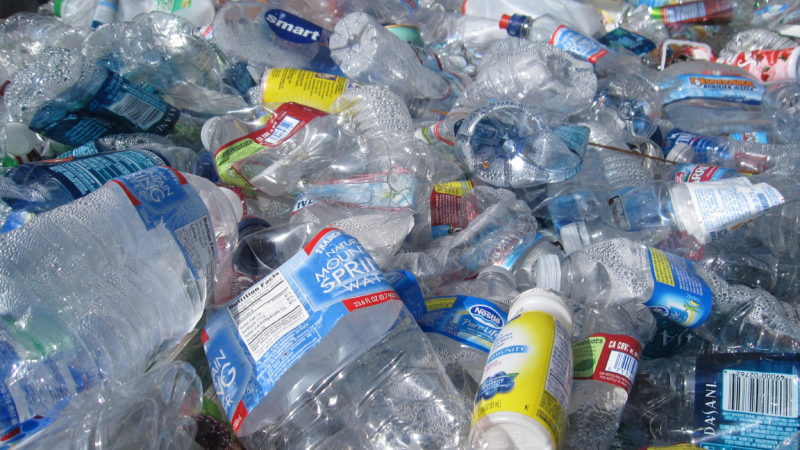
plastic bottles

‘This is the government’s last chance to show real leadership ahead of COP26’

This article was first published on Left Foot Forward – please do support them. We need independent media outlets now more than ever.

For many, the defining image of plastic pollution is the one shaped through Blue Planet 2 – that of floating plastic bottles in the middle of the ocean.

It’s a heart-breaking image that has spurred much action but in truth it barely scratches at the surface of the problem. Literally. It is thought that the majority of plastic in our oceans is between 200 and 600 metres below the surface.

And while this prevailing image of floating bottles has undoubtedly acted as a catalyst for incredible action, and it has spurred the development of some positive policy decisions like that of the now sadly significantly delayed Deposit Return Scheme (DRS), it has, seemingly, blinded decision makers to the wider problem of plastic pollution that is in the air around us, in the food we eat and the oceans we rely on. 

At the latest hearing of the Environment Bill at report stage, Conservative backbencher Chris Loder MP submitted an amendment that specifically would force government to set legally binding targets to reduce plastic pollution – covering the entirety of the problem. This amendment was backed by businesses, MPs, faith leaders, academics and campaigning organisations alike, including City to Sea. 

The Environment Minister, Rebecca Pow’s, response was telling. Pow’s reply was that government could not (or would not) support Loder’s amendment because they want a more ‘ambitions and holistic target’ that deals with all kinds of waste not just plastic. On the surface this seems reasonable, but like plastic pollution itself, if you scratch the surface of this logic you find a much bigger problem. 

Firstly, and crucially, by tying up efforts to tackle plastic pollution with “resource efficiency” you miss major sources of plastic pollution including most microplastics. These pollutants are not even entering our waste streams but are going directly into our natural environment. They are found in alarming numbers in the air we breathe, the food we eat and the oceans that sustain life itself.

These often do not come from conventional “waste and resource” sources like floating plastic bottles but are often shed directly into the natural environment. Think for example of the microplastics from car tyres that are responsible for over 200,000 tonnes of microplastics entering our oceans every year. Microplastic pollution may be largely invisible to the human eye, but it is profoundly felt in our natural environment and can have a potentially devastating effect – especially as it can be mistaken for food by some of our smallest ocean creatures, which are then eaten by bigger creatures as part of the food chain.  

Secondly, think of all the plastic that should, but for various reasons, doesn’t, even enter our waste streams. For example, every year water companies are spending millions on unblocking sewers that are overflowing due to plastic wet wipes and period products that have been flushed down the loo. Our riverbanks are strewn with these grim physical reminders of the plastic crisis we face. 

The government’s response and refusal to include plastic pollution in its targets section of the Environment Bill is born from either ignorance or lack of concern.  Instead of focusing on reducing the metric that really counts, plastic pollution, this government repeatedly echoes the language of the plastics industry in talking up the role of recycling. Recycling is important, but it must be seen as one of the many steps needed to reduce plastic pollution, not the end goal in of itself. 

We know, and I am sure the Minister knows, that recycling doesn’t currently work at the scale we need it to and we can’t recycle our way out of this plastic crisis. We need government to focus on what does work – and that’s to implement and enforce the waste hierarchy in all areas of policy, and to then set concrete, legally binding, targets to reduce plastic pollution in their flagship Environment Bill. 

They can still do this. The Environment Bill is due to come after the Queen’s Speech in May – this is the government’s last chance to show real leadership ahead of COP26 on one of the most pressing environmental issues of our ages. The only question left to ask is, will they? 

Steve Hynd is Policy Manager at City to Sea, a not-for-profit that campaigns to stop plastic pollution at source.

1 Comment

Filed under Environment

COVID-19 testing “an utter shambles”

Last week my two young children, 1 and 3 years old, came down with a cough – one of the Coronavirus symptoms. As the advice states I tried to get them tested, but the nearest available test centre was over 2 hours drive away in Telford. I drove two ill children for hours to the test site, but when we finally arrived, I was told that the whole site was closed because they’d run out of tests. This was awful in of itself. But this is then what happened next.

I tweeted about that experience and honestly things went a bit crazy for a while.


That tweet was shared nearly 9,000 times and reached over 1.5 million people. Hugh Grant shared it. And then Piers Morgan shared it as well. And this was when I got the call from Good Morning Britain asking if I wanted to come onto the show the next morning.

It was very, very, wet in the part of mid-Wales I was staying.

But from here things went really wild. I was getting a dozen answer phone messages every hour from producers and more replies to my tweet than I could read. It had the potential to swallow my whole day when my kids were ill and I was meant to be on holiday. So I agreed with my wife that I would limit it all to a few hours after which I would then go back and be with my ill kids. In that time I spoke to the BBC, ITV News, Sky News, C5 News, the i paper, LBC, Heart FM and more in back to back interviews. In retrospect those few hours were all a bit of a blur.

To my surprise, GMB asked if I would then go back on to give an update the next morning. There were still no tests available (I was offered one near Liverpool first thing which we decided not to take) and the problem across the country only seemed to be getting worse.

What was I hoping to achieve? Well when I posted about my experience on social media and parents, carers and key workers up and down the country got in touch with me to share their experiences. None of them were good. I had an opportunity to speak up for people who were being let down by incompetence and a failing system.

I also mentioned the experience my Dad’s care home had. How they worked in a vacuum of information as they lost residents to coronavirus. I wanted to say – to anyone who would listen – that this incompetence costs lives. I wanted to be able to say to those in power how this was affecting ordinary people day in, day out.

Right now we could and should have a functioning testing and track and trace system in place. This government, this Prime Minister and his health secretary, need to take responsibility for this. Without responsibility being taken, public faith in the programme will continue to diminish. The main take-away from the existing evidence is that you NEED public confidence to ensure compliance.

Instead, people’s lived experience is that of frantically trying to book a test, only to find that there’s none – some have been told to drive 500 miles to the nearest test centre. Essential workers staying home, patients having operations cancelled and students and staff stopped from attending school – simply because they cannot get a test.

This just diminishes faith, not only in government, but in the importance of complying with the testing programme in general. I just can’t get my head round how the PM and his ministers do not see this as a failing they should be taking responsibility for. The Government’s ‘world leading’ testing system is in utter chaos and all they tell us is that they are ‘shooting for the moon’. As the British Medical Journal (BMJ) writes:

England’s performance in implementing a routine test, trace, and isolate programme doesn’t inspire confidence for upscaling to a moonshot. Missed targets, misleading “facts,” slow results, and false bravado are everyday occurrences.3 Lucrative contracts are awarded to private companies by opaque processes, while money for patients is squeezed, as Helen Salisbury points out.4 All this without accountability or apology for mistakes and missteps.

This is deadly serious. The number of weekly coronavirus cases in Europe topped 300,000 last week – higher than during the first peak in March. More lives are being put at risk.

That’s why I’m calling on Matt Hancock and Boris Johnson to take responsibility and urgently sort this mess out. And this is why I set up this Change.org petition. If government is willing to listen, the discontent at the metaphorical school gates is loud and easy to hear. Listening now is the first step to recovery and their only path to align themselves with the mood of the country. If they don’t do this they will loose the public and their track and trace system is destined for further failure.

This is a cost too high for all of us. If you can please do sign and share it.


Update: Here is Jacob Rees Mogg in the Commons today illustrating my concern about how out of touch this government seems to be:

Leave a comment

Filed under Politics

Interview: Hotels move to ban tiny shampoo bottles

I recently spoke to PRI about the news that Marriott International would ditch tiny plastic soap bottles from its hotels worldwide by the year 2020. It’s a move that other hotels are making, too, including phasing out the use of other single-use plastics. I spoke with host Carol Hills and you can listen to the interview below or the whole episode of The World online by clicking here.

We also need supermarkets to make it easier for people to travel with less plastic. Sign the petition demanding supermarkets stock plastic-free toiletries so that we at least have a choice!

Leave a comment

Filed under Media, Travel

Hotels are ditching mini toiletries – here is how you can help them do it faster

044-CityToSea_TravelCampaign_TwitterInfographics_1200x675px-V4This article was originally published in Pebble Magazine, as part of City to Sea (where I now work as their Campaigns Manager)’s #PlasticFreeTravel campaign.

There was a time when no holiday was considered complete without trying to eke out the most miniscule amounts of shampoo from those mini bottles that haunt hotel bathrooms. But the times they are a changing.

This week it was announced that all hotels run by InterContinental Hotels Group (IHG) will remove mini toiletries from their rooms, after realising they get through 200 million mini bottles of shampoo, shower gel and so on – per year.

The move will see their hotel chains such as Holiday Inn and Crowne Plaza hotels taking the small single-use plastic bottles out of their 843,000 rooms by 2021.

These toiletry bottles have been a curious part of a hotel experience for as long as most of us can remember.

Alongside the shower cap, the free hand conditioner that smells like Aunt Marjorie’s potpourri and the trouser press they were an unquestioned part of hotel room ‘experience’.

Premier Inn, the UK’s largest hotel chain, has never used them and instead fitted rooms with dispensers to cut soap waste as well as plastic pollution. It’s a move that has saved them money as well as the environment.

Last year Marriott Hotels announced they were scrapping the mini bottles and just a few months ago the first ever piece of legislation was introduced in California that would see these tiny toiletries banned – forever.

But how did hotels ever think these environmentally disastrous and economically costly bottles were ever a good idea?

Why do we need to get rid of mini toiletries?

If there’s anything that conjures up single use plastic when you’re on holiday, it’s hotel toiletries. Mini bottles of shampoo and conditioner might be handy in the moment but they contribute to our overwhelming, global plastic crisis.

The Ellen MacArthur Foundation has worked out there will be more plastic than fish in the sea by 2020. Plastic makes up 60-90% of all marine pollution, with over eight million pieces of plastic ending up in the oceans, every day.

In addition to the millions of mini toiletries that hotels get through, research suggests that 15.5 million Brits buy travel size bottles when going on holiday with many saying they would make no effort to recycle them. This results in an estimate 980 tonnes of plastic bottles being dumped by holiday makers each year. For context, that’s the equivalent to two-and-a-half Boeing 747s.

But there is good news for the summer.

We don’t have to wait for our government to ban these things before we next enjoy a weekend break. There are other ways to enjoy a cranial cleanse that doesn’t involve harming the oceans.

Hard bar shampoos and refillable bottles

The first is an obvious one. There are shampoo bars out there that come with no plastic packaging at all. But if you are really committed to the squelch of liquid shampoo as it oozes out onto your palm, then there is no reason not to buy refillable bottles.

There is a whole world of travel refillable containers out there waiting for you to decant your shampoo into for your mini break. To make this easy for customers though we need all the big supermarkets to stock these products and give customers a real choice.

Ask your travel brand to ditch plastic

The travel sector is changing fast. Some Thomas Cook research found that 90% of its customers care about plastic pollution and want them to do something about it.

In addition, 60% are more likely to use a travel provider who took plastic pollution seriously.

At the same time refill schemes are slowly becoming the norm, so you don’t need to keep buying single use plastic to take away.

Waitrose recently became the first of the big supermarkets to introduce a refill station in its store. This allows customers to top up dry goods and beer and wine in reusable containers.

Not near a Waitrose? See our list of over 90 zero waste stores across the UK where you can refill haircare, pick up hard bar shampoos, bamboo toothbrushes and other plastic free travel essentials.

And then there is the pioneering Refill App – that allows you to find the nearest place you can refill your reusable water bottle for free.

Ask your hotel about their recycling and eco-friendly policies

We all know greenwashing is rife. Don’t believe the myth that recycling will solve everything. Remember that of the more than six billion tonnes of plastic waste produced by 2015, only 9% has ever been recycled. Of the rest, almost all of it is now in the landfill or the natural environment (79%) with the remainder incinerated.

If you happen to find yourself sharing a shower with one of those ridiculous mini bottles of shampoo; firstly, don’t use it and secondly, let management know you don’t want them to use them. It might seem like a small move but in these rapidly changing times hotel chains need just the smallest of nudges to adopt more sustainable approaches.

You can be that nudge.

Leave a comment

Filed under Travel

Podcast: Brexit, Climate Crisis and The Green Party

I recently had the pleasure of talking to the good folk at The Big Green Politics Podcast. If you are in the small group of people who don’t feel that you hear me voice my opinions enough then you can listen again below.

Do follow the podcast – they offer an interesting international alternative take on the big (Green!) issues of our day. Previous episodes available here >>> and follow them on twitter here >>>

https://soundcloud.com/biggreenpoliticspodcast/uk-politics-special-brexit-climate-crisis-and-the-greens-with-steve-hynd

2 Comments

Filed under Climate Change, EU politics, Politics

Adventure holidays and trips in Africa for 2014

This article was written as part of The Guardian’s ‘Adventure Sports Series’.

Kayak the Nile
From kayaking the Nile and mountain biking in the shadow of Kilimanjaro to exploring Africa’s amazing national parks.

Jinja, Uganda, is a town on the banks of the Nile that is gaining a reputation as the extreme sports capital of east Africa. This is, in part, thanks to the range of whitewater rapids on the nearby stretch of the river Nile.

You can read the whole article on the Guardian Travel site by clicking here >>> 

2 Comments

Filed under Outdoors, Travel, Uganda

Millions in Africa do not have access to morphine and suffer unnecessary preventable pain

This article was originally published on Left Foot Forward, Britain’s No 1 left-wing blog

Palliative care

Palliation – literally, the removing of symptoms of life-limiting illnesses such as pain – has been brought sharply into focus in Africa due to the dual burden of an ageing population and an increased disease burden.

To give just one example, 70 per cent of people living with HIV worldwide live inside sub-Saharan Africa, a region which constitutes only 12 per cent of the global population.

Millions of these people in sub-Saharan Africa require palliative care to address the medical/physical, social psychological and spiritual challenges as a result of the life-limiting illnesses.

Despite the large demand, there is still little palliative care provision across much of Africa. Many countries do not have any element of palliative care: no hospices, no formal training for medical professionals, no or little integration of palliative care into national health systems and often little public awareness.

It is estimated that only 9 per cent of countries in Africa have palliative care integrated into mainstream health services.

One of the largest challenges facing pain relief efforts in Africa is the availability of, and access to, oral morphine. It is thought that Hospice Africa Uganda, a centre of excellence of palliative care in Uganda, can mix a three week supply for a patient for ‘less than a loaf of bread’.

Despite this, oral morphine is still not widely available to most Ugandans, let alone the rest of Africa.

Bernadette Basemera, a palliative care nurse based in Kampala, explains part of the problem:

“Morphine wrongly incites fear: Doctors wrongly fear patients becoming addicted, the police wrongly fear drug related crime, and members of the government fear falling short of international drug control frameworks.”

As a result of this fear, millions do not have access to morphine and suffer unnecessary preventable pain.

In recent years however, there have been signs that this might be a thing of the past. In the last two years alone four countries – Rwanda, Swaziland, Tanzania and Mozambique – have all adopted stand alone palliative care policies.

Although policy development does not immediately translate into oral morphine availability, a number of countries such as Kenya, Nigeria, Zambia, Namibia Ethiopia and a few others have improved access to oral morphine. Meanwhile Hospice Africa Uganda, in a partnership with the Ministry of Health of Uganda, continues to produce and distribute oral morphine whilst at the same time offering training courses to practitioners from all over Africa.

At the heart of these developments are passionate workers like Bernadette. Once again working late, Bernadette describes why she wants to work in palliative care, saying:

“Palliative care is the sort of care that you would hope you and everyone you care about receives. No one wants to think of a loved one suffering unnecessarily.”

Bernadette offers a simple motivation for her work in palliative care. This simple motivation, however, could benefit millions of Africans. Palliative care needs to be rolled out, and people like Bernadette might just be the way to make it happen.

1 Comment

Filed under Health, Uganda

On Israeli settlers: “They come down from the hills and get us with dogs and guns”

I have just stumbled across this article that the wonderful Kate Hardie-Buckley wrote after visiting me and my former colleague Emmet Sheerin in Yanoun in the Occupied Palestinian Territories.

I don’t think I shared the article on Hynd’s Blog at the time.

The title, “They come down from the hills and get us with dogs and guns“, might read to some as being as slightly over the top. The fact that I can promise it isn’t says a lot about life in Yanoun.

Anyway, have a read of the article and let me know what you think.

PS – you can also watch Emmet’s video about life in Yanoun.


Leave a comment

Filed under Human rights, Media, Middle East, War

My love affair with Kampala

I am on an elongated honeymoon with city in which I live, Kampala. A rational mind living in this city would see the congestion, the number of motorbike accidents, and the levels of petty theft, but the mind of a lover is anything but rational.

My mind sees green hills, standing pert overlooking the beating heart of the city centre. It sees the taxi buses that serve as the blood flow of the city, bringing life to each of its extremities.  It sees the millions of people swarming through this landscape, each like an atom of the body, for a limited period, an inseparable part of this wider being – Kampala.

The irrationality of my mind was brought into focus a few days ago when I was walking back from work over one of Kampala’s hills. On this occasion the weather was close and heavy. It had been raining most of the day and it felt like there was more to come.

On this day, a thick mist was rising from the sodden ground and dancing in the air with the heavy low clouds. Walking through this was like entering a steam room as the thick air stuck to the inside of my lungs.

For most in Kampala, their thoughts in these few minutes were on finding shelter before once again the heavens opened. My mind though, was caught in that moment, enjoying it, literally breathing it in.

I stopped and stood, just for a few seconds, and watched the moisture lift from the ground and glide through the overhanging tree branches. Through the mist I caught glimpses of other houses and people making preparations for the inevitable downpour. But for those few seconds, it felt like I was alone in the city.

The air of Kampala was slipping into me, dissolving the distinction between the two of us, for a few seconds making us one.

Of course the sky then opened dropping heavy thunderous balls of rain. Every other resident was dry under shelter as I was striding through the streets with thick red mud clinging to my feet.

Somehow though, I didn’t mind, I still enjoyed it.

As with every honeymoon, I know this will all end. I know there will be a day where I will be walking the streets and feel my wallet slip from my pocket as the sun burns that bit harder onto the back of my neck  and I will long for nothing more than the soft comforting embrace of the temperate valleys from which I am from.

But that day is not here yet and so, just like every other lover around the world, I will continue forwarded, blinkered by the beauty of all that sits around me appreciating it to its fullest.

1 Comment

Filed under Travel, Uganda

Eugene Grant: “I prefer the term dwarf”

173796_507019340_815239236_n

Eugene Grant is a dwarf and the founder of the viral site EveryDayDwarfism that chronicles the day-to-day experiences of what it is like to be a dwarf in 21 century Britain. Despite his experiences, Grant is optimistic that he can contribute to changing people’s understanding of dwarfism. Steve Hynd caught up with him to find out more.  

For many readers the term ‘dwarf’ is one they are not familiar with. I know some people are nervous about using it, afraid that it is derogatory. Can you tell us what the word means to you?

I personally much prefer the term ‘dwarf’ as opposed to others like ‘midget’, which many dwarfs I know find offensive. But, for me – and this is where the whole idea of political correctness becomes redundant – what’s more important are the intentions behind the terms used.

People can be ‘politically correct’ but employ such words with malicious intent; others may use quite derogatory terms without any idea or intention of insulting or hurting a person. It all depends on the way such terms are framed.

Can you tell us a little about why you set up EveryDayDwarfism?  

The aim behind EveryDayDwarfism is to document and present just some of the things that I – and my partner who also has dwarfism – go through during our day or week. Its purpose is to try to make people just that little bit more aware as to the things we encounter as dwarfs.

A lot of what we experience, I would put down to stigma and discrimination still being relatively acceptable to lots of people. The whole tone of the site is not supposed to be angry or ‘martyr-ish’, but relatively neutral, matter-of-fact and informative.

It’s to say: ‘these things happen, quite regularly. I just wanted you to know’.

Within the EveryDaySexism movement, there is a strong feeling of finally ‘shouting back’. Within EveryDayDwarfism it also feels like there is quite a lot of rage, is this an important element of responding to discrimination?

It depends what you mean by rage. Rage is very important but it needs to be channelled in the right way and used very carefully.

Leaving out abuse in the form of physical violence, I think when responding to discrimination it’s vital to ask oneself: ‘what is it that I want to achieve here?’ and, more importantly, ‘how will I get this person to change the way they think and act towards me and others like me’.

Can you tell us a bit about how you coped with the attention and discrimination before you started chronicling it on EveryDayDwarfism?

It really depends on two things: the type of abuse, attention or discrimination, and the intentions behind it.

Some abuse – e.g. an individual shouting insults from a moving car – is best left ignored. What can you achieve when they’re 100 metres down the road by the time they’ve finished their sentence?

Others – the attention from a small child for example – is normally fine; although, as I wrote on the site, it’s often the reaction – or lack thereof – from the parents that is the most frustrating thing.

Some abuse though might manifest itself in the form of totally unprovoked physical violence or confrontation.

Have you been in contact with other dwarfs, how do they feel about EveryDayDwarfism? Do others relate to your experiences?

It’s very important that people don’t think that EveryDayDwarfism or my own experiences reflect those of other dwarfs; I can’t speak for them. Not even my partner.

However, I do know that lots of people like me experience such things – sometimes less so, sometimes more so.

If you had one message to the metaphorical guy in the street who tries to take a photo of you with his phone, what would it be?

Just stop, for a moment, and think: What are you doing? Why are you doing this? Why would you or your friends find that photo or film to be of any value or interest? What does that say about your character, as an adult, and how you think about and respond to people who are different? What if I was your brother, son or cousin? How would you see it then?

A bit of a long message!

You wrote for the Guardian about the portrayal of dwarfs in the media, do you see EveryDayDwarfism as an effort to counter some of that through the illustration of agency?

Not really, no. Sadly, but also deliberately, EveryDayDwarfism documents some of the negative things that happen. And in this way, there is a negative tone to the blog.

What I was trying to say in the article you mention was that there needs to be more boring, regular, neutral representation of dwarfism in the media – weather reporters, Masterchef contestants, Question Time panelists, kids on CBBC – whatever.

Basically, more portrayals of dwarfism that do not limit that person’s identity to ‘a dwarf’ but reflects what they really are: a citizen, a parent, a doctor or lawyer, a voter, someone with views, ideas, etc.

What has been the reaction of family and friends to EveryDayDwarfism, are they shocked to hear of such day-to-day encounters? 

It was actually as a result of encouragement from friends to set up EveryDayDwarfism that I did.

Often friends have no idea of the things that I – and lots of others like me – encounter on a daily, weekly, monthly basis. Some have even been in situations with me when there has been abuse or something happen. Quite often, they are absolutely shocked at the way some people behave. It’s not a question of going looking for abuse or discrimination – that’s not a productive or positive way to live – it’s that, a lot of the time, this stuff finds youseeks you out, interrupts your day, your evening, when you’re just trying to live your life. And that’s what I wanted people to realise.

www.everydaydwarfism.tumblr.com/
www.twitter.com/aneverydaydwarf

1 Comment

Filed under Bath, Interview, Media, Politics, Social comment

From war zone to tourism: the transformation of northern Uganda

The people of Agoro in northern Uganda were some of the worst hit by the Ugandan civil war. As the village slowly recovers, Steve Hynd from the Mountain Club of Uganda visits Agoro to explore the surrounding mountains and what role tourism might have in the regions recovery.

The car pulls up next to two piles of red mud bricks. Behind are a handful of thatched mud huts that mark the edge of the village of Agoro. Ahead, beyond the mud bricks , is another collection of mud huts. The latter are UPDF army barracks. The pile of red mud bricks is the checkpoint into the barracks that cannot be passed until ‘clearance’ has been approved.

A smartly dressed soldier appears and waves the car through. The soldier introduces himself as Lieutenant Everest. Dressed in ironed khakis and polished leather boots Lt Everest stands tall with his chest puffed out. His appearance would have been archetypically military if it wasn’t for his curious grin and unashamed enthusiasm.

When the prospect of climbing the surrounding mountains is mentioned, the aptly named Lt Everest describes in some detail the security challenges. He talks about the landmines that line the border with South Sudan and claimed a UPDF soldier’s life in 2011 and countless other lives during the civil war. He also talks though about the ‘potential’ of armed conflict breaking out from over the border.

The village had been spooked recently by reports that Kony, the wanted Ugandan war lord, is being harboured by Sudan.

The village which is two hour’s drive north of Kitgum, the most northerly town in Uganda, has every reason to be on edge. Agoro has been devastated by 17 years of almost continuous civil and tribal conflicts. Many people have been killed or forced into fighting for rebel factions including Kony’s notorious Lord’s Resistance Army.

Human Rights Watch (HRW) have documented wide spread human rights violations including reports of cutting the lips and breasts off women who dared leave the internally displace people (IDP) camps.  Agoro’s children were also hit particularly hard.

The Lord’s Resistance Army, notorious for its use of child soldiers, operated heavily in the area. One 12 year old child from Agoro told HRW how he was beaten until he agreed to kill a civilian. His experience is sadly not unique.

In light of this very recent history, Lt Everest’s opinion that armed guards were a necessity for any mountaineering expedition had to be taken seriously, despite the relative stability and peace of recent years.

Pub 4Two soldiers, carrying nothing but dust covered AK-47s led the way through the fertile fields in plastic wellington boots with the local guide, Jeffery, following suit. As Jeffery walked he pointed with obvious pride the varied fruit and vegetables that flanked the small path that he was walking.

This pride stems from both the villages new 680 hectare irrigation system and, in contrast, the near starvation that many in the village faced just a few years previously. The International Rescue Committee described Agoro’s recent history saying:

“Most of Agoro’s residents had been driven from their homes into a makeshift camp that grew up around the local trading center. These displaced farmers, with little space or incentive to grow their own food, lived on relief rations provided by the United Nations.”

It is no surprise then when Jeffery takes pride in both being able to walk freely through the fields but also being able to reach up and pick some mangoes from near-by trees.

These agricultural fields sit in the bottom of a valley which is encircled by imposing mountain peaks, the highest of which on the Ugandan side of the border stands at over 2,800 meters.

As the agriculture gives way to uncultivated bamboo forest though, so the path soon disappears. The soldiers though march on insisting that they regularly walk these routes for ‘surveillance’. The pace of the walk drops only occasionally to drink some water or to stand for a nervous few seconds as everyone waits for a snake to slither off.

The higher up the ‘path’ goes, the less apparent the ‘path’ becomes.  So, the last hour before summiting is spent scrambling through thick grass up improbably steep slopes. The soldiers who at the bottom seemed at best bemused about why anyone would want to go to the top of the mountain are now clearly enjoying themselves.

Standing on top of the peak the soldiers explain that we cannot go any further in case the South Sudanese soldiers see us. “It might cause problems” says the younger of the two soldiers as he pulls a cigarette out of his shirt pocket.

As he explains this though, he does not look up to the border of South Sudan but instead he looks out over the plains that stretch for miles out to the south. The plains are dotted by the volcanic mountains that hint at the potential for other walks in the area.

Pub 7Just as the agriculture of the plains is booming in this formally ‘no go’ area of northern Uganda, the potential for tourism is also growing.  The Ugandan Tourism Association has documented the so far mainly untapped tourism potential of northern Uganda. There is no reason to think that Agoro could not be at the heart of this tourism revival.

The village of Agoro has seen an unimaginably difficult couple of decades loosing men and women and children in a bloody conflict. This history requires visitors to be sensitive to such loss, but should not stop them from coming.

As we leave Agoro, we say good bye to Lt Everest and thank him for his help. We pull up at the pile of red bricks that mark the entrance to the army barracks and Lt Everest, now in civilian clothing, beams a smile at us and says, “Tell your friends to visit, they too can be our guests.”

Steve Hynd is a freelance journalist based in Kampala and is a member of the Mountain Club of Uganda

6 Comments

Filed under Outdoors, Travel, Uganda, War

Losing count

Speaking to no-one in particular, he says she’s spoken for,
but wanting something more her young heart breaks in two,
inside himself, to no-one else, he tells her that she’s the one,
but it’s been too long since he has spoken these three words.

Back home, she opens her mouth, and his anger and fists begin to rise,
she closes her eyes, and tries to hide, to put all of this out of her mind,
she pictures in her mind’s eye the softer touches of other calmer nights,
as she reaches out, with pleading in her eyes,  he reacts back, and

That was that. .

The morning after, her cheeks are bruised and smudged with mascara,
she goes to work and thinks of nothing but him and her cracking heart,
she knows her mind is crumbling and it’s not just her bodies that suffering,
there and then, she says, enough is enough, I won’t take this no more.

He stops in his tracks, he’s been walking the streets running from himself,
his mind is dwelling on the job he doesn’t have, and his fists are swollen,
He stops and stares, but does not dare, to dwell on his aching heart,
that is overflowing with the shame. Who is this man that he has become?

With his body numb, and this thought dwelling on his mind, tears starts roll,
down go his defences and down goes the possibility of carrying on as if nothing,
is going down. His hands tremble and his legs give way. Sitting there slumped,
he knows he can’t get much lower, and so he too decides to lift himself up.

Staring at her own front door she resolves that she’s worth something more,
turning on her heel she takes hold of herself and her trembling hands,
she strides with small steps away from her house and her home, all alone,
she walks and turns the corner of her street and her life and resolves that,

never again will he cause her mascara to streak….

Turning his keys, he realises his hands are shaking and his stomach is turning,
with flowers in hand, bought with an empty wallet he wipes away his tears,
stepping over the doormat, he resolved this would be the fresh start they need,
he drops his car keys onto an empty hallway table where her car keys should be.

The silence engulfs him. Finally, whispering to no-one, he says those three words,

she’s the one, and there and then, his heart starts to break in two.

Leave a comment

Filed under Social comment, Spoken Word

“You cannot be happy to see your dad suffering…”

This is an article that I wrote for the Africa edition of ehospice.


Mutagubya Bruno is the son of Lawrence Ssenyonde. Lawrence has cancer of the prostate and needs oral morphine to relieve his pain. Bruno recently talked to ehospice about what life is like caring for a family member in severe pain.

On the outskirts of Kampala, Mutagubya Bruno lives with his mother and father. A small alleyway leads to a neatly kept garden that is lined with palm trees and freshly hung clothes on a washing line. Bruno breaks the conversation he is having with his mother as a small delegation from Hospice Africa Uganda arrive through a side gate to their house.

In the living room, the three health care professionals sit in a line craning their necks to try and listen to Bruno’s father as he describes his pain. As Bruno’s father speaks, one of the nurses sorts through her case notes. She glances at the previous dosages of oral morphine Bruno’s father has received.

Throughout the conversation Bruno sits on the edge of a worn-out arm chair opposite his father looking on.

Read the full article here >> 

Leave a comment

Filed under Health, Interview, Media, Uganda