Category Archives: Media

Interview: Hotels move to ban tiny shampoo bottles

I recently spoke to PRI about the news that Marriott International would ditch tiny plastic soap bottles from its hotels worldwide by the year 2020. It’s a move that other hotels are making, too, including phasing out the use of other single-use plastics. I spoke with host Carol Hills and you can listen to the interview below or the whole episode of The World online by clicking here.

We also need supermarkets to make it easier for people to travel with less plastic. Sign the petition demanding supermarkets stock plastic-free toiletries so that we at least have a choice!

Leave a comment

Filed under Media, Travel

Ice Bucket Challenge: Pour a bucket of water over my head? Not in Uganda I won’t

This is an article that I wrote for The Daily Telegraph about why I didn’t complete my ‘Ice Bucket Challenge’ but did make a donation to Water Aid. 

telegraph 2

You can read the whole article in The Daily Telegraph by clicking here

You can watch the video below

https://www.youtube.com/watch?v=i6bi8lDtwgY&feature=youtu.be

Leave a comment

Filed under Media, Social comment, Uganda

Hynd’s Blog in top 100 political blogs in the UK

ebuzzing 2
Hynd’s Blog has this month been catapulted to the dizzying height of the ’91st most influential political blog in the UK’ according to the online analysis site ‘e-Buzzing‘.

Hynd’s Blog is still not quite matching the pace set by Labour List, Guido Fawkes or Left Foot Forward who top the list but still…it is nice to know someone somewhere is reading my ramblings. And to whoever you are – thank you! You, the readers, are the difference between this online blogging hobby being something worthwhile or just another blogger exuding the signs of virtual insanity by talking to oneself.

So thank you, it is really appreciated that you take the time to visit Hynd’s Blog.

Well, enough of this sentimental mush….onwards and upwards.

More information:

2 Comments

Filed under Media

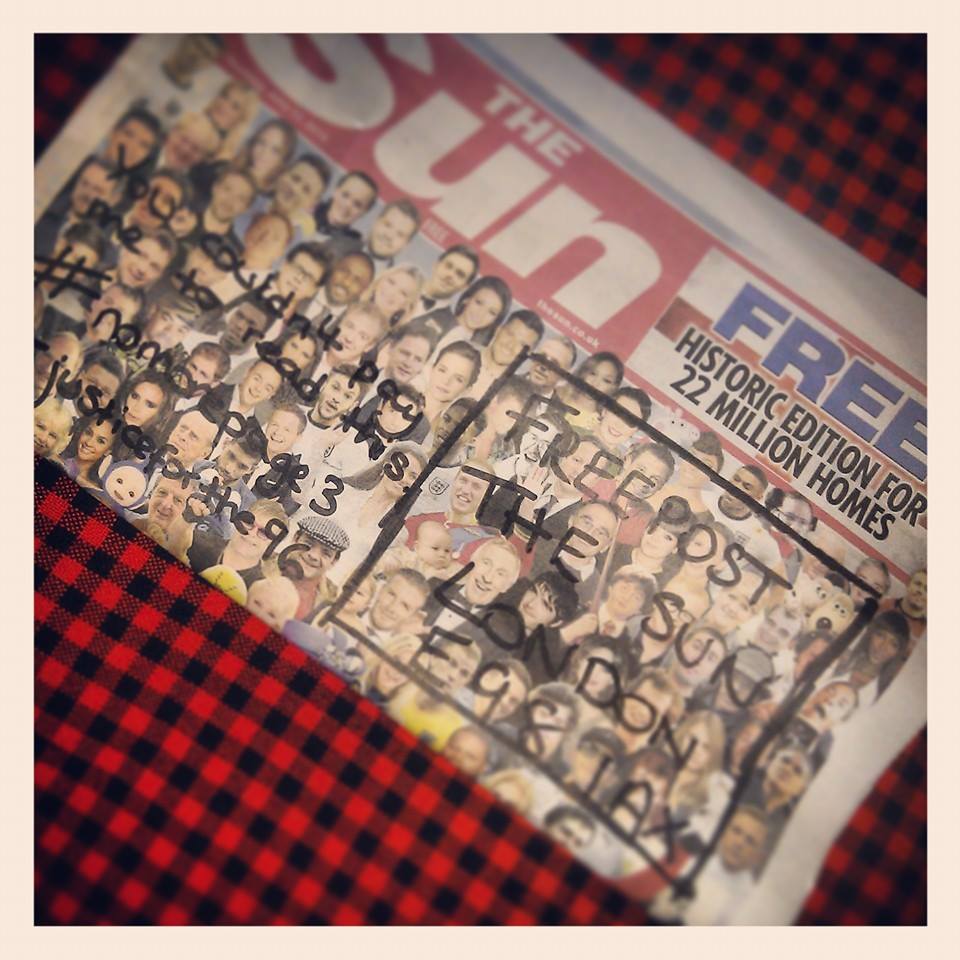
How and why to return today’s free copy of The Sun newspaper

justice
When you get your free copy of The Sun in the post today, you can return it to FREEPOST, The Sun, London E98 1AX.

My suggestion is to write “Justice for the 96” or “You dropped page 3 once, why not forever?” on the front. But I trust Hynd’s Blog readers to think of their own creative slogans as well (suggestions in the comments box below please!).

Let’s get creative and tell The Sun that we don’t want their divisive, misogynistic, lying newspaper in our front rooms.

UPDATE:

Love this from my friend Ellie:

Sun

Wow, the Labour Party has just been entered into the ‘what single tweet has made you most angry/disgusted/disappointed’ competition:

42 Comments

Filed under Football, Media

Channel 4 looks at Africa’s scandalous shortage of pain medications

https://www.youtube.com/watch?v=LhiiIEa7Kl0&list=PLBKfErliSueNJ_4OE2_mUnjvVn5QhLnku&feature=share

“without the political will to change, vulnerable people remain deprived of humane treatment and an end to life free of pain.” 

This is the conclusion of the Channel 4 documentary, ‘Africa’s Drug Scandal’ that I helped to coordinate through my work – the African Palliative Care Association. The documentary is due to be broadcast on Channel 4 in the UK at 7:35pm on Friday 30th May 2014.

I am posting about it here because it strikes me as a rare opportunity to get a large number of people thinking about an issue that is incredibly important to me.

The documentary focuses in on the issue of access to pain medications – predominantly oral morphine. Having access to such medication is something that most people in the UK take for granted. If you were diagnosed with a life-threatening illness tomorrow you would assume that you would be given the appropriate pain control that would firstly enable you to live your life to the full but secondly, would enable you to die a peaceful death.

For the majority of people in the world this is simply not the case. Indeed, as ehospice reported last November, due to a lack of access to inexpensive and effective essential opioids more than 4 billion people, over half the world population, live in countries where regulatory barriers leave cancer patients suffering excruciating pain.

In countries like Senegal where the documentary is set the situation is dire. Last October Human Rights Watch found that the government only imports about one kilogram of morphine each year – enough to treat about 200 cancer patients when there is an estimated need in the tens of thousands of patients!

And so, this is one of the corner stones of my organisations work – to lobby, offer training, educate and empower people to ensure that everyone has access to the pain medications they need.

unreported world

It might seem like an abstract issue, but as Krishnan Guru-Murthy, the renowned Channel 4 reporter finds out, once you see a patient suffering in unbearable but perfectly treatable pain you instantly understand the importance of the issue.

Guru-Murthy concludes the situation amounts to “needless cruelty”.

I find it impossible to see how anyone, when faced with this reality could conclude anything different.

The programme can be watched live online here, on 4OD for 30 days after broadcast here, and you can read a preview in the Radio Times here.

Let me know what you think of it in the comments below.

Leave a comment

Filed under Health, Media

The end of Liberal Conspiracy

This morning Sunny Hundal, the Editor of the left-wing blog Liberal Conspiracy, announced that after 8 years of blogging he was no longer going to be up-dating the site.

Over the last few years, Liberal Conspiracy was kind enough to publish a series of my articles. These included:

Liberal Conspiracy has given me a platform to write about issues that I am passionate about. It also provided me with a wealth of interesting articles to read and learn about.

It will be missed.

In an industry that focuses so much on negative attacks and smears, I thought it only right then to publicly thank Sunny and everyone else over at Liberal Conspiracy for everything they have achieved over the last 8 years. They have often provided a positive left-wing alternative voice in opposition to the dominant mainstream media of the day. As I said, this will be missed.

Leave a comment

Filed under Media

On Israeli settlers: “They come down from the hills and get us with dogs and guns”

I have just stumbled across this article that the wonderful Kate Hardie-Buckley wrote after visiting me and my former colleague Emmet Sheerin in Yanoun in the Occupied Palestinian Territories.

I don’t think I shared the article on Hynd’s Blog at the time.

The title, “They come down from the hills and get us with dogs and guns“, might read to some as being as slightly over the top. The fact that I can promise it isn’t says a lot about life in Yanoun.

Anyway, have a read of the article and let me know what you think.

PS – you can also watch Emmet’s video about life in Yanoun.


Leave a comment

Filed under Human rights, Media, Middle East, War

Eugene Grant: “I prefer the term dwarf”

173796_507019340_815239236_n

Eugene Grant is a dwarf and the founder of the viral site EveryDayDwarfism that chronicles the day-to-day experiences of what it is like to be a dwarf in 21 century Britain. Despite his experiences, Grant is optimistic that he can contribute to changing people’s understanding of dwarfism. Steve Hynd caught up with him to find out more.  

For many readers the term ‘dwarf’ is one they are not familiar with. I know some people are nervous about using it, afraid that it is derogatory. Can you tell us what the word means to you?

I personally much prefer the term ‘dwarf’ as opposed to others like ‘midget’, which many dwarfs I know find offensive. But, for me – and this is where the whole idea of political correctness becomes redundant – what’s more important are the intentions behind the terms used.

People can be ‘politically correct’ but employ such words with malicious intent; others may use quite derogatory terms without any idea or intention of insulting or hurting a person. It all depends on the way such terms are framed.

Can you tell us a little about why you set up EveryDayDwarfism?  

The aim behind EveryDayDwarfism is to document and present just some of the things that I – and my partner who also has dwarfism – go through during our day or week. Its purpose is to try to make people just that little bit more aware as to the things we encounter as dwarfs.

A lot of what we experience, I would put down to stigma and discrimination still being relatively acceptable to lots of people. The whole tone of the site is not supposed to be angry or ‘martyr-ish’, but relatively neutral, matter-of-fact and informative.

It’s to say: ‘these things happen, quite regularly. I just wanted you to know’.

Within the EveryDaySexism movement, there is a strong feeling of finally ‘shouting back’. Within EveryDayDwarfism it also feels like there is quite a lot of rage, is this an important element of responding to discrimination?

It depends what you mean by rage. Rage is very important but it needs to be channelled in the right way and used very carefully.

Leaving out abuse in the form of physical violence, I think when responding to discrimination it’s vital to ask oneself: ‘what is it that I want to achieve here?’ and, more importantly, ‘how will I get this person to change the way they think and act towards me and others like me’.

Can you tell us a bit about how you coped with the attention and discrimination before you started chronicling it on EveryDayDwarfism?

It really depends on two things: the type of abuse, attention or discrimination, and the intentions behind it.

Some abuse – e.g. an individual shouting insults from a moving car – is best left ignored. What can you achieve when they’re 100 metres down the road by the time they’ve finished their sentence?

Others – the attention from a small child for example – is normally fine; although, as I wrote on the site, it’s often the reaction – or lack thereof – from the parents that is the most frustrating thing.

Some abuse though might manifest itself in the form of totally unprovoked physical violence or confrontation.

Have you been in contact with other dwarfs, how do they feel about EveryDayDwarfism? Do others relate to your experiences?

It’s very important that people don’t think that EveryDayDwarfism or my own experiences reflect those of other dwarfs; I can’t speak for them. Not even my partner.

However, I do know that lots of people like me experience such things – sometimes less so, sometimes more so.

If you had one message to the metaphorical guy in the street who tries to take a photo of you with his phone, what would it be?

Just stop, for a moment, and think: What are you doing? Why are you doing this? Why would you or your friends find that photo or film to be of any value or interest? What does that say about your character, as an adult, and how you think about and respond to people who are different? What if I was your brother, son or cousin? How would you see it then?

A bit of a long message!

You wrote for the Guardian about the portrayal of dwarfs in the media, do you see EveryDayDwarfism as an effort to counter some of that through the illustration of agency?

Not really, no. Sadly, but also deliberately, EveryDayDwarfism documents some of the negative things that happen. And in this way, there is a negative tone to the blog.

What I was trying to say in the article you mention was that there needs to be more boring, regular, neutral representation of dwarfism in the media – weather reporters, Masterchef contestants, Question Time panelists, kids on CBBC – whatever.

Basically, more portrayals of dwarfism that do not limit that person’s identity to ‘a dwarf’ but reflects what they really are: a citizen, a parent, a doctor or lawyer, a voter, someone with views, ideas, etc.

What has been the reaction of family and friends to EveryDayDwarfism, are they shocked to hear of such day-to-day encounters? 

It was actually as a result of encouragement from friends to set up EveryDayDwarfism that I did.

Often friends have no idea of the things that I – and lots of others like me – encounter on a daily, weekly, monthly basis. Some have even been in situations with me when there has been abuse or something happen. Quite often, they are absolutely shocked at the way some people behave. It’s not a question of going looking for abuse or discrimination – that’s not a productive or positive way to live – it’s that, a lot of the time, this stuff finds youseeks you out, interrupts your day, your evening, when you’re just trying to live your life. And that’s what I wanted people to realise.

www.everydaydwarfism.tumblr.com/
www.twitter.com/aneverydaydwarf

1 Comment

Filed under Bath, Interview, Media, Politics, Social comment

“You cannot be happy to see your dad suffering…”

This is an article that I wrote for the Africa edition of ehospice.


Mutagubya Bruno is the son of Lawrence Ssenyonde. Lawrence has cancer of the prostate and needs oral morphine to relieve his pain. Bruno recently talked to ehospice about what life is like caring for a family member in severe pain.

On the outskirts of Kampala, Mutagubya Bruno lives with his mother and father. A small alleyway leads to a neatly kept garden that is lined with palm trees and freshly hung clothes on a washing line. Bruno breaks the conversation he is having with his mother as a small delegation from Hospice Africa Uganda arrive through a side gate to their house.

In the living room, the three health care professionals sit in a line craning their necks to try and listen to Bruno’s father as he describes his pain. As Bruno’s father speaks, one of the nurses sorts through her case notes. She glances at the previous dosages of oral morphine Bruno’s father has received.

Throughout the conversation Bruno sits on the edge of a worn-out arm chair opposite his father looking on.

Read the full article here >> 

Leave a comment

Filed under Health, Interview, Media, Uganda

The removal of ‘insulting’ from Public Order Act is a victory for free speech

This article was written for Left Foot Forward.

Rowan

MPs have confirmed that the word ‘insulting’ will be removed from Section 5 of the Public Order Act 1986.

This is a major victory for an unlikely alliance of free speech campaigners including The Christian InstituteThe National Secular Society and Rowan Atkinson.

Last month the home secretary Theresa May announced that the government was ‘not minded to challenge a House of Lords amendment removing the word ‘insulting’ from Section 5 of the Public Order Act.

In the past Section 5 had been used against street preachers ‘insulting’ homosexuals and LGBT activists ‘insulting’ religious groups.

As Rowan Atkinson commented, “The clear problem of the outlawing of insult is that too many things can be interpreted as such. Criticism, ridicule, sarcasm, merely stating an alternative point of view to the orthodoxy, can be interpreted as insult”

This change in law is a victory for freedom of speech in the UK.

There remains, however, an important limiting role for the law to play. That role is to provide protection to those who are victims of threatening or abusive behaviour.

In 2011 I blogged saying that, “We all hold the right to live without fear or intimidation. This has to be legally separated, however, from being ‘insulted”.

The distinction has finally been acknowledged by the government and the change in the law later in the year is now just a formality.

It is worth noting, though, that even with this change in law, the discussion about what constitutes threatening behaviour compared to ‘insulting’ behaviour will remain. There is a considerable grey area around what the law should interpret to be ‘threatening’ and what it should view as merely ‘insulting’.

For example, ‘My Tram Experience’ – a video showing a vile torrent of racist abuse on a south London tram – sparked two very different interpretations.

thought her behaviour was threatening and therefore called for her arrest, while bloggerSunny Hundal argued that she was simply being insulting.

With the change in law however, the police are some way towards having a clear distinction to follow. We are no longer asking them to be the judge of what behaviour is deemed ‘insulting’, at least.

Leave a comment

Filed under Celebrity, Human rights, Media, Politics, Social comment

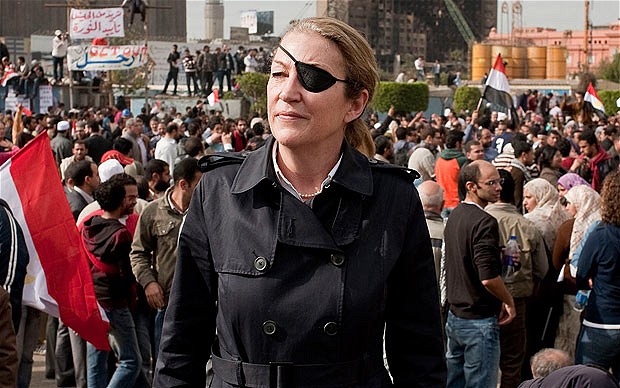
A tribute to Marie Colvin

As 2012 slips into the confines of history, I wanted to pay one last tribute to Marie Colvin – one history’s greatest journalists that 2012 so cruelly took from us. I want to ensure that something of her ethos lives on in my writing.

Marie Colvin

Marie Colvin

Marie Colvin is one of the 121 journalists who lost their lives in 2012.  She lost her life in Syria surrounded by the same killings, war crimes and atrocities that she had spent her life reporting as a war correspondent.

She not only did a job that many of us would be unable to do, but she did it without losing a sense of humanity in some of the darkest situations.

Jeremy Bowen described her “big reserves of empathy” – something that is so vital when you spend your time examining the worst humanity has to offer.

In a 2010 speech in Fleet Street Marie described the role of a war correspondent saying:

“Covering a war means going to places torn by chaos, destruction and death, and trying to bear witness. It means trying to find the truth in a sandstorm of propaganda when armies, tribes or terrorists clash…

Despite all the videos you see from the Ministry of Defence or the Pentagon, and all the sanitised language describing smart bombs and pinpoint strikes, the scene on the ground has remained remarkably the same for hundreds of years. Craters. Burned houses. Mutilated bodies. Women weeping for children and husbands. Men for their wives, mothers children.

Our mission is to report these horrors of war with accuracy and without prejudice”

What fascinates and inspires me however is what drove her to then put what she saw down onto paper.

Ingrained in Marie’s writing was a belief, a belief that if the atrocities that she witnessed were recorded and reported then at least there was the potential for action to be taken. Accountability.

If war zones are left without accountability we take nothing into the future except for the loss, anger and desperation which comes to define the bloody aftermath of war.

Marie’s writing acted as a basket to carry the possibility of justice forward. Without accountability, the truth, in all its bloody detail, is left to soak into the cracks of history.

Perhaps part of what drove Marie, and certainly what motivates a lot of my writing and human rights work, is more than just the possibility for action. It is the belief that people care.

In the same speech in 2010 Marie went onto say:

The real difficulty is having enough faith in humanity to believe that enough people be they government, military or the man on the street, will care when your file reaches the printed page, the website or the TV screen”

In 2013, I am going to take these words with me.

I doubt I will find my ways into the war zone of Syria, but I am sure, wherever I end up, there will be human stories to tell. I hope that you, the reader, will also take these words with you.

I do what I do because, like Marie, I trust that you care.

1 Comment

Filed under Human rights, Media, War

Watch: Yanoun – by Emmet Sheerin

This is a video by a friend and former colleague Emmet Sheerin. We lived together for a  few months in the village of Yanoun in the West Bank as part of the EAPPI programme. This is his short video which was made while we were there.

http://vimeo.com/54138761

5 Comments

Filed under Human rights, Media, Middle East

Leo McKinstry should be glad there isn’t a fit for work test for journalists. If there was, he’d fail

This is a guest article from Eugene Grant. Eugene works in the third sector as a public policy advisor on poverty and welfare, and comments regularly on disability and issues of social policy. He blogs at Dead Letter Drop.

Over the last few months we have seen a continuous drip-feed of stories which have promoted a range of inaccurate and generalised accusations against disabled people with long term health conditions. As a result disabled people have faced greater hostility from the public, with many claiming that they have experienced hostility, discrimination and even physical attacks from strangers.”

So starts the National Union of Journalists’ opening statement on media coverage of disabled people.

Last summer, a report strongly criticised some sections of the media for the way in which they reported stories on disability benefits. Specifically, the pejorative language such as the use of terms like ‘work shy’ or ‘scrounger’. The fact that this report came, not from a ‘usual suspect’ disability charity or campaign organisation, but from the respected, cross-party Work and Pensions Select Committee is an indication as to just how serious the problem has become.

The 2012 London Paralympics is a wonderful opportunity to openly celebrate disability and difference. But, a change in our social narrative is badly needed. As I have written before, disability hate crime – which itself is under-reported and often ignored by police – remains a vile and stubborn stain on our social fabric.

This goes not just for adults, but children too; a recent academic study of disabled children found a fifth of them had been attacked physically, sexually, abused emotionally or neglected.

It is worth bearing this all in mind, when you read this spiteful, professionally weak and woefully misleading article, titled, ‘The Paralympics show up a corrupt benefits system’ by Leo McKinstry in the Daily Express. It is not that Mr McKinstry’s view of the welfare state differs to mine, which vexes me most; I fully accept that people will have different views on what the role of the state should be in providing disabled and vulnerable people with financial support. It is the fact that Mr McKinstry’s tendentious argument is based on un-checked, un-picked and inaccurate assumptions; he presents fiction as fact and fact as fiction.

Let the dissection begin.

He says: “One particular target of the activists’ fury is the international firm ATOS, which, under the coalition’s new, more rigorous, benefits regime, carries out assessments to decide if individuals are fit to work and what level of support they might require.”

He is correct in so far as Atos – which, with a note of sad irony, also sponsors the Paralympic games – does conduct the government’s fit-for-work assessment, the WCA. But this is a test that is not fit for purpose. Were it fully functioning it would not have been the subject of several internal and independent reviews; nor would experts like Paul Gregg – who designed some of the welfare-to-work support packages connected to the test – have spoken out against it; nor would almost a third of those decisions that are appealed then be successfully overturned in favour of the claimant. But no matter. Let’s move on.

He writes: “[Benefit] claims have rocketed in recent decades because the system is so lax. In fact, the definition of incapacity has been remorselessly expanded to widen the scope for dependency.”

I presume he means when in 2005 the Disability Discrimination Act was expanded to include conditions like Multiple Sclerosis, cancer and HIV? So, none of these conditions could have adverse impact on a person’s ability to work or give rise to any additional costs? Right. There’s a reason you’re not a doctor, Leo.

He goes on “claims for incapacity benefit are dominated, not by the physically disabled, but by those with mental health problems like depression, stress and behavioural disorders.

Read this again. What he’s suggesting is that people with mental health issues should not be entitled to state support, or that they’re all fakers who should just snap out of it. I myself am not an expert in mental health conditions but I’m pretty sure my colleagues over at Mind and Rethink would know of some people who would take serious issue with this.

He goes on:

“In this chaotic world, it is no surprise, that the total number of people on Disability Living Allowance has gone up from 1.1 milllion in 1992, when the benefit was first introduced, to 3.2 million today…”

See what he’s done here? All he’s done is point out that the caseload for DLA (a vital benefit that acts as a contribution to the extra costs disabled people have to pay as a result of living in our society with an impairment or condition) has increased. The ‘chaotic world’ and ‘no surprise’ bits helps frame it in a way that leaves readers with the impression that the only explanation for this rise in claims for DLA must be because people are fraudulently claiming it. Not because, oh I don’t know, that it’s well established that our society is getting progressively older and disability increases with age? Or that more people with critical needs are surviving into later life? Or that medical advancements are enabling many disabled people to live longer? Or that academic research shows that survival rates of very premature babies are, thankfully, improving, which suggests the number of people born with severe disability has increased. But these things are of no consequence right?

But wait, here comes the best bit. McKinstry writes:

AND the anti-reform campaigners are in denial about the extent of this costly failure. They are fond of telling us that fraud represents just 0.5 per cent of disability claims, but that is a completely bogus figure.

In the courts there is a constant parade of cases involving serious benefits fraud, like the conviction last week of serial cheat Barry Brooks, who grabbed £1.8 million from the taxpayer by pretending to be confined to a wheelchair

First, is the claim that the 0.5% fraud rate for DLA is “bogus…” Funny that, when you consider the figure comes from – wait for it – the Department for Work and Pensions. But more to the point, his only evidence for his claim that a Government statistic is ‘bogus’ is that there have been court cases of benefits fraud brought to his attention – of which he cites just one. And even then he fails to pick a case of DLA fraud. A quick Google search of Barry Brooks shows that he was jailed for fraudulently claiming support from Access to Work, and not DLA.

Mr McKinstry, you can lambast the welfare benefits system all you like. All that I ask is that, as a journalist, you do it accurately and check your line of argument. It’s a shame there isn’t a fit for work test for journalists and social commentators. If there was, you would fail it miserably.

12 Comments

Filed under Health, Media, Politics

Amazing people inspire Steve to spread the word

This article was was published in the Stroud News and Journal.

Human rights activist Steve Hynd has returned home to the Five Valleys after five months working in one of the most volatile, divided regions on the planet. The vital observations he made in the  West Bank helped inform major peace organisations desperate to bring stability to the landlocked territory, which has been fought over for decades between Israeli and Palestinian troops. Having met some extraordinary people on his travels, Steve is now keen to share his experiences of life in the strained region, where human rights abuses continue to shock the world.

“I LOVE Stroud – everything from its green valleys to its award winning ale. It has a buzz about it that combines a feeling of vibrancy with a relaxed tranquil atmosphere.

It was therefore quite a jump for me to go from a quiet life in the west country to accepting a position with a human rights monitoring scheme in the West Bank.

I have just returned from five months with the scheme, which was co-ordinated by the World Council of Churches.

Throughout my time I witnessed some terrible human rights abuses but I also met some inspiring people carving out lives for themselves in incredibly difficult situations.

For example, I met Mohammed in East Jerusalem who was evicted from his home aged just 14.  His neighbourhood, Sheikh Jarrah, is being targetted by Israeli settlers looking to establish a permenant Jewish presence there.

Today, Mohammad lives back with his family but is forced to live alongside the settlers in his house, which has been literally divided into two, with his family living in the back and the settlers  living in the front.

What struck me most about Mohammad’s story was the honesty with which he told it. He would be the first to admit that he reacted with deep anger towards all Israelis, feeling the rage and injustice of the situation in which he found himself.

This was until Israeli peace activists such as Tzvi Benninga started to come and help him, his family and his neighbourhood. This was the first time he had met an Israeli who was not a soldier or a settler. Every Friday, Palestinians, Israelis and internationals come together to protest in MohammadÕs neighbourhood.

One of my organisation’s roles was to go along to these protests to monitor proceedings. In the past it has been met with violence and tear gas and it would be our role to report that.

Mohammad is just one of a series of inspiring characters that I met whilst I was there. Now that I am back home I feel it is only right to try and tell the stories of a few of the people that I met.

As such I am hoping to do a series of talks around the area about my experiences.

If you would be interested in hosting a talk then please do not hesitate to contact me by emailing stevehynd24@gmail.com.

Whenever I asked anyone I met what they would want me to do to help their situation they nearly always responded in the same way – ‘go home and tell people what you have seen here’, they would say  – so this is what I am hoping to do.

1 Comment

Filed under Human rights, Media, Middle East