Category Archives: Social comment

The social distanced funeral and the need for primeval hugs

My Dad’s funeral was last week. It consisted of me, my four siblings and a vicar, all stood 2 metres apart in Gloucester Crematorium. The vast majority of people watched on through a live stream as the hymns and the eulogy echoed around the near empty room. The rows of empty silent pews speaking volumes about all the people who knew and loved Dad over the years who couldn’t be there.

After the funeral I have spent some time trying to answer people’s unimaginative question, “how was the funeral”? And I think this is the nearest I have come to an answer so far.

Crucially, both for coronavirus, but also for understanding what happened, there was no physical contact at the funeral at all. The vicar welcomed us with a polite nod of the head and my siblings and I all gave half smiles and weak waves back.

At the end of the service there were no hugs, no shared tears, and no sharing of marginally inappropriate anecdotes at the boozy wake. There wasn’t even the usual socially awkward British handshake (or my personal favourite, when one persona goes in for a handshake and the other a hug) from friends from Dad’s distant past. Instead there were just awkward good-byes and splodges of hand sanitizer as the next cask was wheeled in for the next small group of mourners. As we all disappeared off to our own separate lives even the warmth of sun felt inappropriate. It was a beautiful warm day and I knew the next time I would speak to my siblings it would be through a Zoom call or a shared meme on WhatsApp.

To me it felt inadequate, a poor fraction of a funeral for a man that burst at the seams of life. I wanted a festival for him, I wanted to hear first-hand about how he used to rally cars, how he spent hours preserving ancient machinery, how at one point or another he would have poured everyone there a glass of desert wine and watched expectantly for their reaction as they took the first sip.

Instead, the inadequacy compounded a hurtful sense of the inadequacy in not being able to be there to support my Dad in his final weeks of life. Instead of holding his hand in those final weeks I counted down the hours and days left of his life just 20 miles from the hospital where he rested. I still feel disproportionately grateful to the palliative care doctor who told me she sat and held his hand while she spoke to him about steam trains.

Although I answer honestly when I tell everyone “I’m fine” it is, I think, important to acknowledge that with death comes a form of psychological pain. And ritual and contact normally plays an important role is helping us all deal with that pain.

While people deal with this pain in their own personal and socially specific ways, I read that everyone uses the same regions of the brain to process this pain. To one degree or another it’s a shared experience. When we come together to mourn a death remarkably similar thought processes are occurring in all of our brains.

Crucially though, these processes are the same parts of the brain that are used to process physical pain. To deal with this, most of the world has developed a form of ritual that helps release endorphins to dampen this pain – in our society this is around the social gathering and shared embraces at a funeral.

We know that endorphins dampen, incredibly effectively, our psychological pain. That is why at funerals hugs are shared so freely when in general in British society we normally avoid that close embrace of a hug. It’s thought that these endorphins produce an opiate-like analgesic effect but just much stronger (one study suggests 18-33 times the effectiveness). We have evolved this behaviour as social creatures over millions of years. As a behaviour pattern it really isn’t dissimilar to the grooming of primates. Cuddling, with its stroking, patting and even the occasional leafing through the hair (that’s a joke) is the human form of primate grooming, and is designed to create and maintain our relationships and to soften pain. Anyone parent will know the impulsive response to hug their child equally when they fall over as when they are upset about something.

In an increasingly isolated world that has become more and more physically distanced (I had a cousin watch dad’s funeral from New Zealand), these rituals of gatherings around births, deaths and weddings are more important than ever. Sometimes a decade could pass and these are the only occasions when my extended family will have got together. These are our backstop to maintaining the loving relationships that sit as the foundation blocks to personal, family and social well-being.

That’s why I feel a funeral could and should be a time to gather and share stories of love and shared history but perhaps more importantly to be there, physically, for each other. Instead it feels like the coronavirus not only stole the last part of my Dad’s life, and indeed also the small but important role that we his children could play – to be there physically for him, but it also stole so much of the ritual that we all rely on to help us through the mourning process. In these socially distancing times, it feels like we are being asked to go against the most primeval of instincts embedded within all of us. To gather, to give and receive a hug and to share our memories.

One of the most comforting thoughts now is the promise of a gathering when “all this is over”. I know that this is unlikely to happen any time soon but the prospect of it is something to hold onto. To really say good-bye to my Dad I want warm ales on a hot day and long anecdotes about narrow-gauge railways all shared by the unusually diverse group of friends that my Dad managed to hold onto. But most of all I want a moment when everyone is deep in conversation and the booze is flowing that I can turn to someone who knew him and loved him as much as I did and hug them, and to mutter softly how much he would have loved us all being there together.

Until then I am making do with photo-albums and the incredibly lucky sensation of constantly having two children climbing over me and to be sharing this all with the most loving wife.

I know in this sense I am lucky and my heart breaks for all those in comparable situations going back to empty houses. If you are still reading this I urge you to take the time to reach out to those people living alone – I’m really OK and they might well not be. This unprecedented time isn’t just changing the basics of the modern society that we have grown so use to, but also the slowly evolved rituals that we rely on more heavily than most of us realise. There is little that can replace the importance of a hug but just letting people know you’re there for them is also important.

My Dad 1940-2020

5 Comments

Filed under Blogging, Health, Social comment

A long journey…

Jackie and Emblem

My mum, Jackie, with her favourite cow, Emblem.


Yesterday was my mum’s funeral, the end of a long journey that started many years ago. Its initial stages were played out behind the scenes, out of sight, deep inside my mum’s mind. Unknown to any of us, friends or family, the 100 billion or so neurons in my mum’s brain started a countdown. These neurons in her brain threw out neurological branches that connected to more than 100 trillion points, allowing for thoughts and memories to be formed and recalled. Slowly, and completely silently, this number started to drop. With no fanfare, an incredibly awful and utterly incurable process began that would only begin to show itself years later.

When it did show itself, it did so relatively innocuously. It was the odd repeated question, the occasional double take, the subtlest of shifts away from engaging in conversation.

The science behind Alzheimer’s tells us that the areas of the brain most commonly affected early on are those that are used for learning and planning. I remember patiently sitting with my mum trying to explain to her how to use her new mobile phone. The simplest instructions seemingly lost in the seconds following the conversation. In retrospect I can see the folly of trying to explain, and reexplain, something new to my mum. That I failed to mitigate my own behaviour, let alone expectations, to allow for the early onset dementia is both something I regret, and something that makes me feel embarrassed.

How unequipped I was to support my mum in those initial stages leaves a deeper sadness in me now than the ending of her story. She was preparing for one of the hardest journeys of her life, and I turned up with no shoes to walk in, maps to direct me or rations to sustain us. I was woefully ill-equipped.

In retrospect, there was still so much left to celebrate at this stage and instead I was too focused on the immediate problems and challenges in front of me. The fixation on the next steps trying to ‘fix’ these problems blinkered me from spotting the wider landscape of where we were, how we got there and how much further we still had to go.

I remember asking questions about gardening and composting and getting encyclopaedic answers disguised under a subtle humble demeanour of a women with a life time of experiences not used to being asked to share them. The lack of notebook and pen in hand resonates strongly now to illustrate my own failings at the time to appreciate the delicacy of these thoughts that could dissipate at any moment.

By the time I spotted the severity of the journey ahead, my mum had been walking solo for years. Everyday a confusing challenge, walking a journey no one would chose to take. Each day trying to guide herself with sheer willpower through an ever-changing landscape.

To try to support her I took my first significant step in equipping myself for this journey. This was to read Oliver James’ book ‘Contended Dementia’. Although far from the miraculous saviour text some of its proponents make it out to be, it did set me off in the right direction. It was from this that I accepted that parts of my mum’s memory, and what makes her who she is was slipping away. I set about ‘relearning’ my relationship with my mum. This was beyond tiring and involved unlearning a lifetime of habits. My questions soon ceased to be part of our conversations. They were instead replaced with an ever-changing melody of chitter chatter which at times danced as freely as the topics that passed through her mind, while at others were strictly kept to subjects I knew to garner a positive reaction.  I learnt the joy of hearing about parts of my mum’s life that were previously never mentioned and my curiosity about the patchwork of her earlier life grew. Even then though I struggled to prevent my focus returning to the ever-growing list of things we couldn’t do or talk about.

In retrospect, if I could change one thing from this whole journey, it would be to spend more time at each stage celebrating all that was left of my mum – the good, the bad and the utter complexity in between.

My mum had a fiercely proud personality, often contradictory in its nature, and a stubbornness that any mule would be proud of and in retrospect she plodded on this journey as any mule would – proudly, quietly and without complaint. She would never ask for help and would scorn the suggestion if anyone ever offered it.

And yet, in my mum’s mid-stage of dementia, I feel like I learnt new ways of interacting that allowed me to better help her. By just being with her and holding a conversation that was not threatening and didn’t highlight the missing memories I felt like, for a short period, I could carry some of the extra weight for her on this journey.

At this stage I began to spot the crucial role that emotions played. If I had a positive interaction with my mum, then I could tangibly see how these positive emotions lived on much longer than the memory of the actual interaction. Equally, if something distressed her it was clear that the anger, or hurt, or confusion would long outlast the initial problem. This moved me onto what I think of as the relentless optimism stage. Regardless of the reality I found a positive moment – the new flower that had just sprung in the garden, the fact that my wife was pregnant, that the sun was shining. The smallest of things resonated.

Again, I wish I had turned some of this optimism and positivity to all that she still had to offer at this stage instead of just distracting from all she couldn’t do. Whether or not this would have been possible I don’t know. I do know that I wish I had tried harder.

Later I would read that this importance of positivity wasn’t just my experience but one backed up by studies. One lead author of a study concluded by saying that “our findings should empower caregivers by showing them that their actions toward patients really do matter and can significantly influence a patient’s quality of life and subjective well-being”. It did for me. For some months, a year maybe, I could visit my parent’s house and let my reality melt away and interact with my mum wherever she was at that time. In her mind, if she was milking cows I would comment how good the fried breakfast was waiting for us. If she was worried about where her Dad was I quipped that I was sure he would have a good story to tell over dinner. If I didn’t know where she was in her mind I would look out of the window and say how special it was to be here at this time of year.

This is not to say it wasn’t incredibly hard work. Each visit I was constantly second guessing what was happening and trying to steer conversation away from any cracks in my mum’s memory road. I suspect though that this was just nothing compared to either her experience of living with the disease or that of my Dad’s experience living with her and for many years being her primary carer.

In the final year or so, it became harder and harder to muster these positive emotions. Verbal conversation became a less useful tool and suddenly I felt like I had slipped back to square one – back to being an unwitting bystander to my mum’s journey. At times I found ways around this. After the birth of my son, her grandson, we would sit together with her doting affection and my son performing back a series of giggles and smiles.  It is hard, even after years of suffering from Alzheimer’s to not be cheered by the rapturous laugh of a baby. In the final months though we would more often than not sit in silence.

As these final months ticked by, I watched the seasons slip from one to another outside her care home window. This alone was enough to fill me with sadness to think how she once lived her whole life outdoors surrounded by animals. She was now sat in a thermostat-controlled room – I wasn’t sure of much at this stage, but I knew this was not right, and not what she would have wanted.

With the passing of the seasons so the number of neurons and connections continued to quietly drop. Basic functions disappeared but still, at times, there was the unmistakable facial expression or look that was uniquely my mum. In these last few months I spent more and more time feeling awkward and unable to help her. My weekly visits had slipped to every other week and sometimes longer and as a result the progression of her symptom became more pronounced between visits. By the end I would helplessly sit with her unsure if she knew if anyone was with her not.

Coming one time into the uncomfortably warm care home I found her slumped sideways on the chair. A member of care staff who was spoon feeding her explained to me that she had lost control of body positioning. Her eyes were glazed and focused on nothing in the distance. She weighed just over 40 kilograms. The length and severity of the journey she had been on had taken its toll.

Two days later she passed away.

When people now ask me how I am, I say I’m OK; that I feel both relieved and sad. A mix of emotions. But the more I think about it, the more I think this is the wrong question. There are much more pertinent questions to ask. How have I been for the last 8 years? How have I been throughout this long journey? At what point did I feel that the essence of my mum left leaving her body to keep on the journey? When did grief start? What have I learnt over the last 8 years? Do I feel guilty for not having done more? Do I feel proud for doing what I did? How did all those who loved mum struggle in their own ways to interact with this journey?

And then, and only then, a little for the here and now: how does it feel to be setting off on this next stage of life, on my own journey, without a mum that had, up until now, been a constant in my life?

At this stage, I’m not really sure.


11 Comments

Filed under Blogging, Health, Social comment

Reflections on my Mum’s advanced dementia

“Death is coming for us all…the day we will have to face the crossing will come sooner than we think. I hope my day is many many years away, but… I don’t want to make the greatest leap in life in a vague dream. I want to have the chance to look it in the eye, to say: ‘You have had me in your sights all your life, but it’s on my terms that I come.’” Hendri Coetzee – Living the Best Day Ever


Sitting across from each other on slightly uncomfortable wooden chairs in the care home I watch my Mum interact with one of the staff. The young girl lays her hand on my mum’s shoulder, raises the volume of her voice slightly and asks if “everything was alright dear” and if my Mum would “like any help?”.

My mum looks up at her and smiles with wide unfocused eyes. The staff member smiles back, hovers awkwardly for a moment trying to decipherer what this blank stare means before finally she walks over to another resident. As she makes her way over to a lady sat hunched in the corner I look back at my Mum and catch just the faintest flicker of a death stare from behind her eyes. It was an unmistakable reflection of something deep within her that these days only occasionally surfaces. Today this was a split second of a “fuck off am I your dear”.

Of course, I could have imagined it, I could have simply wanted to see a bit of her old self and so read too much into a distant stare. But, in that moment I think I saw my Mum: proud, wanting to help others – not wanting to waste people’s time in being helped, and ultimately using anger as a shield to hide away from all the insecurities and uncertainties of her life.

She focuses her eyes back on me, a second of surprise or alarm gives way to a meandering anecdote about the walk she believes she had taken that morning over Dartmoor. I ask if she saw any deer and she responds that she had, but only in the distance. This follows a second of silence and a drop in her eyebrows before she asks if I was OK to count? I promise her that I was more than happy to count to which she scoffs and says she doubts it. I once again miss the nuance of her reality.

Asking questions of dementia patients often only increases distress and confusion and so I try to steer the conversation back onto safe territory and say it was a beautiful crisp winters day outside. Her eyes look at me. One, two, three. Seconds pass with no response. I try a new path. I tell her that I recently spoke with her nephew, my cousin, and that he is happy and doing well. One, two, three. Eyes wide. No response. I try three of four times more and get little in response.

I decide not to push conversation. I sit with her in the weak winter sun surrounded by the stuffy air of the car home. Silence.

In the silence my mind jumps to memories at random. I think back to my mum cutting all the fire wood for the house by hand insisting that she was perfectly happy with her bow saw and no, she didn’t want me to come around with a chainsaw. I think back to her carrying heavy trestle tables out of the local scout hut as all the other mums stood and watched. I think about her slapping down any idea or suggestion that she might in anyway need any help.

With these thoughts in mind I smile at her thinking that I might get going soon. She doesn’t smile back. The staff member approaches and puts her hand on Mum’s shoulder and, just before Mum smiles up at her, she gives her a split second of that recognisable death state. The staff member either doesn’t notice or chooses not to.

The thing I feel saddest about when I leave is that Mum has so little capacity, so little control. Despite both the care home and my family doing all they can, we are no longer able to play by her rules and there is nothing we, or she, can do about it. She is left to be looked after by others. She is clearly being looked after well but they also clearly miss the very essence of her. I don’t think I am sad that she will pass away in the coming, weeks, months, or possibly years. I am just sad that it must be like this, not on her terms.


2 Comments

Filed under Health, Social comment

The simple satisfaction of cycling into work along the River Frome into Bristol

My daily commute follows the River Frome into the centre of Bristol. Or I should say, as close as the modern infrastructure built around the river allows. Every day I pass the same weir, the same log spanning from one bank to another, the same bridge where the river finally disappears below the concrete centre forever from sight.

There is a simple satisfaction in observing how the river responds to the weather and countryside that feeds it. After heavy rains the weir can almost disappear under surging dirty brown water washed from ploughed farmers’ fields. A few days of no rain later, and you will be left with a clear trickle struggling to make it down its shallow path.

On days like today, when the temperature drops below freezing, this slow flowing river begins to freeze over altogether leaving sheets of ice floating in the river’s eddies.

Wrapped in thick coats, scarves and hats, the red flushed faces look out as the dog walkers crunch over the frozen muddy puddles. On one section of path, just south of Broom Hill the puddles perpetually sit never normally fully draining. Today though, they are iced over leaving a crisp brown path slicing through the centre of a frost filled field. The small wooden picnic bench which normally sits opposite a small outcrop of limestone perfect for some climbing in warmer months is today frozen white.

About 2 kilometres north of the city centre the River Frome emerges from the steep valley in which it has been travelling and my commute cuts up through the open expanse of Eastville Park. In these winter months, the sun rises directly to my left, beaming gently through the historic horse chestnut trees that cast long shadows over the frozen ground.

As the river fights its way through the monstrosity of modern out of town shopping my route slips alongside the equally awful piece of urban engineering – the M32, the first real reminder that you’re heading into a major city centre. From here the river dips below concrete in places and the off-road cycle route weaves between skate parks, railway bridges and underpasses.

The embedded heat in the concrete on this stage of the commute means that despite the air temperature being close to minus 4, nothing is frozen. The concrete is grey, the grass green and the sky blue.

Nothing of the surroundings for the last bit of this commute gives any hint of the weather or countryside that surrounds the city. It is then that I feel a huge sense of privilege to have such a commute. Also though, I feel a sadness that for most people, even those whose daily commute is outside of their cars, most people in Bristol would not have seen the frozen field that I cycled through this morning.

As I arrive in the office buoyed by the beauty of the seasons, I can’t help but to wonder what impact it is having on us as a society for most of us to never fully experience or appreciate the changing of the weather, seasons and nature that will always sit beyond our control.

Leave a comment

Filed under Blogging, Bristol, Outdoors, Photography, Social comment

How you can help the unaccompanied child refugees in Calais

This slideshow requires JavaScript.

On our doorstep, just two dozen miles from the British coast, is a refugee camp that is being demolished leaving people in the most desperate conditions. There are hundreds of children in these camps, many of whom have a legal right to be in the UK. Due to feet dragging, legal technicalities and lack of political will, their temporary shelters are being demolished and they are being left exposed having to fight not just for their rights, but their very survival.

In the next week or two this camp will be fully demolished. Unless our government acts, unless we act, many of these accompanied children will more than likely just go missing and disappear. This happened before, it is likely to happen again. The thought of the exploitation they will likely face should this happen should be enough to inspire us all into action.

Last week I went with the MEP, Molly Scott Cato, who I work with and visited the camp and met with some of the refugees and volunteers. What I saw was the end result of an uncaring and uninterested government. It was simply awful. A policy to do nothing left vulnerable people with nothing. I saw no government representation, no officials offering support, only volunteers where government agencies should have been.

It is worth noting, that the refugee camp in Calais is not, and never was, actually a refugee camp but just a makeshift camp with refugees in. This distinction is important. The former implies order and support and the latter implies disorder and little sufficient support.

Our government’s limited response to this is in the last few days is shameful. At the last minute they generously offer to accept a fraction of the children they are obliged to support. Too little too late. For too long they have been focusing on building a hugely expensive “security wall”.  Perhaps a wall fits better with this governments fortress Britain mentality, but does little to support the children living in the camp. This whole time, rather than resorting too counterproductive Trump-esque style tactics, the British Government could have been registering the children identified to them by NGOs in the camps, to stop them risking their lives trying to get to the UK illegally.

We now face a ticking clock while the camp is demolished. To stop children disappearing, the UK government must step up and process all children with a legal right to be here. This is either through the Dublin III Regulation which entitles them to be reunited with family members living in the UK or under the Alf Dubs amendment which is supposed to bring the most vulnerable unaccompanied children in Europe to safety in the UK.

There are of course children there who don’t have a legal right to be in the UK and for some it may not be in their best interests to come here anyway. For those the UK government needs to be pushing the French authorities to do more in providing reception facilities to these children so they can go through the appropriate asylum process in France.

Whilst in the camp I heard reports of children being turned away by French authorities when they tried to register to claim asylum. Worse still, I also heard numerous reports of excessive use of violence from the French police. Volunteers talked to me about rubber bullets and tear gas being fired directly into groups leaving some minors with serious injuries.

History will judge our own and the French government’s actions and inaction poorly.

This government behaviour has, to some extent, been mitigated against by an army of volunteers that should be highly commended. Until government steps up to its legal and moral reasonability the goodwill of you, I and volunteers is all some have at the moment. If you have not already I urge you to write to your local MP urging government to act urgently. This cannot wait. There is a sample letter here but more powerfully, you can explain why this is important to you in your own words. Secondly, if you can afford to, please send phone credit to the refugees in the camps. This is crucial all the time but even more so during the up-coming demolition. Lastly, if you have time, volunteer either in the UK or the camps yourself.

This is a moral crisis. Primarily a crisis of government but one that touches on each of us. As Dr Seuss said, “Unless someone like you cares a whole awful lot, nothing is going to get better, it’s not.”

I doubt many in government have read Dr Seuss. But you have, so please act.


Leave a comment

Filed under Human rights, Hynd's Blog, Middle East, Photography, Politics, Social comment, War

I want my country’s confidence back

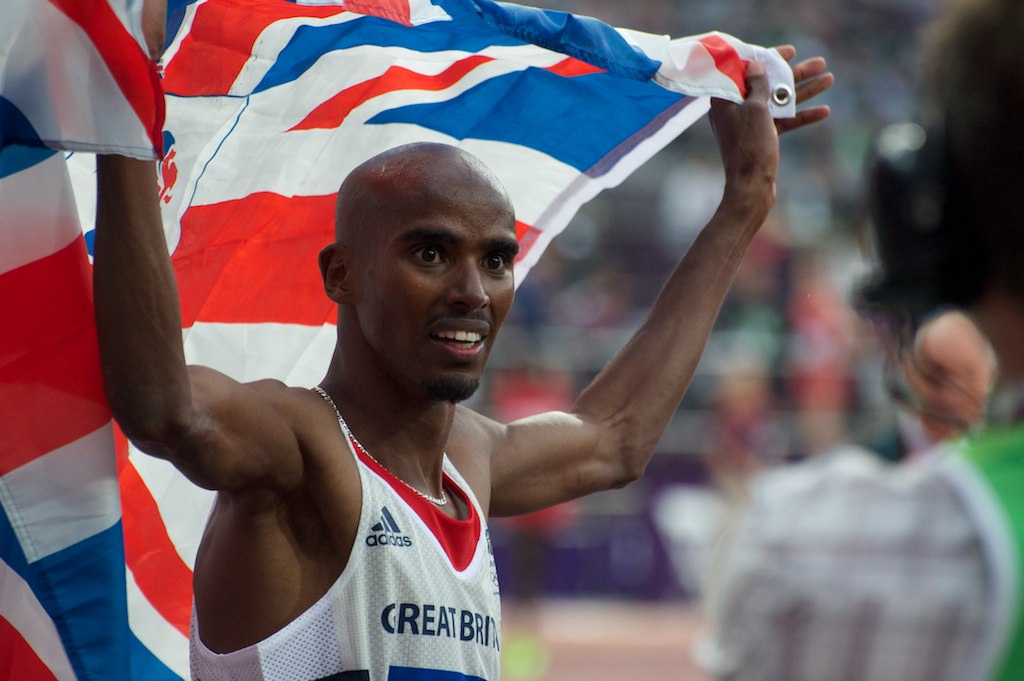
Mo Farah - Jon Connell Fickr

Picture by Jon Connell – Flickr

“I want my country back…”

This is the lazy rhetoric of the Leave campaign. I want my country back…from what, or to when, seem to be questions they are unable or unwilling to answer.

But I think I can though, so here goes.

More than anything I want my country back from the recent poisonous rhetoric of the Leave campaign. When did it become OK in this country to produce political videos depicting refugees as “vicious snakes”? At what point did it become OK to produce political videos that depict a women being raped by a political entity? At what point did it become OK to produce posters so dehumanising, degrading and despicable that they are compared to Nazi propaganda – by the Conservative Chancellor of the Exchequer?

I want this to stop. This isn’t the politics of a country that I am proud of. This is the politics of the gutter.

It hasn’t always been like this though. And that’s what I want my country to return to. Metaphorically speaking, I want my country back to that balmy summer of 2012 when the country came together around the Olympic Games to celebrate our role in the international community.

Do you remember it? Kids playing in the street, spontaneous acts of kindness, citizen ambassadors? I remember the image of Mo Farah flying the Union Jack and how it became a symbol of our nation: confident, energetic, multi-cultural, welcoming, high achieving.

After that incredible summer of the 2012 Olympic Games a study was done to explore what impact it had on our international standing. The results were clear, people from around the world saw us Brits as more “distinctive, daring, charming, energetic, trendy and authentic”.

The world came to us and we embraced them confident open arms.

Skip forward 4 years and we seem have retreated further into ourselves. Without the same confidence we have half-turned our back on our neighbours, arms crossed, protective.

So how do we get our country back to that outward looking, confident country we were all so proud to be part of?

I can tell you it is not going to come from either the mainstream Leave or Remain fear based campaigns. While the Leave camp are hell bent on dog whistling on immigration, the Remain record is stuck on the question of “what if” we leave.

I want to be asking a different question. I want to be asking what it is about the EU that has secured peace for decades, secured a higher quality of environment and worker protections. And, significantly, what was the role of the UK in that process?

When we start to dig deeper we can find a proud history. One that stretches from Churchill’s post-war vision to our leadership through the EU in tackling climate change, promoting human rights, and exporting democracy. A role in the UK plays in the EU that we can be really proud of.

This is what we must be focused on and, crucially, asking how can we look to build on these successes?

I will be voting Remain on Thursday not out of fear but because I want my country’s confidence back. I want us to reclaim that outward facing, confident and positive feeling that gripped us back in 2012. I want us to be leading not leaving the EU. I want us to remain a positive, confident, tolerant country.

1 Comment

Filed under EU politics, Politics, Social comment

Be outraged! Manchester nightclub hosting ‘free midget’ night

Today I was alerted to the Restricted Growth Association’s Change.org petition calling on the Oxford Club in Manchester to reconsider its decision to host a ‘free midget night’.

I will copy here the reason I wrote for signing the petition so you know why it’s important to me.

“Everyday people with restricted growth get both physical and verbal abuse thrown at them. Part of why this happens is because of a culture that doesn’t value them but instead sees them as entertainment, a point of comedy, a thing for the rest of the world’s pleasure. It is in this mind-set that people think it acceptable to pick dwarfs up, to try and balance a pint of beer on their heads, or in this case, host a “midget night” in an entertainment venue.

Just imagine if those things happened to any other minority? There would be outrage…I am signing this petition because I think there both should be and needs to be outrage in the scenario, please also sign and share this petition.” Continue reading

Leave a comment

Filed under Politics, Social comment

24 hours in the UK

slad
Last year when my plane touched down at Heathrow coming back from Uganda I was met with a wonderful scene to welcome me back to old blighty. Queuing to enter the terminal building, what the British do best, an elegant determined woman pushed to the front of queue – sacrilege! One chap next to me notices that I have clocked this queue jumping outrage and chips in with the comment, “fucking French huh”.

What a welcome back to the UK – baseless xenophobic queue based hatred all performed to the backdrop tinny Christmas carols under a smattering of drizzle!

This year I was a smidgen disappointed to find no Christmas carols on repeat but delighted to make it out of the airport without witnessing any casual racism.

Once back in the hills and valleys of the ‘West Country’ though I took little time to head out for a walk. Thinking that this is what made the UK amazing I walked with uncharacteristic clear skies and meek winter sunshine hitting the frost covered ground. I was in a buoyed mood striding across farmer’s fields and down hidden valleys following bubbling brooks.

This mood was lifted further though with what truly makes the Great Britain great. With every dog walker passed a friendly ‘good morning’ was chirped followed by a compulsive observation of the uncharacteristically good weather: “wonderful day for it” or “you couldn’t ask for a better day” before then swiftly apologising for their dog who would be eagerly sniffing my trouser legs.

These small interactions last less than a few seconds but make up an integral part of the DNA of British culture.

Warmed by the simple pleasant jollity of rural British life I stopped in the open fire warmth of a local pub – the Woolpack in Slad – where I had arranged to meet family.

Sat sipping local real ales on slightly uncomfortable wooden furniture (why is that both pubs and churches consider it a virtue to have furniture that in other walks of life would be considered completely unfit for purpose?) I watched dogs curl up on the floor close to their owner muddy wellington boots. With a low warm afternoon winter sun breaking through the window I sat back with family around me and listened to the impromptu piano/saxophone performance that only added to the ambiance.

Outside, after a hearty pub lunch, we strode up Swift’s Hill which enjoys some of the finest views in the region down over the Slad Valley across the market town of Stroud and out to the Severn Valley and across to the Black Mountains in Wales. A few clouds clung to the horizon to exaggerate the sunset as wonderful pinks and oranges were thrown over the fields and footpaths.

It felt like the weather was welcoming me back to the UK, giving me 24 hours of pleasure before it inevitably resumed in the monotony of drizzle that everyone seems to perpetually believe might stop at any moment but so rarely does.

Walking back over the fields I make a decision to call into another pub on the way home. Instead of live piano/saxophone renditions, this pub instead has the unmistakable sound of football coming from the TV screens. Excited to be able to watch my national sport with my fellow countrymen I step in and order my pint of warm frothing ale.

Looking for a place to sit I approach a stranger with the prerequisite of “excuse me, I am terribly sorry, but would you mind if I possibly took a seat” motioning towards one of five empty seats surrounding him. Smiling warmly the man looks up from his Daily Telegraph with impeccable replicable manners and says, “Please, it would be an honour”.

How wonderful is that – being told it would be an honour for me to sit next to him.

Buoyed by these little interactions I sit happily watching Arsenal score four goals with the return of their star striker – Giroud. In an unspoken acknowledgment I suggest to the man next to me through nothing more than eye contact that I was happy, that I was delighted to be back in the UK and that in that moment I could think of nothing I would rather be doing.

Responding to this the man next to me commented in a perfect middle England accent, “Typical isn’t it”. “What’s that?” I responded. “The fucking French keeping such an English institution like Arsenal afloat” he sneered.

Sigh.

Leave a comment

Filed under Gloucestershire, Social comment, Travel

Living the best day ever

This is a cross-post of an article that I wrote for the Africa edition of ehospice news reflecting on the lessons learnt from Hendri Coetzee’s book ‘Living the best day ever’. 

kadoma1
Palliative care, by definition, is both a science and an art form that involves accepting the reality of death. What you have left when you accept this is what the profession calls ‘preserving or improving the quality of life’.

Never before though, have I been challenged to re-examine the concept of ‘quality of life’ than when reading Hendri Coetzee’s book: ‘Living the best day ever’.

Hendri Coetzee was a South African living in Uganda perpetually searching for the best day ever. This search led him to become a legend throughout the extreme sports and exploration world.

In 2004 Hendri led the first ever complete descent of River Nile from source (Lake Victoria) to sea (the Mediterranean). The 4,160 mile trip took four and a half months and crossed two war zones.

Coetzee was also the first person to run the rapids above the Nile’s Murchison Falls, a section of river filled with some of the biggest white water in the world, and holding one of the highest concentrations of crocodiles and hippos.

He would go on to complete this section of river a further seven times and he remains the only person ever to run the section by himself. He also ran large sections of the upper and lower Congo River, walked 1000 miles along the Tanzanian coast and was the first person ever to snowboard the glaciers in the Ruwenzori Mountains.

In short, his résumé was one of the most impressive in the business.

It was not, however, his outlandish adventures that makes Coetzee’s book such a challenge for anyone to read, but his burning passion for life. Deep within all of his adventures was an intertwined journey to accept the fullness of life – to be able to appreciate it to its full. Only by understanding and ultimately accepting one’s death, Coetzee believed, can we truly experience a ‘quality of life’.

Speaking to some, and by no means all, palliative care patients I have come across a stillness – a deeper happiness – that I have rarely seen elsewhere. It is a happiness that comes fundamentally from within, a spiritual or psychological wellbeing.

Does this come from an acceptance of one’s own death?

Early on in the book, when undertaking the Murchison Falls section of white water, Coetzee writes: “In our society we avoid the thought of death as if recognition alone could trigger the event. Thinking about your own death is seen as a sign that mentally, all is not well. Some people live their entire lives with the sole purpose of minimising the chances of it occurring to them, instead of preparing for the inevitable. After avoiding the issue for so long, it is almost soothing to invite death on my terms.”

Reflecting on this, I wonder how many palliative care practitioners spend their professional hours encouraging patients to think about their deaths, to make preparations and to become comfortable with the idea whilst then perpetuating the myth in their own lives that life is infinite?

I only speak for myself when I write that I am too often guilty of this self-delusion.

To live a truly high ‘quality of life’ do we have to be comfortable with the idea of our death? I don’t know.

For Coetzee though, this acceptance was clearly linked to the life he chose to lead. Writing about his desire to keep going on clearly dangerous expeditions he wrote: “Psychoanalysts may diagnose a death wish, but missions like these enhance the appreciation of life. It is no coincidence that death and rebirth are related in all forms of religion and spirituality. When you accept that you are going to die, and it will be sooner than you think, it becomes impossible to merely go through the motions.”

Even the acceptance of my own inevitable death cannot push me to actions that so invite the prospect of death earlier than it otherwise would arrive. There is too much to live for to put my life on the line in search of living just that one day to the extreme – in the search for the best day ever.

That said, it is imperative for the palliative care community to understand the full spectrum of thought that exists out there. Just as there are people who are terrified of the concept of their own passing so there are people like Coetzee that can write the following words:

“Death is coming for us all…the day we will have to face the crossing will come sooner than we think. I hope my day is many many years away, but… I don’t want to make the greatest leap in life in a vague dream. I want to have the chance to look it in the eye, to say: ‘You have had me in your sights all your life, but it’s on my terms that I come.’ Tibetans believe that one can find enlightenment at the moment of your death, as long as you prepared yourself for it during life…I have had the best day ever more times than I remember. So yes, I believe I am ready to die if that is what is needed to live as I want to.”

Hendri Coetzee was pulled from his kayak by a crocodile deep inside the Democratic Republic of the Congo and his body was never recovered.

At the end of his last ever blog entry though, after completing a section of river that many assumed impossible to kayak, he wrote: “We stood precariously on a unknown slope deep in the heart of Africa, for once my mind and heart agreed, I would never live a better day.”

I have no idea if – when it came – Hendri Coetzee was prepared for his death. It is clear though, that he lived life to the full and died in way he had to have expected.

Not many of us can say that and for that alone ‘Living the best day ever’ is worth reading. I think we can all learn something from Hendri Coetzee approach to both life and death.

2 Comments

Filed under Health, Social comment, Travel, Uganda

First ever self defense programme for people with Dwarfism launched

A good friend of mine and occasional contributor to Hynd’s Blog, Eugene Grant, has launched the first ever self-defence programme for people with dwarfism. This is a cross-post of his article that explains why he sees the need for such a self-defense course. 

Eugene-2

I don’t even remember where I was going. All I remember is looking to my left, distracted by a homeless man asking for change as I walked past. When I turned my head back to the front, a tall man – about 6’ 0” – was advancing aggressively in my direction, just a few feet away, his hands outstretched towards me.

I have Achondroplasia – one of the most common types of dwarfism. In 28 years, I’ve had stones thrown at my head; I’ve been chased by youths on mopeds; I’ve been grabbed and assaulted by strangers. I was frequently bullied at school. The list of instances in which I’ve been verbally abused or threatened is too long to include here.

Now, I make no assumption that my experiences are representative of other dwarfs. But I know I’m not alone.

Throughout my life, I’ve studied boxing, self-defense, and martial arts: Karate, Kick-boxing, Ninjitsu, and Tae-kwon-do, to name but a few. Growing up, these provided a valuable outlet for me as a frustrated and isolated young man, who struggled to deal positively with an environment that felt harsh and hostile towards me.

And yet, over time I realised that so many of these forms of self-defence were completely inapplicable for people with dwarfism. Even at 4’6” – hardly small for a dwarf – my hips are at the height of most people’s knees. I’m never going to get my leg up high enough to kick an attacker in the head – as you’re taught in Taekwondo. Nor, at 7 and a half stone, would I try to grab, trip, and throw him to the floor – as you might in Judo. Like most dwarfs, my arms are short – making boxing difficult (but not impossible…).

I realised that what people with dwarfism, people like me, really need is a self-defense system designed for our body types and the sorts of threats and assaults (being grabbed, picked up, bear hugged, and so on) which, sadly, some of face all too often in our daily lives.

And so SPD – Self-Protection for Dwarfs – was born.

Designed and developed by myself, under the expert guidance and instruction of  Urban Warriors Krav maga Chief Instructor Kelina Cowell, SPD is a unique, practical, and applicable form of self-defense for people with dwarfism. For us, by us; tailored to the modern day environment (not the battlefields of feudal Japan!).

dwarfism dwarf boxing martial arts krav magaOf course there’s a desperate need for us as a society to re-evaluate how we treat those who are different; to think critically about how a dearth of real representations of people with dwarfism – and indeed other disabilities too – in the media perpetuate prejudices and spread stereotypes.
But as Kelina herself has said before, the world will never rid itself of violence, abuse, and discrimination. That we also need to address structural problems like poverty and inequality, social immobility and educational disadvantage, shouldn’t stop us from locking our doors at night to prevent burglars and home invaders.

Urban Warriors Self Protection for Dwarfs is a serious step forwards to helping people with dwarfism be better prepared to look after and defend themselves in times of crisis; to learn new skills and grow as individuals and as a community; and to build our self-awareness, self-esteem, and self-confidence.

To me, that’s truly empowering.

All we have to do now is to spread the word, teach and train others, and watch the movement grow.

Interested? Want to know more? For more information about Urban Warriors Self Protection for Dwarfs, Please like the Urban Warriors SPD Facebook page, follow us on the Urban Warriors SPD Twitter page, or contact us urbanwarriorsspd at gmail.com

Leave a comment

Filed under Social comment

Book review: ‘The Unlikely Pilgrimage of Harold Fry’ by Rachel Joyce

This is a copy of a book review I wrote for the UK edition of ehospice news.

Harold Fry
If ever a fictional book has illustrated the importance of ‘spiritual care’ as an integral part of palliative care, it is Rachel Joyce’s debut novel, ‘The Unlikely Pilgrimage of Harold Fry’.

Joyce’s heart-warming novel charts the unlikely story of Harold Fry. Harold is a retired Englishman who embarks on 600 mile walk from Devon to Berwick to visit an old friend who is dying of cancer. The walk, or pilgrimage, increasingly becomes interlinked with Harold’s own grief and spiritual pain as he becomes convinced that by undertaking such a walk he can not only keep his old friend alive, but also repent for the mistakes he has made in years gone by.

Although Harold’s friend Queenie is in a hospice with terminal cancer, the reader only gets brief glances at the physical, spiritual and social pain that she is experiencing. Joyce alludes to a lack of family or friends but this, it feels, is only mentioned to add impetus to the protagonist’s pilgrimage.

Indeed, it is Harold, and at times his wife Maureen, who the reader becomes best acquainted with. On a base level the reader begins to empathise with Harold’s tortured emotions towards Queenie and this only heightens throughout the walk.
From the beginning of the walk and the book the reader is aware of a pain lying just underneath the surface of Harold. Only as the walk, or as Joyce sometimes refers to it, ‘the journey’, develops do we begin to understand the nature and severity of Harold’s pain. Throughout the book one cannot help but draw parallels between Harold’s journey and other patient’s journey towards death.

What stands out in this novel though is the way Joyce cleverly explains to the reader how pain goes so much further than just the pain experienced by the patient. Friends, family and, of course, colleagues can be, and often are, effected by death and the process of dying.

Using this holistic understanding of pain, understanding it as more than just physical but also spiritual and social that can and does impact on friends and family as well the patient, Joyce takes the reader on a powerful emotional journey that is sadly too often out of reach in other novels that touch on issues related to death.

Using Harold’s well-being as an extended metaphor Joyce cleverly intertwines Harold’s hopes, emotions and fears with those of the readers and lets you experience the trials, tribulations and triumphs of Harold’s walk.

The context of which this journey is undertaken – the quintessential English landscape – is, I believe, mistaken by many as being the central theme to the book. Indeed in the reviews published on The Guardian or The New York Times, the life-affirming story and the societal implications of what it means to be ‘English’ or ‘Spiritual’ in the 21st century are drawn out as key themes.

For me, these were side-issues all playing in and relating to how we understand death and the role someone’s spiritual pain can play in that process. I took from the novel, and I believe this was intended as a key theme, the universality of spiritual concern and pain – something which palliative care practitioners have been advocating about for a number of years now.

This is illustrated in the fact that the issues around spiritual pain are shown from the perspective of an atheist (Harold). Regardless of religious beliefs we all have the potential to feel spiritual well-being and of course, pain.

Even when faced with the ultimate twist in the final chapters Joyce still refuses to deviate from what I felt to be the core theme of the book – Harold’s deeply personal anguish and how this not only impacts on those around him, but also on his own ability to be at one with himself.

‘The Unlikely Pilgrimage of Harold Fry’ remains one of the few fictional books I have read that deals with spiritual pain around dying adequately. This is not to say it deals with these issue comprehensively, merely that it acknowledges it to be a central part of what it is that makes us human.

It is perhaps this unlikely source of shared humanity that makes this first novel such a triumph and pleasure to read despite the difficult subjects it addresses.

1 Comment

Filed under Health, Social comment

Ice Bucket Challenge: Pour a bucket of water over my head? Not in Uganda I won’t

This is an article that I wrote for The Daily Telegraph about why I didn’t complete my ‘Ice Bucket Challenge’ but did make a donation to Water Aid. 

telegraph 2

You can read the whole article in The Daily Telegraph by clicking here

You can watch the video below

https://www.youtube.com/watch?v=i6bi8lDtwgY&feature=youtu.be

Leave a comment

Filed under Media, Social comment, Uganda

On genocide, palliative care and enduring hope

Rwanda1
One of the many reasons I love my current job is because of the amazing people I get to interact with on a daily basis.

When working in palliative care you meet people who are being pushed both physically and emotionally and it never ceases to amaze me how people respond to these challenges with humour, courage and most of all, hope. This is true for both patients and medical practitioners.

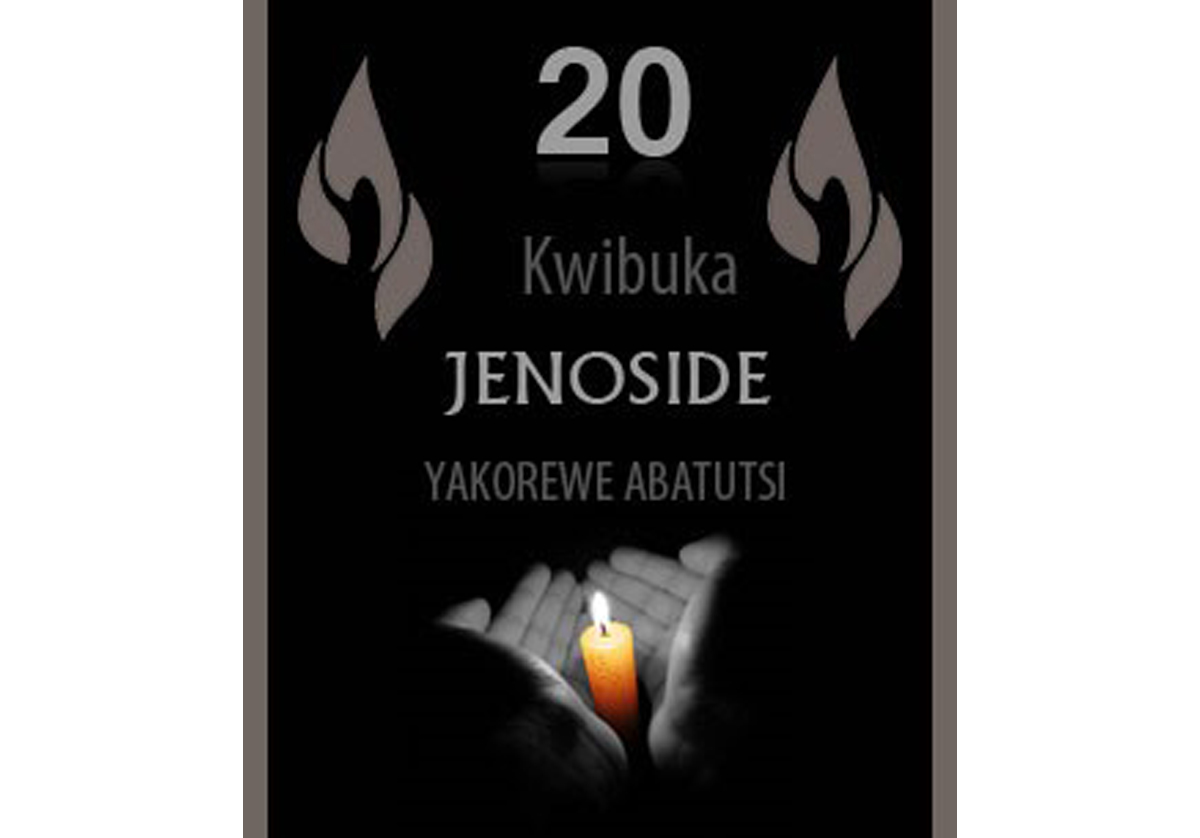
Today I feel really honoured to have received an article from Dr Christian Ntizimira from Rwanda that marks International Holocaust Memorial Day by looking at the challenges to providing palliative care in a post genocide society.

If you accept my observation that death can push people in conventional circumstances to their limits both emotionally and physically then it is a small step to observe that genocide has the potential to rip both people and society to shreds.

But what sets Dr Christian’s article apart is not the description of how people’s lives were ripped apart and how millions were killed of displaced but how, in the aftermath of such suffering, Dr Christian has chosen to draw out a narrative of hope and courage.

If I was to draw one thing from this last year of working for the African Palliative Care Association – and more generally with palliative care practitioners – it is this optimism in the face of adversity.

Whatever happens, however bad, palliative care offers a simple framework to be able to help. I have seen this in the care patients receive right up to their last breath and Dr Christian powerfully illustrates this point in his article on genocide and palliative care.

You can read Dr Christian’s article visiting ehospice by clicking here >>>

Leave a comment

Filed under Health, Social comment

On Thatcher, Mandela and death

Thatcher Mandela
A few days ago a friend of mine emailed me to ask what I thought of Peter Tatchell’s article, “Mandela: Heroic but failed on HIV, poverty & Mugabe” considering that I had been so vocal in the aftermath of Thatcher’s death (See Celebrating Thatcher’s death is wrong both pragmatically and in principle and Thatcher is dead, but Thatcherism is alive: If only it could be the other way round).

On the face of it, following my own logic I should have been upset with Peter’s article. I should have been saying, just as I did for Thatcher, let’s give it a rest, let people mourn and leave the politics out of it…for now at least.

But I wasn’t and nor did I feel I should be.

It has taken me a few days to think this over. In short I think it comes down to a degree of respect for those mourning the death of a loved one. Peter could have waited to write that article, but in the grand scheme of things I am not worried that he did not.

Why? Because very few, if any, of those who cared for and loved Mandela would be troubled by Peter’s article. Throughout he maintained a measured respectful tone that didn’t lose sight of the fact a person had just died and that people were in mourning.

This is markedly different to the witch is dead celebrations that followed Thatcher’s death.

There is a freedom of speech issue here that I will passionately defend. If the state tried to stop people voicing opinion after a death then I would be the first to criticise that. But just because we have the right to do something, this doesn’t mean it is the right thing to do.

I would be more than happy to condemn the blithering idiots at the Westboro Baptist Church for producing a video and social media campaign claiming Mandela is going to hell. But do I think the state should stop them from doing this? No.

Do I hope (a big hope I know) that someone who was part of this campaign might read this and reconsider? Yes. Do I personally think they were misplaced, inconsiderate and disrespectful to publish such rubbish straight after Mandela’s death? Of course, it goes without saying!

So in short, Peter and anyone else should be free to write and criticise Mandela, but I would personally lay down two principles before I would put pen to paper criticising anyone soon after their death:

  • Either be measured, respectful and conscious of those in grieving (like I feel Peter was in his article) or
  • Just wait a little while and allow people to mourn before turning to the politics of someone’s life.

Judging by the response I got from the Thatcher articles I don’t expect many people to agree with this but hey, that’s OK. I would just ask those who don’t to imagine it was their own loved one that had just died and ask them to think how they would like others to behave during such time.

Leave a comment

Filed under Social comment

Eugene Grant: “I prefer the term dwarf”

173796_507019340_815239236_n

Eugene Grant is a dwarf and the founder of the viral site EveryDayDwarfism that chronicles the day-to-day experiences of what it is like to be a dwarf in 21 century Britain. Despite his experiences, Grant is optimistic that he can contribute to changing people’s understanding of dwarfism. Steve Hynd caught up with him to find out more.  

For many readers the term ‘dwarf’ is one they are not familiar with. I know some people are nervous about using it, afraid that it is derogatory. Can you tell us what the word means to you?

I personally much prefer the term ‘dwarf’ as opposed to others like ‘midget’, which many dwarfs I know find offensive. But, for me – and this is where the whole idea of political correctness becomes redundant – what’s more important are the intentions behind the terms used.

People can be ‘politically correct’ but employ such words with malicious intent; others may use quite derogatory terms without any idea or intention of insulting or hurting a person. It all depends on the way such terms are framed.

Can you tell us a little about why you set up EveryDayDwarfism?  

The aim behind EveryDayDwarfism is to document and present just some of the things that I – and my partner who also has dwarfism – go through during our day or week. Its purpose is to try to make people just that little bit more aware as to the things we encounter as dwarfs.

A lot of what we experience, I would put down to stigma and discrimination still being relatively acceptable to lots of people. The whole tone of the site is not supposed to be angry or ‘martyr-ish’, but relatively neutral, matter-of-fact and informative.

It’s to say: ‘these things happen, quite regularly. I just wanted you to know’.

Within the EveryDaySexism movement, there is a strong feeling of finally ‘shouting back’. Within EveryDayDwarfism it also feels like there is quite a lot of rage, is this an important element of responding to discrimination?

It depends what you mean by rage. Rage is very important but it needs to be channelled in the right way and used very carefully.

Leaving out abuse in the form of physical violence, I think when responding to discrimination it’s vital to ask oneself: ‘what is it that I want to achieve here?’ and, more importantly, ‘how will I get this person to change the way they think and act towards me and others like me’.

Can you tell us a bit about how you coped with the attention and discrimination before you started chronicling it on EveryDayDwarfism?

It really depends on two things: the type of abuse, attention or discrimination, and the intentions behind it.

Some abuse – e.g. an individual shouting insults from a moving car – is best left ignored. What can you achieve when they’re 100 metres down the road by the time they’ve finished their sentence?

Others – the attention from a small child for example – is normally fine; although, as I wrote on the site, it’s often the reaction – or lack thereof – from the parents that is the most frustrating thing.

Some abuse though might manifest itself in the form of totally unprovoked physical violence or confrontation.

Have you been in contact with other dwarfs, how do they feel about EveryDayDwarfism? Do others relate to your experiences?

It’s very important that people don’t think that EveryDayDwarfism or my own experiences reflect those of other dwarfs; I can’t speak for them. Not even my partner.

However, I do know that lots of people like me experience such things – sometimes less so, sometimes more so.

If you had one message to the metaphorical guy in the street who tries to take a photo of you with his phone, what would it be?

Just stop, for a moment, and think: What are you doing? Why are you doing this? Why would you or your friends find that photo or film to be of any value or interest? What does that say about your character, as an adult, and how you think about and respond to people who are different? What if I was your brother, son or cousin? How would you see it then?

A bit of a long message!

You wrote for the Guardian about the portrayal of dwarfs in the media, do you see EveryDayDwarfism as an effort to counter some of that through the illustration of agency?

Not really, no. Sadly, but also deliberately, EveryDayDwarfism documents some of the negative things that happen. And in this way, there is a negative tone to the blog.

What I was trying to say in the article you mention was that there needs to be more boring, regular, neutral representation of dwarfism in the media – weather reporters, Masterchef contestants, Question Time panelists, kids on CBBC – whatever.

Basically, more portrayals of dwarfism that do not limit that person’s identity to ‘a dwarf’ but reflects what they really are: a citizen, a parent, a doctor or lawyer, a voter, someone with views, ideas, etc.

What has been the reaction of family and friends to EveryDayDwarfism, are they shocked to hear of such day-to-day encounters? 

It was actually as a result of encouragement from friends to set up EveryDayDwarfism that I did.

Often friends have no idea of the things that I – and lots of others like me – encounter on a daily, weekly, monthly basis. Some have even been in situations with me when there has been abuse or something happen. Quite often, they are absolutely shocked at the way some people behave. It’s not a question of going looking for abuse or discrimination – that’s not a productive or positive way to live – it’s that, a lot of the time, this stuff finds youseeks you out, interrupts your day, your evening, when you’re just trying to live your life. And that’s what I wanted people to realise.

www.everydaydwarfism.tumblr.com/
www.twitter.com/aneverydaydwarf

1 Comment

Filed under Bath, Interview, Media, Politics, Social comment

George the Poet – ‘Go Home’

George the Poet is a spoken word artist. In this video he takes on the government’s latest pilot policy encouraging illegal immigrants to ‘Go Home’.

You can follow George the Poet on Twitter.

Leave a comment

Filed under Politics, Social comment, Spoken Word

‘That was my mosque you tried to burn down’

Police outside Mosque on Ryecroft Street in GloucesterIn the early hours of this morning, someone tried to burn down the Masjid-E-Noor mosque in Ryecroft StreetGloucester. CCTV footage shows someone pouring petrol onto the front door before lighting a rag to ignite the fire.

This is just one of a recent spate of anti-Islam (Muslim?) attacks that have occurred since the tragic murder of Lee Rigby.

In reaction to these attacks the liberal left have gone on what I refer to as the, “we are all the same” offensive. Owen Jones writing in the Independent illustrates this phenomenon by stating:  “83 per cent of Muslims are proud to be British…compared to 79% of the British public” – a gallant effort to highlight the ludicrousness of the EDL’s arguments.

I think something slightly more nuanced than this though.

I don’t really share many nationalistic sentiments, with the right or the left. Why would I? What have I got in common with someone from Glasgow, or Gilford, or even Glandyfi?

In contrast however, what do I have in common with someone from Gloucester? Well, quite a lot now you come to mention it…and yes, I do take it personally when an arson attack occurs in Gloucester.

The good people of Gloucester and I, we share a lot. We probably share friends, favourite places to eat, bus routes, schools, hospitals and everything else that makes a community. And yes, despite being a de facto atheist our friends and family will share places of worship.

So when a man approaches the mosque with petrol and matches in hand, he isn’t just approaching a place of worship that is special to hundreds of Gloucester residents. He is wading through the centre of my community.  He is lighting a fire under something that I hold very close to me.

The vibrant Muslim community in Gloucester is part of what makes the city what it is. The Masjid-E-Noor mosque has been part of this city for generations. People have been worshiping in the mosque since 1974 and at the site even longer. An arson attack on the mosque is like burning a hole in the patchwork rug of Gloucester.

This arson attack, on my local mosque, is no different to trying to burn down my neighbour’s house. It’s fucking with people that are close to me, and the metaphorical flames of hatred might burn down something that I deeply care about – the diverse tolerant multicultural ambiance of my home town, Gloucester.

You can sign a letter to Yakub Patel and the congregation of the Masjid-e-Noor mosque on the hope not hate website – here

4 Comments

Filed under Gloucestershire, Social comment

The whispered words of Musa Okwonga

Part of what I do at Hynd’s blog is to try and draw to people’s attention the people, poetry and issues that are important to me.

I am fully aware how limited this platform, Hynd’s Blog, is. But still, I keep adding to this platform because if you do not dare to whisper out loud the things that are important to you, they will never be heard.

Someone who whispers with more wisdom and wit than I could ever imagine mustering is the poet and journalist, Musa Okwonga. Musa has unwittingly been on-going source of inspiration to me over the last few years.

He has a turn of phrase unmatched and yet, inexplicably, he is yet to become a household name.

Let me give you a few examples of why I think he deserves to be huge:

I spend a lot of my time trying to articulate the blight of racism in football. I struggle though, constantly, to put into words the human stories that football projects without losing the impact and influence the game holds.

In response to Roberto Carlos’ decision to walk off a pitch after a banana was thrown at him; Musa articulated these imagined thoughts of Roberto in the first person:

I am a man first, and a footballer second.  I am a grown man, not an animal, and I am not a creature on display for your entertainment.  You have come to a stadium, to watch human beings play football.  This is my place of work, and if you will treat it like a zoo, I will show that this pitch is not a cage, and I will leave it.”

And thus he treads that fine line that I so often miss.

A second example: Whenever I dare to whisper out loud about something personal to me such as my family or my partner I instantly clam up with dread. Exposing yourself on the internet’s oh so very social platforms, is something that I think people under-estimate. Just as standing on a stage to perform takes admirable courage, so I also think, writing about personal issues online does.

Musa, in an ever self-effacing way, manages to both perform and write about the most personal of issues with a confidence and coherence I cannot help but to admire. Here I would urge you to watch his performance of his poem, ‘Passport’.

But, it is when he integrates this personal with the overtly political does he really come into his own.

At this point, I would urge you to watch his performance of his poem, ‘Love versus Homophobia’. It is an articulate outpouring of anger at the ambivalence, arrogance and anger that some people hold for his understanding of love.

Now, don’t get me wrong. I don’t think the Vatican will be playing this on loop. Nor do I think the US or UK government’s will be listening to his latest poem, ‘Monotony’.  But I leave you with this because, he has dared to whisper these words out loud not knowing who will hear them. All I can do is echo them and ask you to do the same.

This is our monotony:
They bring the most hateful of rainfalls,
And don’t make apologies:
They send storms from the jaws of a drone
To slay those who’d take the USA off its throne –
So each day, we’re preparing for rain;
For these drops not of water
But rage;
Wait –
All you’ll hear is the hum as they’re closing
A teenaged male isn’t safe in the open –
So we’ve taught them to run,
Our daughters and sons –
Taught them something most terrible:
That here in Yemen, it is never wise
To gaze up and daydream into our own skies:
This is –
The only way, we are told;
That’s not so bad as it goes:
No:
Shattered bone,
Shattered hope,
Shattered homes,
We all raise our eyes at the drones –
And so:
In many decades, our youth will explain
Why, when about town, they still walk with necks craned

Leave a comment

Filed under sexuality, Social comment, Spoken Word

An Englishness that appeals to me

Traditionally I was one who would rather sit on the fence,
take it or leave it I wasn’t concerned to jump to the defence,
of this rather dense idiotic abstract notion of Englishness,
but like a true Brit, against the odds, I defend this underdog.

Like it’s a demi-god I worship that afternoon cup of tea,
the crashing sea that laps up onto our shores for an eternity,
our punctuality, our sense of hospitality and our individuality,
this is what makes pride pulse through me, not the EDL’s idiocy.

You see, when those EDL thugs takes to the streets, to shout,
that those Muslims don’t know what Englishness is about.
What do we see, but those Muslims responding with, cups of tea.
What a fucking beautiful sight to see, an Englishness that appeals to me.

At the same time I listen to the EDL shouts, of ‘get those black cunts out’
and because they are defiantly not racist they clarify it aint the blacks,
they just seem to attract the flak, it’s those immigrants we want to go back,
it’s all those god-damn Pakistanis, corner shop owners, the free-loaders.

Well here’s the low down, and tell me if you need me to slow down,
my understanding of Englishness can be simplified to one question,
this question, asked when your chips are down and you’re nearly out is,
how’d you respond to adversity? With some anger and arrogance or…

a nice cup of tea.

Now that’s an Englishness that appeals to me.

1 Comment

Filed under Far-right politics, Social comment, Spoken Word